
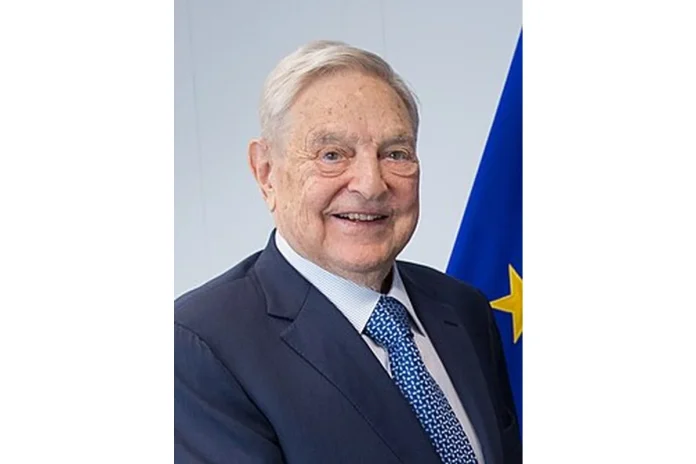
George Soros Bio
George Soros (born György Schwartz; 12 August 1930) is a Hungarian-American investor, hedge fund manager, and philanthropist. Born in Budapest, he survived the Nazi occupation of Hungary as a teenager, later studied philosophy at the London School of Economics, and went on to found Soros Fund Management and the Open Society Foundations. He gained international prominence for large currency trades and for his theory of reflexivity in financial markets. Over several decades, Soros has donated more than $32 billion to philanthropic causes supporting democratic governance, human rights, education, and public health around the world. Known for the nickname “The Man Who Broke the Bank of England,” he remains one of the most influential and debated figures in global finance and politics.
Early Life and Background
György Schwartz was born on 12 August 1930 in Budapest, in the Kingdom of Hungary, into a prosperous non-observant Jewish family. His father, Tivadar Soros, was a lawyer and noted Esperanto author who edited the literary magazine Literatura Mondo, while his mother, Erzsébet (Elizabeth) Soros, came from a family that operated a successful silk store. In 1936, the family changed their surname from Schwartz to Soros as a form of protective camouflage amid rising antisemitism in Hungary.
Soros was thirteen years old when Nazi Germany occupied Hungary in March 1944. He survived by posing as the Christian godson of a government official, while his father worked to save not only his immediate family but also many other Hungarian Jews. After surviving the Siege of Budapest in 1945, he relocated briefly to Paris before moving to England, where he enrolled at the London School of Economics. There, he studied under philosopher Karl Popper and earned a Bachelor of Science in philosophy in 1951 and a Master of Science in philosophy in 1954.
Path to Investor and Philanthropist
After failing to secure an academic position, Soros began his financial career in 1954 at the London merchant bank Singer and Friedlander, working as a clerk before moving into the arbitrage department. A colleague, Robert Mayer, suggested he apply at his father’s New York brokerage, F. M. Mayer, and in 1956 Soros moved to the United States, specializing in European securities. Between 1959 and 1963, he worked as an analyst at Wertheim and Co., where he refined the theory of reflexivity inspired by Popper’s philosophy.
In 1963, Soros joined Arnhold and S. Bleichroeder as a vice president, and in 1966 he began experimenting with his own trading strategies using firm capital. He founded the Double Eagle hedge fund in 1969 and, the following year, established Soros Fund Management, providing the organizational foundation that would later become the Quantum Fund. By the early 1970s, Soros had transitioned from employee to independent fund manager, setting the stage for his future influence in global finance.
George Soros Career
Early Career (1954–1969)
George Soros began his professional life in 1954 at Singer and Friedlander in London, where he worked in the arbitrage department. His early exposure to European financial markets led him to F. M. Mayer in New York in 1956, followed by a move to Wertheim and Co. in 1959, where he continued analyzing European securities.
While at Wertheim, Soros began developing the theory of reflexivity, which posits that market values are driven not only by economic fundamentals but also by the fallible perceptions of participants, creating self-reinforcing cycles of boom and bust. This philosophical framework became the intellectual foundation of his later investing success and his writings on financial markets.
Fund Management Breakthrough (1969–1990)
In 1969, Soros established the Double Eagle hedge fund with $4 million in capital, and in 1970 he founded Soros Fund Management. After reorganizing his funds in 1973, he launched the Quantum Fund, which grew from $12 million in initial assets to hundreds of millions of dollars over the following decade. During this period, Soros and partners such as Jim Rogers and Stanley Druckenmiller delivered consistent high returns, establishing Soros’s reputation as one of the world’s most successful investors.
By 1981, the Quantum Fund had grown to $400 million in assets, and Soros expanded his influence beyond markets into political and social causes. From 1979 onward, he used his wealth to support dissident movements behind the Iron Curtain, including Poland’s Solidarity movement, Charter 77 in Czechoslovakia, and Soviet scientist Andrei Sakharov. His first Open Society Institute, founded in Hungary in 1984 with a $3 million budget, marked the beginning of his institutional philanthropic work.
Global Investor Era (1990–Present)
Soros achieved global fame on 16 September 1992 during Black Wednesday, when his Quantum Fund sold short more than $10 billion in pounds sterling, profiting over $1 billion as the United Kingdom withdrew from the European Exchange Rate Mechanism. The feat earned him the title “The Man Who Broke the Bank of England” and cemented his status as one of the most powerful investors in modern history.
In subsequent decades, Soros expanded his philanthropic footprint through the Open Society Foundations, transferring $18 billion to the organization in 2017 and announcing a $1 billion endowment in 2020 to launch the Open Society University Network. As of 2025, he has donated more than $32 billion across more than 60 countries, with the Open Society Foundations distributing roughly $600 million annually to advance justice, education, public health, and independent media.
Notable Events and Milestones
Among Soros’s defining moments are his bet against the British pound in 1992, his early funding of dissidents in Soviet-dominated Eastern Europe, and his role in supporting the peaceful transition from communism in Hungary between 1984 and 1989. In 2018, a pipe bomb was placed in the mailbox of his Katonah, New York, home as part of the October 2018 United States mail bombing attempts, an incident that drew national attention to threats against public figures. In January 2025, United States President Joe Biden awarded Soros the Presidential Medal of Freedom.
George Soros Career Wins
George Soros’s career is marked by sustained financial performance and the expansion of a global philanthropic network. His Quantum Fund averaged over 20 percent annual compound returns for decades, generating roughly $40 billion since its 1973 inception. He also built one of the world’s largest grant-making institutions, the Open Society Foundations, which has reshaped civil society in dozens of countries.
Career Highlights
Soros’s first major fund management success came with the launch of the Double Eagle hedge fund in 1969 and the founding of Soros Fund Management in 1970. His most celebrated financial win was the 1992 short sale of the British pound, which produced an estimated profit of $1 billion in a single day. Most recently, Soros transferred $18 billion to the Open Society Foundations in 2017 and donated $100 million to Bard College in 2020 to expand the Open Society University Network.
Other Wins and Achievements
In 2014, LCH Investments ranked Soros number one among the top twenty hedge fund managers, citing gains of nearly $42 billion since the launch of the Quantum Endowment Fund in 1973. He was inducted into Institutional Investor Alpha’s Hedge Fund Manager Hall of Fame in 2008 and was elected an Honorary Fellow of the British Academy in 2017.
| Organization | Role | Year |
|---|---|---|
| Double Eagle Fund | Founder | 1969 |
| Soros Fund Management | Founder and Chairman | 1970 |
| Quantum Fund | Principal Advisor | 1973 |
| Open Society Institute (Hungary) | Founder | 1984 |
| Open Society Foundations | Founder | 1993 |
| Central European University | Founder and Major Donor | 1991 |
George Soros Family
Family Background and Heritage
George Soros was born to Tivadar Soros, a lawyer and Esperanto author, and Erzsébet (Elizabeth) Soros, whose family operated a silk store in Budapest. His older brother, Paul Soros, was a private investor and philanthropist who passed away on 15 June 2013. The family’s Jewish heritage and survival of the Nazi occupation shaped Soros’s lifelong commitment to protecting minorities and promoting open societies.
Personal Life
George Soros has been married three times. He married Annaliese Witschak in 1960; they divorced in 1983 and had three children. In 1983, he married Susan Weber; they divorced in 2005 and had two children. In 2013, he married Tamiko Bolton. His five children include Robert Soros, Jonathan Soros, and Alexander Soros, and as of recent reports he resides in Katonah, New York.