
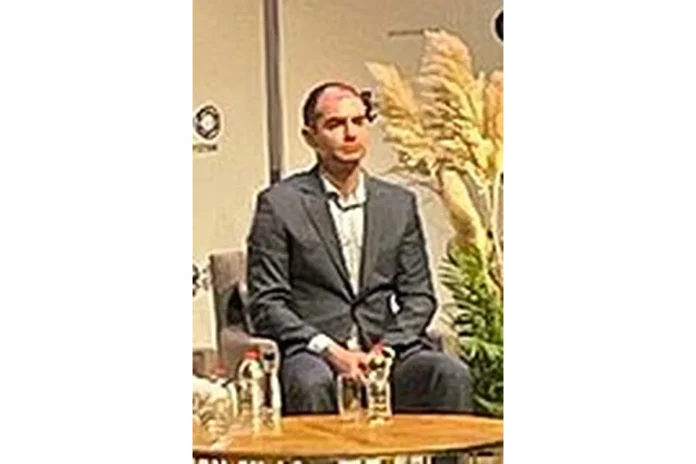
Ilya Sutskever Bio
Ilya Efimovich Sutskever is an Israeli-Canadian computer scientist whose work has shaped the modern fields of machine learning and deep learning. Born in 1986 in the city then known as Gorky in the Russian SFSR, he moved to Israel as a young child and later to Canada, where he built a research career focused on neural networks. He is widely recognized as a co-inventor of AlexNet, a co-founder of OpenAI, and a co-founder of Safe Superintelligence Inc. (SSI).
Across more than a decade of research and leadership, Sutskever has contributed to breakthroughs such as sequence-to-sequence learning, the GPT family of language models, CLIP, DALL-E, and AlphaGo. He has earned the NeurIPS Test of Time Award three consecutive years and was elected a Fellow of the Royal Society.
Early Life and Background
Ilya Efimovich Sutskever was born in 1986 into a Jewish family in Nizhny Novgorod, Russia, which at the time was called Gorky in the Russian SFSR of the Soviet Union. At the age of five, he made aliyah with his family and relocated to Jerusalem, Israel, where he spent his early school years. His early exposure to computers and mathematics came through self-directed study and family encouragement.
Sutskever later attended the Open University of Israel, completing coursework before moving with his family to Canada at age 16. After attending a Canadian high school for roughly a month, he was admitted directly as a third-year undergraduate to the University of Toronto in Ontario. This unusually early entry into a top research environment set the foundation for his later doctoral work.
Path to Chief Scientist and CEO
At the University of Toronto, Sutskever earned a Bachelor of Science in mathematics in 2005, a Master of Science in computer science in 2007, and a PhD in computer science in 2013, writing his doctoral thesis on training recurrent neural networks under the supervision of Geoffrey Hinton. His training positioned him at the center of a small community of researchers who were proving that deep neural networks could outperform earlier approaches to image and speech recognition.
After completing his PhD, Sutskever spent about two months in 2012 as a postdoc with Andrew Ng at Stanford University before returning to Toronto. He then joined DNNResearch, a spinoff of Hinton’s research group, which was acquired by Google in 2013. At Google Brain he served as a research scientist, where he helped develop the sequence-to-sequence learning algorithm with Oriol Vinyals and Quoc Viet Le, contributed to TensorFlow, and co-authored the AlphaGo paper. These roles established his reputation as a senior research leader and prepared him to co-found OpenAI in late 2015.
Ilya Sutskever Career
Early Career (2012–2015)
In 2012, Sutskever, together with Alex Krizhevsky and Geoffrey Hinton, built AlexNet, a convolutional neural network that dramatically improved performance on the ImageNet image-recognition benchmark. The system is widely regarded as a turning point that triggered the modern deep-learning boom. The trio demonstrated that graphics processing units, combined with deeper networks and larger datasets, could train models far more accurately than previous methods.
Following Google’s 2013 acquisition of DNNResearch, Sutskever joined Google Brain, where he expanded his research agenda beyond computer vision. His work on sequence-to-sequence learning became a foundational technique for machine translation and later for large language models. He also contributed to the AlphaGo project, whose program defeated top human players at the board game Go.
OpenAI Breakthrough (2015–2023)
At the end of 2015, Sutskever left Google to co-found OpenAI, an artificial intelligence research organization, and took on the role of chief scientist. In this position he helped set the lab’s research direction, including the so-called scaling ethos that argued larger models trained on more data with more compute would continue to improve in capability. Under his scientific leadership, OpenAI produced landmark systems such as the GPT series of generative pretrained transformers, CLIP, and DALL-E, and oversaw the development and launch of ChatGPT.
Sutskever also played a central role in the research that produced OpenAI’s reasoning models, including the o1 system, which applied chain-of-thought techniques to improve performance on complex problems. In 2022, his public remark that large neural networks might already be slightly conscious sparked broad debate about machine consciousness and the ethical status of advanced AI. In 2023, he announced he would co-lead OpenAI’s “Superalignment” project, an effort to solve the alignment of superintelligent systems within four years.
Safe Superintelligence Inc. Era (2024–Present)
In May 2024, Sutskever announced his departure from OpenAI, citing a desire to focus on a new project he described as very personally meaningful. The following June, he co-founded Safe Superintelligence Inc. (SSI) alongside Daniel Gross and Daniel Levy, with offices in Palo Alto and Tel Aviv. Unlike OpenAI, the company was structured to release no commercial products until it had built a safe superintelligence, a single-product focus that reflected Sutskever’s stated safety priorities.
By September 2024, SSI had raised one billion dollars from investors including Andreessen Horowitz, Sequoia Capital, DST Global, and SV Angel. In March 2025, the company raised an additional two billion dollars and reached a reported valuation of thirty-two billion dollars, a figure attributed in part to Sutskever’s personal reputation. In June 2025, SSI rejected an acquisition offer from Meta Platforms, and shortly thereafter Sutskever became chief executive officer of the company after Gross departed for Meta.
Notable Events and Milestones
In November 2023, Sutskever was one of six board members of the nonprofit entity that controlled OpenAI who voted to remove Sam Altman as chief executive officer. He later expressed public regret for his role in the decision, and Altman was reinstated within a week. Sutskever subsequently stepped down from the OpenAI board and was largely absent from the office in the months that followed. His departure from OpenAI in May 2024 and the founding of SSI the next month marked the end of one chapter and the start of another in his career.
Ilya Sutskever Career Wins
Ilya Sutskever’s career has been marked by a series of influential technical contributions and formal recognitions, beginning with AlexNet in 2012 and continuing through his leadership of major AI research efforts at Google Brain, OpenAI, and Safe Superintelligence Inc. His work has shaped both the scientific community and the commercial AI industry.
Career Highlights
Among Sutskever’s most cited contributions are AlexNet, sequence-to-sequence learning, the GPT models, CLIP, DALL-E, and AlphaGo, all of which are foundational to contemporary artificial intelligence. He is one of the most highly cited computer scientists in modern history, a reflection of how broadly his research has been adopted across academia and industry.
In 2023, Sutskever was elected a Fellow of the Royal Society (FRS) in recognition of his substantial contributions to science. He also received the National Academy of Sciences Award for the Industrial Application of Science in 2026, an honor given for work that has delivered exceptional impact through industrial application.
Other Wins & Achievements
Sutskever has won the NeurIPS Test of Time Award three consecutive times, in 2022, 2023, and 2024, an unusual distinction that recognizes papers whose influence on the field has endured for a decade. These awards, combined with his election to the Royal Society and the National Academy of Sciences honor, place him among the most decorated AI researchers of his generation.
Ilya Sutskever Family
Family Background and Lineage
Ilya Efimovich Sutskever was born in 1986 into a Jewish family in Nizhny Novgorod, then called Gorky in the Russian SFSR. At the age of five, he made aliyah with his family and settled in Jerusalem, an early life move that later took the family to Canada when he was 16. His family’s willingness to relocate shaped his international education and his exposure to multiple research cultures.
Personal Life
Public information about Sutskever’s personal relationships is limited, and details about a spouse, partner, or children are not widely documented in verified sources. He has long divided his professional time between North America and Israel, with Safe Superintelligence Inc. operating offices in both Palo Alto and Tel Aviv.