
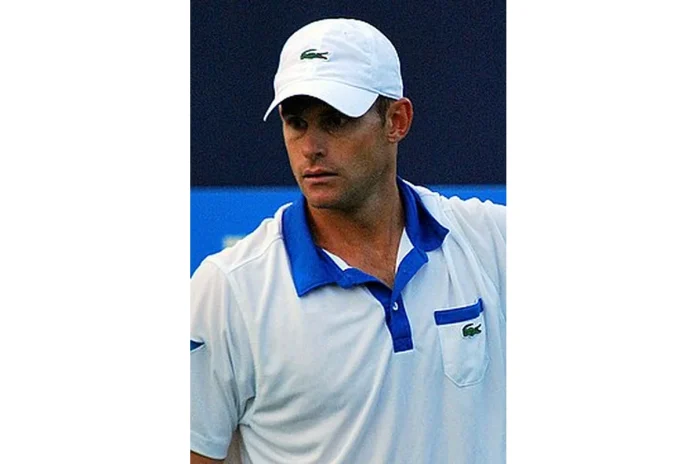
Andy Roddick Bio
Andrew Stephen Roddick is an American former professional tennis player born on August 30, 1982, in Omaha, Nebraska. He was ranked world No. 1 in men’s singles by the ATP for 13 weeks in 2003 and won 32 ATP Tour singles titles, including the 2003 US Open. Roddick led the United States to a 2007 Davis Cup victory and was inducted into the International Tennis Hall of Fame in 2017. After retiring following the 2012 US Open, he transitioned into broadcasting, commentary, and the Andy Roddick Foundation. He is married to actress and model Brooklyn Decker.
Early Life and Background
Andrew Stephen Roddick was born on August 30, 1982, in Omaha, Nebraska, the youngest son of Blanche Corell, a schoolteacher, and Jerry Roddick, a businessman. He has two older brothers, Lawrence and John, both of whom were promising young tennis players. Roddick lived in Austin, Texas, from ages 4 to 11, where he was first exposed to competitive tennis through his brothers.
The family later moved to Boca Raton, Florida, so his older brother could pursue tennis development, and Roddick attended SEK Boca Prep International School, graduating in 2000. He also completed high school classes online through the University of Nebraska High School. His two older brothers served as his earliest training partners and helped shape his competitive foundation.
After considering quitting the sport at age 17 during a junior losing streak, coach Tarik Benhabiles persuaded him to give tennis four more months of full focus. Roddick rose to become the No. 6 junior in the United States in 1999 and the No. 1 junior in the world in 2000, capturing six world junior singles titles and seven doubles titles. That same year he won both the Australian Open and US Open junior singles championships.
Path to Professional Tennis
Roddick turned professional in 2000 and quickly demonstrated his potential on the ATP Tour. At the Miami Masters in March 2001, he earned his first ATP-level victory over Fernando Vicente. Just weeks later at the same event, the 18-year-old stunned seven-time Wimbledon champion Pete Sampras in the third round, announcing himself as a future star of American tennis.
He also reached the second round of the French Open, where he defeated former champion Michael Chang in five sets, and at Wimbledon he took a set from eventual champion Goran Ivanišević. By the end of 2002, Roddick was ranked inside the top 10 and had established himself as one of the leading players of his generation. Working with coach Tarik Benhabiles, then later Brad Gilbert, he developed into a powerful all-court player known for his serving strength.
Andy Roddick Career
Early Career (2000–2002)
Roddick’s first full season on tour was 2001, when his upset of Pete Sampras in Miami signaled his arrival. He defeated world No. 1 Gustavo Kuerten later that summer, confirming that he could compete with the game’s elite. With Benhabiles guiding his early development, Roddick emphasized aggressive baseline play built around a booming serve.
By 2002, he had broken into the year-end top 10 for the first time, a position he would maintain for nine consecutive seasons. His early title wins and deep Grand Slam runs established a foundation for the breakthroughs that followed. Coaches Brad Gilbert and later Dean Goldfine continued to refine his tactical game.
ATP Breakthrough (2003–2004)
Roddick’s 2003 season was his breakthrough year. At the Australian Open, he battled Younes El Aynaoui in a five-hour epic, winning a fifth set 21–19, then won his first Masters titles at Canada and Cincinnati. At the US Open, he rallied from two sets down and a match point to defeat David Nalbandian in the semifinals before beating Juan Carlos Ferrero in the final to claim his only Grand Slam singles title.
By November 3, 2003, he had risen to world No. 1 and finished the year as the top-ranked American. In 2004, he reached his first Wimbledon final, taking the opening set from Roger Federer before falling in four sets. He also produced the fastest recorded serve in professional tennis at the time, 155 mph during a Davis Cup semifinal. That year he received the Arthur Ashe Humanitarian Award and the ESPY Award for Best Male Tennis Player.
Continued Tour Success (2005–2009)
Roddick continued to feature in major finals, reaching the Wimbledon final again in 2005 and finishing the year inside the top 10. He added multiple Masters titles and ATP trophies, including events in Cincinnati and at Queen’s Club. From 2006 to 2008, he worked briefly with Jimmy Connors before retooling his game with his brother John Roddick and then Larry Stefanki.
The 2009 Wimbledon final remains the most celebrated match of his career. Facing Federer once more, Roddick pushed the final to 16–14 in the fifth set, setting records for the longest men’s Grand Slam final and the most games ever played in a Wimbledon final. Although he finished as runner-up for the fourth time at a major, his performance cemented his reputation for resilience and shot-making.
Final Tour Years (2010–2012)
Roddick’s 2010 season included his fifth Masters title at the Sony Ericsson Open in Miami and a return to the year-end top 10, making him one of only two players ranked in the top 10 from 2002 through 2010. A bout of mononucleosis and a series of injuries hampered his 2011 campaign, and he dropped out of the top 10 for the first time in nine years.
In 2012, he won titles at Eastbourne and Atlanta, his 31st and 32nd career trophies. On August 30, 2012, his 30th birthday, Roddick announced he would retire after the US Open. He lost in the fourth round to Juan Martín del Potro in his final match, and a retirement ceremony was held at Arthur Ashe Stadium four days later.
Driving Style and Strengths
Andy Roddick’s game was built around a world-class serve that often reached 130–150 mph and, at one point, set the professional record at 155 mph. He paired the serve with a punishing forehand, particularly his favored off-forehand, and a heavy kick second serve that pushed opponents off the baseline. Although his backhand was often viewed as a weakness, he improved it later in his career under Larry Stefanki, developing a more all-court style that complemented his raw power.
Notable Events and Milestones
Roddick’s 2003 US Open victory, his 2007 Davis Cup triumph, and the record-setting 2009 Wimbledon final stand as the defining achievements of his career. His serve records, humanitarian work through the Andy Roddick Foundation, and consistent year-end top-10 presence from 2002 to 2010 underscore his impact on American tennis during a golden era.
Andy Roddick Career Wins
Andy Roddick amassed 32 ATP Tour singles titles and 4 doubles titles across his professional career. His triumphs spanned hard-court, grass-court, and clay-court events, including five Masters 1000 titles and one Grand Slam singles championship. The following highlights reflect his most celebrated victories across the major series he contested.
Grand Slam and Masters Highlights
Roddick captured his lone Grand Slam singles title at the 2003 US Open, rallying past David Nalbandian in the semifinals and defeating Juan Carlos Ferrero in the final. He added his five Masters 1000 titles at Canada, Cincinnati (twice), Miami (twice), and Indian Wells. He reached four Grand Slam finals, all against Roger Federer: Wimbledon in 2004, 2005, and 2009, and the 2006 US Open.
His 32nd and final ATP title came at the 2012 Atlanta Open. Across his career, Roddick compiled a 612–213 singles record, finishing as the year-end No. 1 in 2003 and remaining inside the top 10 for nine consecutive seasons.
Other Wins and Performances
Beyond his Grand Slam and Masters results, Roddick won four ATP doubles titles, reached the semifinals of the ATP Finals three times, and helped the United States capture the 2007 Davis Cup. He also won multiple titles at events such as the SAP Open, Regions Morgan Keegan Championships, Queen’s Club, and the Legg Mason Tennis Classic.
Andy Roddick Family
Family Background and Tennis Lineage
Andy Roddick was raised in a tennis-oriented household. His father, Jerry Roddick, supported his sons’ athletic pursuits as a businessman, while his mother, Blanche Corell, worked as a schoolteacher. Both of his older brothers, Lawrence and John, played competitive tennis in their youth, with John later serving as Andy’s coach and brother Lawrence also influencing his development. The family’s collective dedication to tennis shaped Roddick’s path to the professional ranks.
Personal Life
Roddick dated actress and singer Mandy Moore from 2003 to 2004. He later met model and actress Brooklyn Decker, and the two began dating in 2007. They became engaged in March 2008 and married on April 17, 2009, in Austin, Texas. The couple has two daughters, the first born on September 30, 2015, and the second born on November 27, 2017. The family resides in Austin, Texas.
2025 Season Outlook
Having retired from professional tennis following the 2012 US Open, Andy Roddick no longer competes on the ATP Tour. His 2025 activities remain centered on broadcasting, commentary, and philanthropic work through the Andy Roddick Foundation. In recent years he has continued as a Tennis Channel commentator and host of the weekly podcast Served with Andy Roddick, which he launched in 2024.
Roddick also remains active in exhibition events and special tennis projects, including championing the QQQ Champions Series in 2015 and 2017 and participating in charity initiatives tied to his foundation. While he no longer pursues a competitive season, his 2025 schedule is expected to feature broadcasting appearances, charity events, and continued involvement with youth education programs.
With his Hall of Fame induction complete and his family life in Austin firmly established, Roddick’s 2025 outlook emphasizes influence off the court rather than results on it. His commentary work, podcast, and foundation efforts ensure his voice remains central to the sport he once led at No. 1.