

Chase Williams Bio
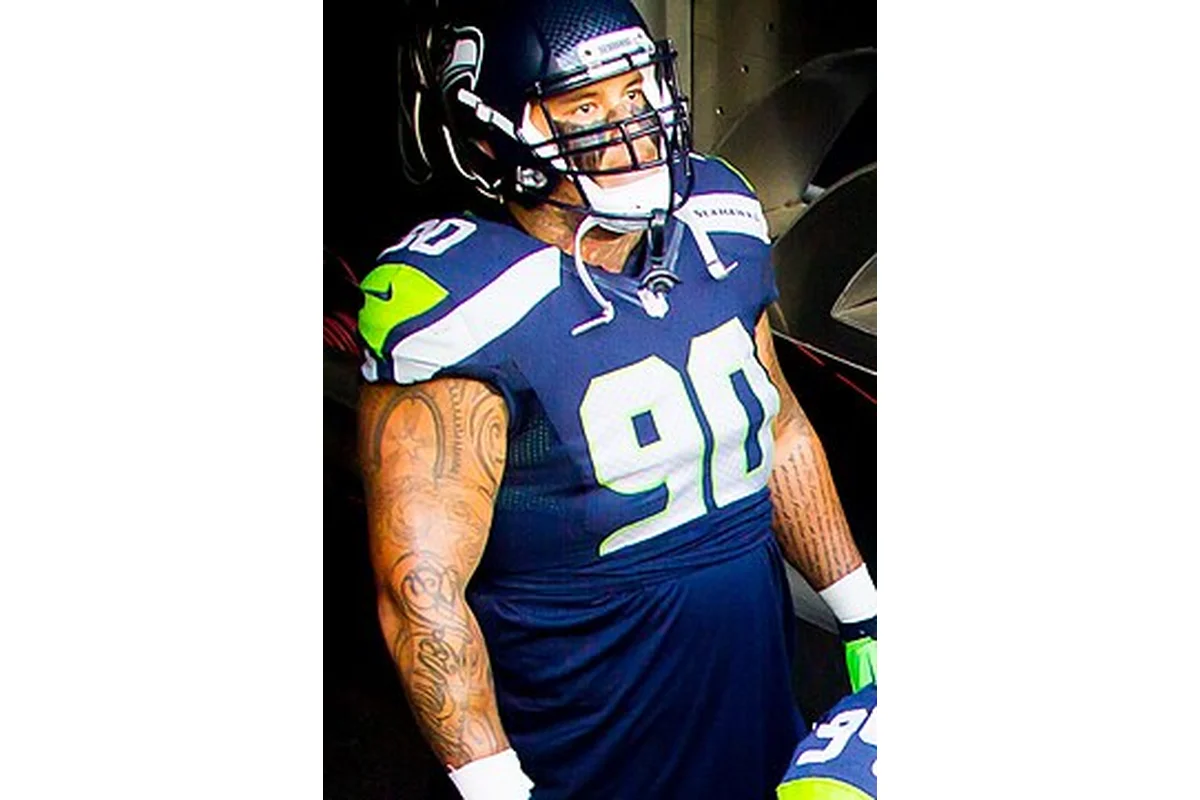
Jesse Williams, born 2 November 1990 on Thursday Island in Queensland, Australia, is a former professional American football defensive tackle. Nicknamed “tha Monstar,” he played college football for the University of Alabama, where he started on the defensive line for the Crimson Tide’s 2011 and 2012 national championship teams. Selected by the Seattle Seahawks in the fifth round of the 2013 NFL draft, Williams became the first Australian to earn a Super Bowl ring as part of Seattle’s title-winning roster.
Early Life and Background
Jesse Williams was born on Thursday Island, Queensland, to Torres Strait Islander parents and raised in Brisbane. He attended Norman Park State School and Cavendish Road State High School, where he first encountered organized American football. Williams grew up playing rugby league and basketball, sports that helped build the size and athleticism that would later define his gridiron career.
He did not start playing football until he was 14 years old. Williams joined the Bayside Ravens after attending one of their practices to watch a friend play quarterback. In his first season as a player, he earned Rookie of the Year honors and was selected for the Queensland Under 19 team that won the Australian National Championships. For his efforts during the 2008 season with the Ravens, Williams was named Defensive Player of the Year.
Path to American Football
Williams was originally recruited by University of Hawaii coaches, who offered him a scholarship after a Warriors scout watched him play during the Australian National Championships. He verbally committed to Hawaii at 16, but the NCAA clearinghouse ruled that he was missing a mathematics class and an English class, preventing him from enrolling for the 2009 season. The setback redirected his recruitment toward the junior college ranks.
Williams then enrolled at Arizona Western College, where Arizona Western coaches spotted him during an exhibition against New Zealand while teaching at a football clinic. At the time, he became the first Indigenous Australian to receive a scholarship to play college football in the United States. After developing into one of the highest-rated junior college recruits in the 2011 class, he chose the University of Alabama from more than 25 scholarship offers and joined Nick Saban’s Crimson Tide for the spring 2011 semester.
Jesse Williams Career
College Career (2009–2012)
Williams spent two seasons at Arizona Western from 2009 to 2010, refining his technique and adding mass to his frame. He transferred to Alabama in time for the 2011 spring semester and quickly earned a starting role. During the 2011 season, Williams started all 13 games at defensive end and recorded 24 total tackles plus half a sack while helping the Crimson Tide win the BCS national championship.
Entering the 2012 season, he was named to preseason watch lists for the Chuck Bednarik Award, the Lombardi Award, the Bronko Nagurski Trophy, and the Outland Trophy, and was a preseason All-American at nose tackle. He started 13 of 14 games as the nose guard that year, finishing with 37 tackles, one sack, and a blocked kick. He also played offense for the first time as a Crimson Tide player, lining up at fullback for a one-yard Eddie Lacy touchdown run in a 52–0 win over Arkansas. After the season, he was named second-team All-SEC by the Associated Press and won a second BCS national championship.
Professional Career with the Seattle Seahawks (2013–2016)
Before the NFL Scouting Combine, Williams publicly vowed to break Justin Ernest’s 1999 record of 51 repetitions on the 225-pound bench press, having reportedly benched as much as 600 pounds. He ultimately recorded 30 reps at the combine. Predicted by some analysts to be a late first-round pick, Williams was selected in the fifth round of the 2013 NFL draft, 137th overall, by the Seattle Seahawks. He signed his rookie contract on 10 May 2013.
On 26 August 2013, Williams was placed on injured reserve because of a knee injury that kept him out for his entire rookie season. He rehabilitated the knee in Australia, where he used Orthokine therapy for joint pain. Although he never played a down that year, he became the first Australian to win a Super Bowl ring after Seattle defeated the Denver Broncos in Super Bowl XLVIII. Williams was again placed on injured reserve on 1 August 2014 with another knee issue, and the Seahawks waived him on 6 March 2015 before re-signing him on 1 April 2015. The Seahawks released him a final time on 9 March 2016.
Notable Events and Milestones
Williams’s most defining professional moment came in February 2014, when he became the first Australian-born player to receive a Super Bowl ring after Seattle’s victory in Super Bowl XLVIII. His 600-pound bench press, captured on social media during Alabama’s offseason, also marked him as one of the strongest players in college football during that era. In May 2015, he was diagnosed with papillary Type 2 cancer and underwent kidney surgery, an experience he later described as a fight he was determined to win.
Jesse Williams Family
Family Background and Personal Life
Williams was born to Torres Strait Islander parents, a heritage that made him a notable figure in Australian sport and a role model for Indigenous athletes. His cultural roots on Thursday Island and his upbringing in Brisbane shaped his commitment to community work after his playing career ended. Following his time in the NFL, Williams became a strength and conditioning coach and dedicated himself to growing the sport of American football in Australia.
Jesse Williams Career Achievements
During his college career, Williams was a starter on two BCS national championship teams at Alabama, earned second-team All-SEC recognition from the Associated Press in 2012, and was named to multiple national award watch lists. He was also the first Indigenous Australian to receive a college football scholarship in the United States. At the professional level, he contributed to the Seattle Seahawks’ Super Bowl XLVIII championship, becoming the first Australian to win a Super Bowl ring.