
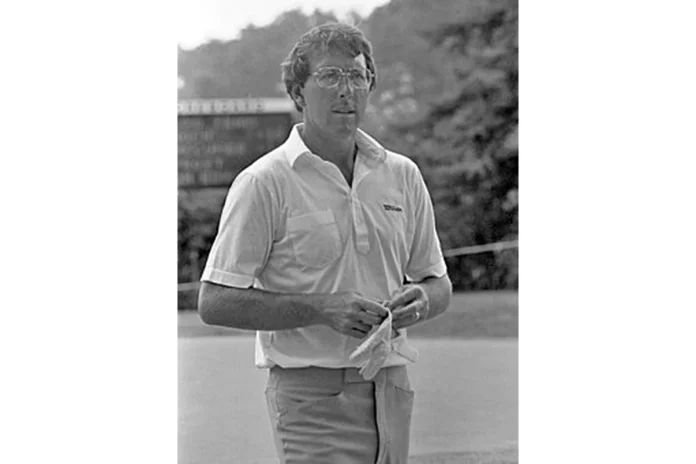
Hale Irwin Bio
Hale S. Irwin is an American professional golfer widely regarded as one of the finest players of his generation. Born on June 3, 1945, in Joplin, Missouri, Irwin rose to become one of the world’s leading competitors from the mid-1970s through the mid-1980s, a period in which he established himself among the game’s elite. He is one of only a few players in history to win three U.S. Open titles and remains the oldest U.S. Open champion after his remarkable 1990 victory at age 45.
Beyond the regular tour, Irwin found even greater success on the senior circuit, ranking second all-time in PGA Tour Champions victories. He has also built a respected second career as a golf course architect, applying decades of competitive insight to course design. Inducted into the World Golf Hall of Fame in 1992, Irwin continues to be celebrated for his longevity, consistency, and sportsmanship.
Early Life and Background
Hale S. Irwin was born in Joplin, Missouri, and was raised in Baxter Springs, Kansas, and Boulder, Colorado. His father introduced him to the game of golf at the age of four, an early start that helped shape a lifelong passion for the sport. By fourteen, Irwin had broken 70 for the first time, signaling a precocious talent that would continue to develop through his teenage years.
At Boulder High School, Irwin was a multi-sport star, excelling in football, baseball, and golf, and he graduated in 1963. His athletic versatility was matched by a strong academic record, traits that would later define his disciplined approach to professional golf. The foundation built in those formative years, both on the course and in the classroom, prepared him for a successful collegiate career.
Path to Professional Golf
Irwin attended the University of Colorado in Boulder, where he played football for the Buffaloes under head coach Eddie Crowder. A two-time All-Big Eight defensive back in 1965 and 1966, he was also recognized as an academic All-American, reflecting his balance of athletic and intellectual achievement. Despite his success on the gridiron, golf remained his true calling, and he won the individual NCAA Championship in his senior year in 1967.
That NCAA title confirmed Irwin’s readiness for the professional ranks, and in 1968, he turned professional. His amateur pedigree, combined with years of competitive experience across multiple sports, gave him a competitive edge and a deep understanding of preparation. The transition from the collegiate amateur game to the PGA Tour would soon produce one of the most decorated careers in American golf.
Hale Irwin Career
Early Career (1968–1973)
Hale S. Irwin began his PGA Tour journey in 1968, steadily building his game against the world’s best players. He secured his first PGA Tour victory at the 1971 Sea Pines Heritage Classic, a win that announced his arrival as a contender. Throughout the early 1970s, Irwin developed the consistency and course-management skills that would become hallmarks of his career, earning a reputation as a thoughtful and disciplined competitor.
During this developmental phase, Irwin’s work on his swing and his mental approach to the game paid steady dividends. He built a foundation of confidence that set the stage for the most successful period of his career, one that would soon bring major-championship glory and worldwide recognition.
PGA Tour Breakthrough (1974–1979)
Irwin’s first U.S. Open triumph came in 1974 at Winged Foot, a victory that came to be known as part of the infamous “Massacre at Winged Foot.” Winning with a score of 7-over par, the second-highest winning score in relation to par of any U.S. Open since 1945, Irwin displayed remarkable patience on a brutally difficult setup. He earned $35,000 for the win and later revealed he had dreamed three weeks earlier that he would claim the title, a premonition he shared only with his wife.
Between January 1975 and the end of the 1978 season, Irwin made the cut in 86 consecutive PGA Tour events, the fourth-longest streak in PGA Tour history. In 1977, he recorded three wins, including a five-shot victory at the Colgate Hall of Fame Classic at Pinehurst, where he opened with a 36-hole total of 127. He also won the prestigious Piccadilly World Match Play Championship at Wentworth Club in both 1974 and 1975, narrowly missing a third consecutive title in 1976. Ranked among the top five in McCormack’s World Golf Rankings every year from 1975 to 1979, Irwin was at the peak of his powers.
In 1979, Irwin captured his second U.S. Open title at Inverness Club, navigating narrow fairways and heavy rough to claim the championship. That same year, he entered the final round of The Open Championship at Royal Lytham & St Annes with a two-shot lead, hoping to complete a U.S. Open and British Open double, only to be denied by Seve Ballesteros’s extraordinary recovery play. The 1979 campaign cemented his place among the game’s elite.
Continued Excellence and Third U.S. Open (1980–1990)
Following the 1985 Memorial Tournament, where he recorded his last PGA Tour win for several years, Irwin remained a steady presence on leaderboards with occasional top-10 finishes. He came close to another major in 1983 at Royal Birkdale, where he lost The Open Championship to Tom Watson by a single shot after a costly mental lapse on a short putt. Another painful near-miss came at the 1984 U.S. Open at Winged Foot, where a final-round 79 dropped him from the lead to a sixth-place finish.
Then came 1990, a year that defined his legacy. At Medinah Country Club, Irwin holed an improbable 45-foot birdie putt on the 72nd hole to force a playoff with Mike Donald. In the Monday playoff, Irwin trailed by two shots with three holes remaining, but Donald missed a crucial 15-foot par putt on the 18th, and Irwin birdied the first sudden-death hole to become the oldest U.S. Open champion in history at age 45. The following week, he won the Buick Classic, capping a remarkable run.
PGA Tour Champions Era (1995–Present)
Irwin qualified for the over-50 Senior PGA Tour in 1995, and his success at this level surpassed even his PGA Tour achievements. Through the 2021 season, he stood as the career leader in Champions Tour wins with 45 victories and more than $26 million in earnings. His dominance was especially clear in 1997, when he won nine times, tying the Senior Tour record set by Peter Thomson in 1985, and was named Senior PGA Tour Player of the Year.
He won three consecutive PGA Seniors’ Championships from 1996 to 1998, including a 12-stroke victory in 1997, the largest margin in a 72-hole Champions Tour event until Bernhard Langer’s 13-stroke win in 2014. He added U.S. Senior Open titles in 1998 and 2000, bringing his career total to five USGA championships. In the 2012 3M Championship, Irwin shot 65, a score under his age for the first time in his career, and he has since shot his age 44 times in official PGA Tour Champions events, well ahead of Gary Player’s second-place 30. Even into his seventies, he has continued to compete selectively, playing no more than eight tour events in any season since 2015.
Driving Style and Strengths
Former U.S. Open champion and television analyst Ken Venturi once said that “aesthetically and technically, Hale stands at the ball as well as any player I’ve ever seen.” Irwin’s game was built on accuracy, course management, and the ability to grind out pars on demanding setups. His patience and strategic approach made him especially effective in difficult conditions, a trait that defined his U.S. Open successes and his long career on the senior circuit.
Notable Events and Milestones
Beyond his three U.S. Open victories, Irwin represented the United States in five Ryder Cup teams: 1975, 1977, 1979, 1981, and 1991. He won professional tournaments on all six continents where golf is played, a testament to his global reach as a competitor. In 2019, in recognition of his character, sportsmanship, and commitment to charity, he received the PGA Tour’s Payne Stewart Award presented by Southern Company.
Hale Irwin Career Wins
Hale S. Irwin compiled 20 PGA Tour victories, 45 PGA Tour Champions wins, and additional titles on the PGA of Japan Tour, PGA Tour of Australasia, and the Southern Africa Tour. His career prize money on the PGA Tour alone totaled just under six million dollars, and he is one of the rare players to claim professional titles on six continents. The breadth and longevity of his win record place him among the most accomplished players in the history of the sport.
PGA Tour Highlights
Irwin’s first PGA Tour win came at the 1971 Sea Pines Heritage Classic, and his most significant regular victories included the 1974 Piccadilly World Match Play Championship at Wentworth, the 1977 Colgate Hall of Fame Classic at Pinehurst, the 1985 Memorial Tournament, and the 1990 Buick Classic. His final PGA Tour victory came at the 1994 MCI Heritage Golf Classic at the age of nearly 49, making him one of the oldest winners in Tour history.
Major Championship Highlights
Irwin won three U.S. Opens, in 1974, 1979, and 1990, with the 1990 victory at Medinah making him the oldest U.S. Open champion at age 45. On the senior stage, he claimed three consecutive PGA Seniors’ Championships from 1996 to 1998, two U.S. Senior Open titles in 1998 and 2000, and remained competitive in senior majors well into his later years. In 2000, Golf Digest ranked him the 19th greatest golfer of all time.
Hale Irwin Family
Family Background and Racing Lineage
Hale S. Irwin is married to his wife, Sally Irwin, and the couple has two children. His son, Steve Irwin, qualified for the 2011 U.S. Open, a milestone the younger Irwin described as a long-held dream, noting that the U.S. Open is the event that truly defined his father’s career. The family’s deep connection to the game has been a defining feature of Irwin’s life beyond his own competitive achievements.
Personal Life
For 25 years, Irwin helped raise money for the St. Louis Children’s Hospital, which named a wing in his honor in recognition of his charitable work. He enjoys hunting, fishing, and spending time with his grandchildren, and is the uncle of former University of Colorado lineman Heath Irwin. His contributions to charity, combined with his sportsmanship on the course, led to his selection for the PGA Tour’s Payne Stewart Award in 2019.
2025 Season Performance
Now in his seventies, Hale S. Irwin has significantly reduced his competitive schedule, playing no more than eight PGA Tour Champions events in any season since 2015. His selective approach has allowed him to focus on the events that mean the most to him, while continuing to demonstrate the longevity that has defined his career. As of the latest verified records, his total of 45 Champions Tour victories and more than $26 million in career earnings remained benchmarks of senior golf excellence.
While specific 2025 results are not confirmed in available records, Irwin’s continued presence on PGA Tour Champions leaderboards highlights the durability of his game. His legacy as one of the greatest senior golfers in history is secure, and any appearances in 2025 are viewed as celebrations of a remarkable career rather than pursuits of new statistical milestones.
Looking ahead, Irwin’s influence on the game extends beyond his playing record. His work as a golf course architect, his charitable contributions, and his role as a mentor to fellow competitors ensure that his impact on the sport will continue well beyond his competitive years.