
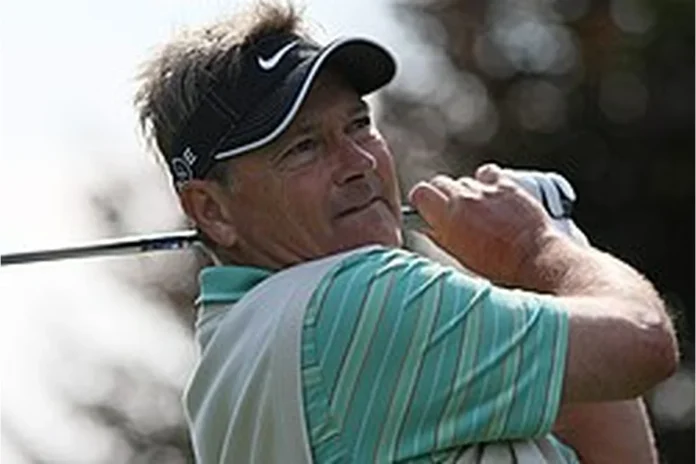
John Cook Bio
John Neuman Cook, born on October 2, 1957, is an American professional golfer who built a long and respected career on the PGA Tour and the PGA Tour Champions. He won eleven times on the PGA Tour and represented the United States on the 1993 Ryder Cup team. He spent 45 weeks ranked among the top ten of the Official World Golf Ranking across 1992 and 1993, and he earned PGA Tour Comeback Player of the Year honors in 1992. Today, Cook continues to play on the PGA Tour Champions and serves as a studio analyst on Golf Channel.
Standing 183 centimeters tall and weighing 79 kilograms, Cook has remained a familiar figure in American professional golf for more than four decades. He turned professional in 1979 after a decorated amateur career, and he has been a consistent presence in the sport ever since. His career reflects steady play, resilience after setbacks, and a willingness to reinvent himself across competitive eras.
Early Life and Background
John Neuman Cook was born on October 2, 1957, in Toledo, Ohio. He is the son of Jim Cook, a PGA Tour official, and grew up in Southern California, where his family relocated during his childhood. The influence of golf was woven into his early years through his father, who worked inside the professional game and exposed his son to the sport from a young age.
Cook attended Miraleste High School in Rancho Palos Verdes, California, and graduated in 1976. In addition to golf, he was a promising but undersized quarterback on the football team through his sophomore year. His high school golf and football coach, Wilbur Lucas, encouraged him to drop football and concentrate on golf, believing that golf offered his best chance at a collegiate scholarship. The advice proved pivotal, and Cook also received early mentorship from former PGA Tour star Ken Venturi.
His high school years set the foundation for what became a championship amateur career. Cook balanced academics and athletics while training in Southern California, and his focus on golf sharpened as his skills developed. That commitment carried him to one of the top college golf programs in the country.
Path to Professional Golf
Cook was offered a scholarship to Ohio State University in Columbus, and both Jack Nicklaus and Tom Weiskopf personally encouraged him to accept it. He joined a talented Ohio State Buckeyes program and became a member of the team that won the 1979 NCAA Championship. That squad also featured future PGA Tour professional Joey Sindelar, underscoring the strength of the program during Cook’s college years.
His amateur résumé grew rapidly after enrolling at Ohio State. Cook won the U.S. Amateur in 1978 at the age of 20, and reached the finals of the U.S. Amateur again in 1979, losing to Mark O’Meara. He captured the Sunnehanna Amateur in 1977 and 1979, the California State Amateur in 1975, and the Ohio Amateur in both 1978 and 1979. He also won back-to-back Northeast Amateur titles at Wannamoisett Country Club in 1978 and 1979, establishing himself as one of the top amateurs in the country.
Following the 1979 U.S. Amateur, Cook made the decision to turn professional. His amateur record, his NCAA team title, and his endorsement from major figures in the game gave him a strong platform for the next step in his career.
John Cook Career
Early Career (1979–1990)
Cook played his first PGA Tour event as a professional in September 1979 at the Anheuser-Busch Golf Classic in Napa County, California, on a sponsor’s exemption. The Associated Press described the debut as the opening of a career that would be watched closely. His first PGA Tour victory came in 1981 at the storm-plagued Bing Crosby National Pro-Am, shortened to 54 holes, where he outlasted Hale Irwin, Bobby Clampett, Ben Crenshaw, and Barney Thompson in a five-way sudden-death playoff that ended on the third extra hole.
Cook added his second PGA Tour win in 1983 at the Canadian Open, defeating Johnny Miller with a birdie putt on the sixth extra hole of a playoff. He continued to log solid seasons through the 1980s, with consistent play and a growing list of contending finishes. By the end of the decade, he was established as a steady Tour presence, although he was still seeking the kind of breakthrough that would lift him into the elite tier of the game.
PGA Tour Breakthrough (1991–2001)
Cook’s career reached its highest level in 1992, when he won three PGA Tour events, including a two-shot victory at the United Airlines Hawaiian Open after closing rounds of 65. That year he moved into the top ten of the Official World Golf Ranking for the first time. He also came heartbreakingly close to winning a major championship at The Open Championship at Muirfield in 1992, leading by two shots late in the final round before missing a short birdie putt on the 17th and bogeying the 18th. Nick Faldo birdied two of the last four holes to overtake him by one stroke, and Cook was named PGA Tour Comeback Player of the Year for the season.
Cook had at least one PGA Tour win each year from 1996 through 1998. His 1996 victory at the FedEx St. Jude Classic was particularly memorable, as opening rounds of 64, 62, and 63 produced a 54-hole total of 189, breaking the lowest 54-hole total in PGA Tour history at the time. He won the tournament and added a brief appearance as himself in a non-speaking role in the 1996 film Tin Cup.
Cook represented the United States on the 1993 Ryder Cup team. He recorded seven top-ten finishes in major championships during his career, and the last of his eleven PGA Tour wins came at the 2001 Reno-Tahoe Open at the age of 43, capping a professional prime that spanned more than two decades.
Champions Tour Era (2007–Present)
Cook became eligible for the Champions Tour in October 2007 and wasted little time making an impact. In only his second Champions Tour start, he won the AT&T Championship in San Antonio nineteen days after his 50th birthday, finishing two strokes ahead of Mark O’Meara and earning $240,000. The victory was his first in more than six years and signaled a smooth transition to senior golf.
He added a second Champions Tour title at the same San Antonio event one year later, closing with a 65 to win by three strokes over Keith Fergus. In 2009, he captured the Administaff Small Business Classic by two strokes over Bob Tway and Jay Haas, and two weeks later won the Charles Schwab Cup Championship by five strokes over Russ Cochran. At the Charles Schwab Cup Championship, he set a tournament scoring record at 22-under-par, highlighted by a 10-under-par 62 in the second round. He successfully defended the title in 2010, winning by two strokes over Michael Allen.
Cook has also contended in senior major championships. He lost a playoff to Bruce Vaughan at the 2008 Senior British Open at Royal Troon, fell in a playoff to Mike Reid at The Tradition in 2009, and was defeated by Fred Couples on the third hole of sudden death at the 2011 Senior Players Championship at Westchester.
Notable Events and Milestones
Cook’s 1992 Open Championship finish at Muirfield remains the signature near-miss of his career, and his 1996 FedEx St. Jude Classic record-setting 54-hole total stands as one of the most remarkable scoring stretches of his era. His selection to the 1993 Ryder Cup team and his Comeback Player of the Year award that same period cement his place among the notable American players of the 1990s.
John Cook Career Wins
John Cook recorded 11 PGA Tour wins, 10 Champions Tour wins, 2 Latin American wins, and 5 other professional victories, for a total of 28 professional wins. His victories span the early 1980s through his Champions Tour career, reflecting both longevity and consistent competitiveness across formats and tours.
PGA Tour Highlights
Cook’s first PGA Tour win came at the 1981 Bing Crosby National Pro-Am, while his most recent PGA Tour victory was the 2001 Reno-Tahoe Open at the age of 43. He also won the 1983 Canadian Open and three events in 1992, including the United Airlines Hawaiian Open, a season that carried him into the top ten of the Official World Golf Ranking.
Champions Tour and Other Wins
Cook’s Champions Tour victories include the AT&T Championship in 2007 and 2008, the 2009 Administaff Small Business Classic, and back-to-back Charles Schwab Cup Championships in 2009 and 2010. He has also won on the Latin American circuit and added several other professional titles, contributing to a career total of 28 professional wins.
John Cook Family
Family Background and Racing Lineage
Cook is the son of Jim Cook, a PGA Tour official who worked inside the professional game throughout his son’s formative years. This connection gave Cook an early understanding of tournament golf and helped shape his path into the sport. He has also worked with his sister, Cathy Cook, a former standout player at Ohio State, on the design of a golf course in Ashville, Ohio, formerly known as Cooks Creek Golf Club.
Personal Life
Cook is married to his wife, Jan, and the couple has three children. He currently resides in Windermere, Florida. His son, Jason, played golf for Pepperdine University in Malibu, California, continuing the family’s strong ties to the game. Cook was inducted into the Ohio State Varsity O Hall of Fame in 1986, and he remains involved in course design and golf media alongside his Champions Tour play.
2025 Season Performance
John Cook continues to compete on the PGA Tour Champions in 2025, drawing on a Champions Tour résumé that already includes ten career titles. His experience and course-management skills have made him a consistent contender on the senior circuit, and he remains an active presence in the field. With Charles Schwab Cup events scattered across the calendar, he has opportunities to add to his total in a season where he has continued to play a full Champions Tour schedule.
Beyond his playing schedule, Cook serves as a studio analyst on Golf Channel, balancing broadcasting commitments with tournament play. That dual role has shaped his 2025 calendar, giving him exposure to viewers while still pursuing competitive rounds. His partnership with the Golf Channel team has remained a steady off-course priority.
Heading into the closing stretch of 2025, Cook’s outlook reflects his long career pattern of steady play, occasional contention, and selective scheduling. His familiarity with senior-event venues and his proven closing ability keep him in position to factor into late-season events. Whether or not he adds another title, his presence on the Champions Tour and in the broadcast booth reinforces his standing in American professional golf.