
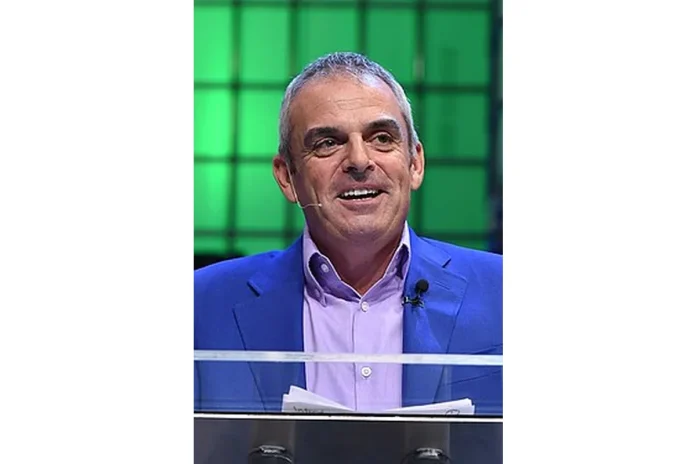
Paul McGinley Bio
Paul Noel McGinley (born 16 December 1966) is an Irish professional golfer who became one of the most respected figures in European team golf. A native of Dublin, County Dublin, Ireland, he joined the European Tour in 1992 and built a steady career highlighted by four individual tour titles and significant contributions to Europe’s Ryder Cup efforts. He is widely remembered for holing a ten-foot putt on the 18th hole against Jim Furyk at the 2002 Ryder Cup, a stroke that clinched the cup for Europe, and for captaining Europe to victory in the 2014 Ryder Cup, becoming the first Irishman to hold that role.
Standing 170 centimetres tall and playing at a competitive weight of 73 kilograms, McGinley was known for his composure under pressure and his deep understanding of team dynamics. He later broadened his career into leadership, broadcasting, and business education, while continuing to live in Sunningdale, Berkshire, England, with his family.
Early Life and Background
Paul Noel McGinley was born in Dublin on 16 December 1966 and raised in the suburb of Rathfarnham. He attended St Mary’s BNS for his primary education before progressing to Coláiste Éanna, the same secondary school later attended by fellow Irish golfer Pádraig Harrington. McGinley came from a sport-minded family: his father Mick, originally from Dunfanaghy, played Gaelic football for Donegal, while his mother Julia hails from Rathmullan. That dual heritage gave McGinley an early grounding in both Gaelic games and golf, and he has often pointed to his Gaelic football background as a key influence on his team-oriented approach to the sport.
After leaving school, McGinley studied at the Dublin Institute of Technology before later moving to the United States International University in San Diego on a golf scholarship, where he earned a master’s degree in marketing. A serious knee injury disrupted his early sporting ambitions and ultimately pushed him to commit full-time to golf. The combination of academic study abroad and his exposure to American college golf helped shape the disciplined, analytical outlook that would later define his professional career.
Path to Golf
McGinley’s competitive path began at the amateur level, where he claimed the 1989 Irish Amateur Close Championship and added the 1991 South of Ireland Championship at Lahinch Golf Club. His form that year earned him a place on the 1991 Britain and Ireland Walker Cup team at Portmarnock Golf Club, just north of Dublin, where a strong American side that included Phil Mickelson won 14–10. Those amateur results marked him out as one of Ireland’s most promising young players heading into the professional ranks.
His time at the United States International University, where he met his future wife Allison Shapcott, sharpened his game in a competitive American college environment. After completing his studies and committing fully to golf, McGinley turned professional in 1991 and joined the European Tour the following year, aged 25, ready to test himself against the leading players in Europe.
Paul McGinley Career
Early Career (1992–1995)
McGinley began his European Tour career in 1992 and quickly showed that he could compete at the top level of the game. In 1993, he reached a playoff at the French Open, where he was beaten by Costantino Rocca, and in 1994 he again finished as runner-up at the Open Mediterrania, this time losing to Spain’s José María Olazábal. Those near-misses against established stars demonstrated his ability to contend, even as a young player still finding his feet on tour.
During these formative seasons, McGinley built a reputation as a calm, steady competitor who rarely made unforced errors. His progress on the tour laid the groundwork for his first breakthrough win and introduced him to many of the partners and rivals who would later share Ryder Cup team rooms with him.
European Tour Breakthrough (1996–2005)
McGinley captured his first European Tour title at the 1996 Hohe Brücke Open, a victory that confirmed his arrival as a tour winner. In 1997 he added the World Cup of Golf for Ireland, partnering Pádraig Harrington, with whom he had attended Coláiste Éanna, in a team success that highlighted his willingness to play for a cause larger than his own scorecard. By the early 2000s, McGinley was regularly contending in top events, and in 2001 he won the rain-shortened Celtic Manor Resort Wales Open on the fifth extra hole of a playoff, joking afterwards that the weather had been sent by the same higher power that helped Goran Ivanišević at Wimbledon.
The 2005 season represented the high point of McGinley’s individual career. He finished third on the European Tour Order of Merit, made the cut in 21 of 23 events, and recorded three runner-up finishes before sealing his fourth and final European Tour title at the season-ending Volvo Masters at Valderrama Golf Club in Spain. Starting the final round four shots off the lead, he shot a 67 to win by two strokes over Sergio García in what he later described as the biggest individual tournament victory of his career. His best major championship finish was a tie for sixth at the 2004 PGA Championship, and he spent periods inside the top 20 of the Official World Golf Ranking.
Ryder Cup Era (2002–2006)
McGinley made three consecutive Ryder Cup appearances for Europe in 2002, 2004, and 2006, contributing to a winning European side on each occasion. His defining moment came at the 2002 Ryder Cup at The Belfry, where he holed a ten-foot putt on the 18th green against Jim Furyk to secure the half point Europe needed to reclaim the cup, with the team eventually winning 15½ to 12½. The image of that putt dropping has remained one of the iconic photographs of the modern Ryder Cup.
At the 2006 Ryder Cup at The K Club in Ireland, McGinley again showed his values as a teammate and competitor. Fearing that a streaker running across the 18th green may have put off his opponent J. J. Henry, McGinley stepped forward and offered his hand to concede a 20-foot putt and halve the match, a gesture that drew widespread praise. Across his three playing appearances, McGinley established himself as a player coaches and captains could trust in the most tense team environments.
Vice-Captain and Captain Years (2010–2014)
After stepping away from playing in the biennial contest, McGinley served as a European vice-captain under Colin Montgomerie in 2010 and under José María Olazábal in 2012, learning the leadership craft of the Ryder Cup from the inside. On 15 January 2013, he was officially named European captain for the 2014 Ryder Cup, a role that also made him the first Irishman ever to captain Europe’s Ryder Cup side.
His captaincy began amid headlines about a public feud between Sergio García and Tiger Woods. McGinley handled the situation calmly, publicly backing García after the Spaniard apologised for a controversial remark, and García ultimately qualified for the European team. At Gleneagles in Scotland in 2014, McGinley’s European team defeated the American side captained by Tom Watson by a score of 16½ to 11½, delivering one of the most one-sided Ryder Cup results of the modern era and cementing McGinley’s reputation as an elite team leader.
Driving Style and Strengths
McGinley was never the longest hitter in the field, but he built his career on accuracy off the tee, a reliable long-iron game, and exceptional composure in pressure situations. His background in Gaelic football shaped his tactical understanding of team match play, and his experience of competitive amateur and college golf in the United States gave him a strong strategic foundation. These qualities made him a trusted partner in team events and a captain whose pairings and session planning were respected by Europe’s leading players.
Notable Events and Milestones
Beyond his 2002 Ryder Cup-winning putt, McGinley’s career highlights include his 1997 World Cup of Golf win with Pádraig Harrington, his 2005 Volvo Masters triumph over Sergio García, and his 2014 Ryder Cup captaincy, which delivered Europe a 16½ to 11½ victory over the United States at Gleneagles. He was also a three-time Ryder Cup player (2002, 2004, 2006) and a two-time vice-captain (2010, 2012) before taking the top job, completing a uniquely comprehensive journey through the modern Ryder Cup.
Paul McGinley Career Wins
Across his professional career, McGinley amassed four individual victories on the European Tour, a World Cup of Golf title representing Ireland, and several additional team and regional successes, giving him a well-rounded record at the highest level of the game. His wins came across a long span of seasons, reflecting both consistency and an ability to peak when it mattered most.
European Tour Highlights
McGinley’s four European Tour titles came at the 1996 Hohe Brücke Open, the 2001 Celtic Manor Resort Wales Open, and two further victories later in the decade, including the 2005 Volvo Masters at Valderrama, his fourth and final tour win. His playoff record on the tour stood at 1 win and 3 losses, including narrow defeats to Costantino Rocca at the 1993 French Open, to José María Olazábal at the 1994 Open Mediterrania, and a sudden-death loss to Paul Casey at the 2005 TCL Classic, where Casey holed a 25-foot birdie putt on the second extra hole.
His most recent individual triumph on tour, the 2005 Volvo Masters, was also his most prestigious, a season-ending event won by two strokes over Sergio García after a closing 67. McGinley also finished runner-up at the 2008 KLM Open behind Darren Clarke, shot a final-round 64, and continued to be a fixture in strong European Tour fields well into the late 2000s.
Other Wins and Performances
Outside the individual European Tour, McGinley partnered Pádraig Harrington to win the 1997 World Cup of Golf for Ireland, a team success that highlighted his ability to perform in a national jersey. He also represented Great Britain and Ireland as an amateur in the 1991 Walker Cup at Portmarnock, and was a longstanding member of the European Ryder Cup team, making three playing appearances and serving as a vice-captain before his 2014 captaincy.
Paul McGinley Family
Family Background and Racing Lineage
Although best known as a golfer, McGinley comes from a strong sporting family. His father Mick, originally from Dunfanaghy, played Gaelic football for Donegal, while his mother Julia is from Rathmullan. McGinley has frequently credited his Gaelic football upbringing with shaping his passion for team competition, an influence he believes played a direct role in his appointment as Europe’s Ryder Cup captain in 2014.
Personal Life
McGinley met his wife, Allison Shapcott, a former English women’s golfer who played on the Ladies European Tour, while both were studying at the United States International University in San Diego. The couple married in 1996 and have three children. McGinley and his family reside in Sunningdale, Berkshire, England, and outside of tournament golf he serves as an executive fellow of the Leadership Institute at the London Business School, reflecting his continued interest in leadership development and team performance.
2025 Season Performance
As 2025 unfolds, McGinley continues to balance selective playing commitments with his wider roles in broadcasting, leadership education, and corporate golf. He remains a familiar presence at major events and on television coverage, particularly around Ryder Cup years and team competitions, where his experience as a player, vice-captain, and winning captain carries significant weight. While his competitive schedule on the European Tour has wound down from its peak, he still engages in corporate outings, exhibition events, and special tournaments, keeping his competitive instincts sharp.
He also continues his executive fellowship at the London Business School, where he contributes to leadership and high-performance team programmes, drawing on lessons from his Ryder Cup captaincy. In 2025, McGinley is widely viewed as a credible candidate for future Ryder Cup leadership roles and remains a respected voice in European team-room discussions, as well as a mentor figure for emerging Irish and European Tour players.
Looking ahead, McGinley’s 2025 focus combines selective competitive appearances with his growing portfolio in media, mentorship, and leadership education, ensuring that his influence on the game extends well beyond his own scorecard. His legacy as a clutch Ryder Cup performer and a pioneering Irish captain continues to shape how the European team prepares for the biennial contest.