

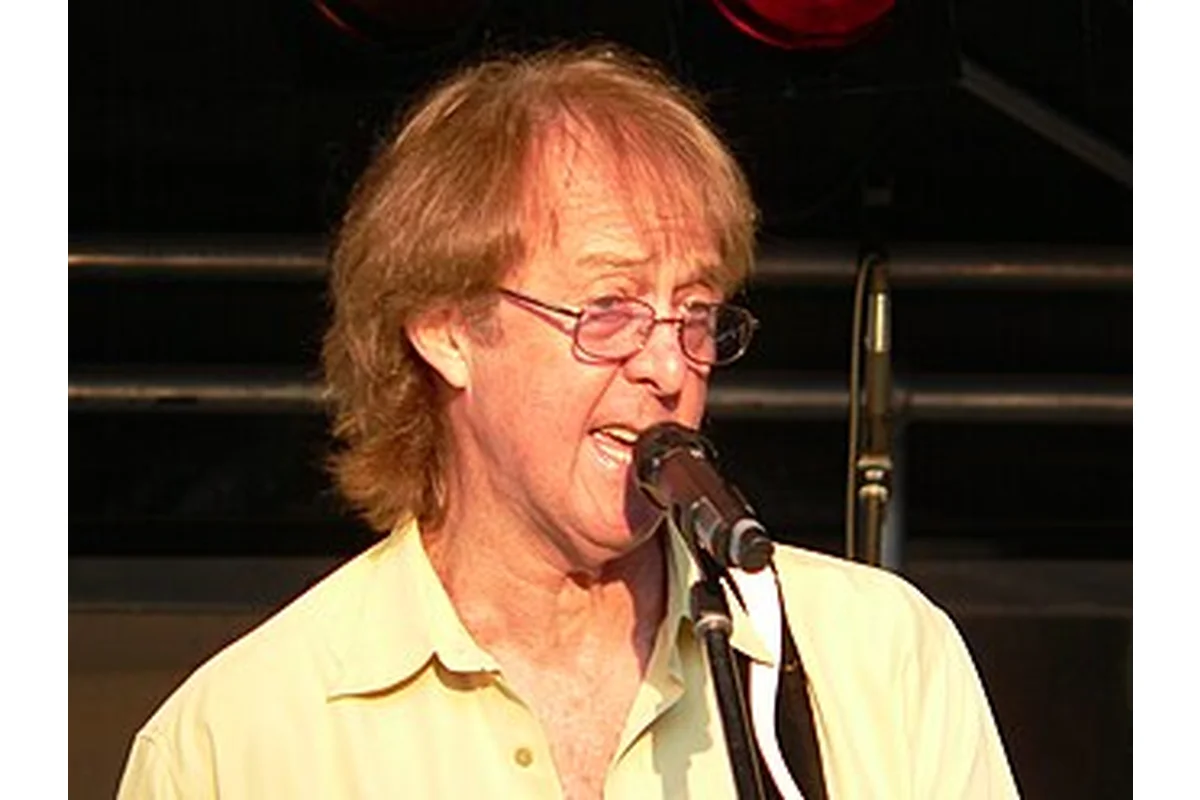
Spencer Davis Bio
Spencer David Nelson Davies (17 July 1939 – 19 October 2020), known professionally as Spencer Davis, was a Welsh musician, guitarist, singer, and harmonica player. He founded the Spencer Davis Group, the British rock band responsible for a string of international hits in the 1960s, including “Keep On Running,” “Somebody Help Me,” “Gimme Some Lovin’,” and “I’m a Man.” After his performing career, Davis built a second reputation as a successful A&R executive at Island Records, where he helped shape the early careers of major recording artists.
Born and raised in Swansea, South-West Wales, Davis combined a working-class upbringing with a serious academic streak, later studying German at the University of Birmingham. He spent the final decades of his life in California, continuing to perform and tour until shortly before his death from pneumonia in Los Angeles at the age of 81.
Early Life and Background
Spencer Davis was born in Swansea on 17 July 1939. His father served as a paratrooper during World War II, and while he was away, Davis’s uncle Herman became an important musical influence, teaching the young boy to play the harmonica at the age of six. Growing up in wartime Swansea, Davis lived through The Blitz and later recalled the bombed city centre as his childhood playground.
Davis began learning both harmonica and accordion at the age of six and attended Dynevor School in Swansea, where he became proficient in several languages. After moving to London at 16 to work as a clerical officer at the Post Office Savings Bank in Hammersmith and later for HM Customs and Excise, he returned to his old school to study A-levels in languages, becoming head boy in 1959. In 1960, he relocated to Birmingham to read German at the University of Birmingham, where his linguistic ability earned him the nickname “Professor” in music circles.
Path to Music
Davis’s early musical influences were skiffle, jazz, and blues, with artists such as Big Bill Broonzy, Lead Belly, Buddy Holly, Davey Graham, John Martyn, Alexis Korner, and Long John Baldry shaping his taste. By the age of 16, he had become hooked on guitar and on the American rhythm and blues making its way across the Atlantic, attending as many local gigs as he could find in South Wales to hear the music in person.
After moving to Birmingham as a university student, Davis performed regularly on stage after his teaching day and formed a personal and musical relationship with Christine Perfect, who would later join Fleetwood Mac. His immersion in the Birmingham club scene brought him into contact with a young group of musicians that would soon change the course of his life.
Spencer Davis Career
The Spencer Davis Group (1963–1969)
In 1963, Davis attended a performance by the Muff Wood Jazz band at the Golden Eagle pub in Birmingham, which featured brothers Muff and Steve Winwood alongside drummer Pete York. Davis persuaded them to join him in a new project, the Rhythm and Blues Quartet, with Davis on guitar, vocals, and harmonica, Steve Winwood on guitar, organ, and vocals, Muff Winwood on bass, and Pete York on drums. The group took the name the Spencer Davis Group because Davis was the only member willing to do press interviews, allowing the others to sleep in.
The band’s live reputation attracted the attention of Island Records founder Chris Blackwell, who signed the group and became their manager. Between 1966 and 1967, the Spencer Davis Group notched back-to-back UK No. 1 singles with “Keep On Running” and “Somebody Help Me,” followed by the era-defining “Gimme Some Lovin’” and “I’m a Man,” all sung by Steve Winwood. The group continued for two more albums after Winwood’s departure in April 1967 to form Traffic, before splitting up in 1969.
Solo Career and Island Records (1971–1979)
After the Spencer Davis Group disbanded, Davis moved to California and recorded the acoustic album It’s Been So Long with Peter Jameson for Mediarts in mid-1971. He followed it with a solo album, Mousetrap, for United Artists, produced by and featuring Sneaky Pete Kleinow. Neither album sold well, prompting Davis to return to the UK, form a new version of the Spencer Davis Group, and sign with Vertigo Records.
By the mid-1970s, Davis had taken on a role as an executive at Island Records, where he worked as a promoter and A&R representative. In that capacity, he worked with Bob Marley, Robert Palmer, and Eddie and the Hot Rods, and supported the solo career of former Spencer Davis Group vocalist Steve Winwood. From the mid-1970s onward, he settled in Avalon on Catalina Island, a small community off the coast of Southern California.
World Classic Rockers (1993–2020)
In 1993, Davis formed the supergroup known as the Class Rock All-Stars. He departed the group in 1995 to establish World Classic Rockers alongside former Eagles bassist Randy Meisner, ex-Toto singer Bobby Kimball, and former Moody Blues and Wings guitarist Denny Laine. World Classic Rockers allowed Davis to remain active on the touring circuit for more than two decades.
Davis also took part in various revival line-ups of the Spencer Davis Group that toured under his direction in later years, keeping his 1960s catalogue in front of new audiences. In the summer of 2012, the Catalina Island Museum hosted an exhibition titled “Gimme Some Lovin’: The Spencer Davis Group,” complemented by a symposium on the British Invasion at which Davis appeared on a panel alongside Micky Dolenz of the Monkees.
Notable Events and Milestones
Davis’s tenure as a television-worthy rock frontman is defined by the run of four consecutive UK and international hits produced with Steve Winwood between 1966 and 1967. His later role in helping launch Steve Winwood’s solo career through Island Records gave him a rare distinction as both performer and executive behind two distinct eras of British popular music.
Spencer Davis Family
Personal Life
Davis married and had three children, before divorcing in the late 1970s. He retained a lifelong affinity for Germany, having studied the language formally and played in clubs in Berlin early in his career, and he watched both the construction of the Berlin Wall in 1961 and its fall in 1989. He was a supporter and honorary member of the Welsh nationalist party Plaid Cymru, and his mother continued to live in the West Cross area of Swansea until her death.
Davis died from pneumonia in Los Angeles on 19 October 2020, at the age of 81.