

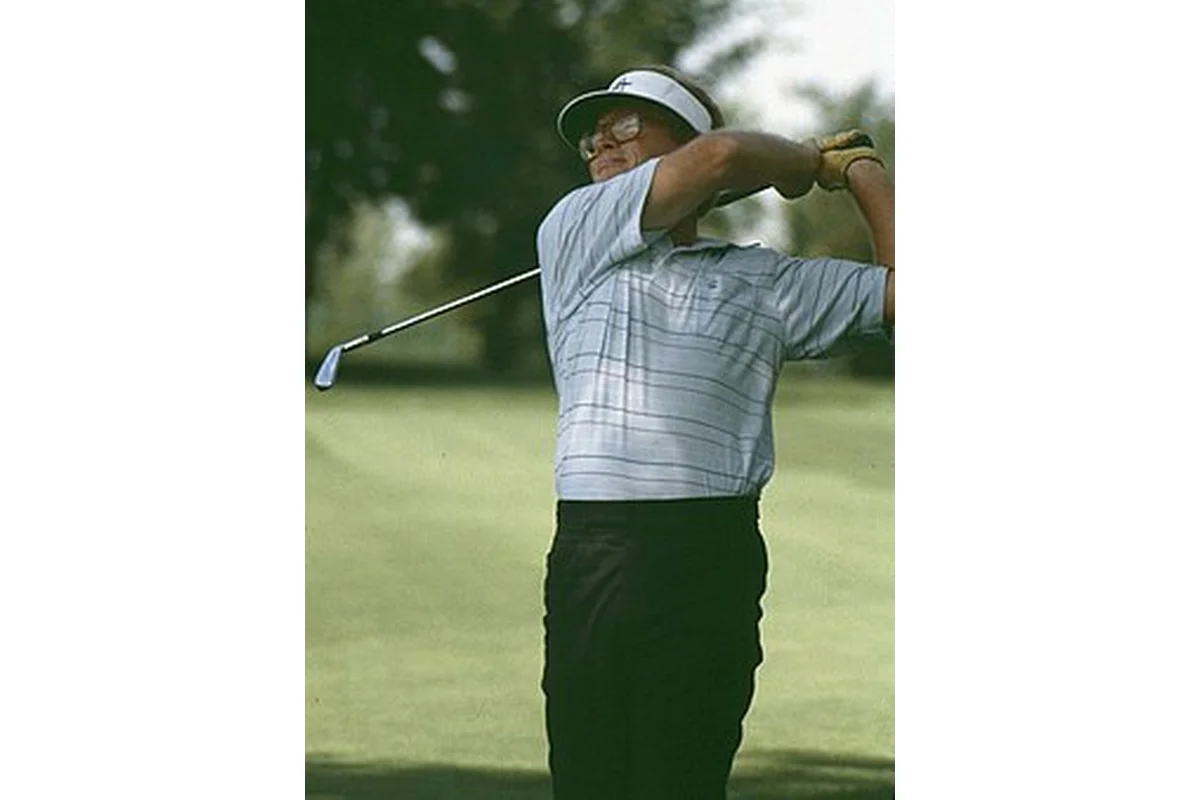
Tom Kite Bio
Thomas Oliver Kite Jr. (born December 9, 1949) is an American professional golfer and golf course architect. He is best known for winning the U.S. Open in 1992 and for ranking among the top players in the world during the late 1980s and early 1990s, spending 175 weeks inside the top-10 of the Official World Golf Ranking between 1989 and 1994. A longtime resident of Austin, Texas, Kite turned professional in 1972 and built one of the most consistent careers of his generation.
Over nearly five decades on the game’s biggest stages, Kite collected 19 PGA Tour victories, 3 European Tour wins, and 10 Champions Tour titles, including a senior major. He represented the United States in seven Ryder Cups and captained the 1997 squad. Inducted into the World Golf Hall of Fame in 2004, Kite is remembered for his disciplined short-iron play, his pioneering use of a sports psychologist, and his status as the first player in PGA Tour history to reach several career-earnings milestones.
Early Life and Background
Thomas Oliver Kite Jr. was born on December 9, 1949, in McKinney, Texas, and grew up in the Lone Star State. He first picked up a golf club at age six and quickly showed a gift for the game, winning his first tournament at age 11. These early experiences shaped a calm, methodical approach that would later become one of his trademarks on the course.
Kite attended the University of Texas on a golf scholarship, where he was coached by the legendary Harvey Penick. He won nine collegiate tournaments during his four years in Austin, earned first-team All-American honors in 1972, and shared the individual NCAA championship that year with teammate Ben Crenshaw. He also helped the Longhorns capture NCAA Team Championships in 1971 and 1972, along with Southwest Conference titles in 1970 and 1972, forming the foundation of a professional career that would soon follow.
Path to Professional Golf
After his standout amateur career at Texas, Kite made the decision to turn professional in 1972. The transition was relatively smooth thanks to his polished fundamentals and the work ethic instilled by Penick. Within a few years, Kite had established himself as a consistent money winner on the PGA Tour, steadily climbing the rankings through the mid-1970s.
Kite’s rise was also shaped by his willingness to embrace new ideas. He was the first player to carry three wedges in his bag, one of the first professionals to work with a sports psychologist, and an early advocate of physical fitness as a means of improving performance. He later underwent laser eye surgery to address partial blindness, a move he hoped would sharpen his game in the later stages of his career. These forward-thinking choices helped him remain competitive for decades.
Tom Kite Career
Early Career (1972–1980)
Kite’s early years on the PGA Tour were marked by steady progress rather than instant stardom. He began posting top finishes in the mid-1970s and gradually built a reputation as one of the circuit’s most reliable ball strikers. By the end of the decade, he was a fixture in the upper tier of Tour earnings.
In 1979, Kite received the Bob Jones Award, the highest honor given by the United States Golf Association, recognizing his sportsmanship and respect for the game. That same year he made the first of seven Ryder Cup appearances, launching what would become one of the most distinguished Ryder Cup careers in American history.
PGA Tour Breakthrough (1981–1989)
Kite’s prime arrived in the 1980s, when he became one of the dominant players on the PGA Tour. He won the Tour’s money list in both 1981 and 1989, capturing the Byron Nelson Award and the Vardon Trophy in 1981 and 1982 for the lowest scoring average. In 1989, he added PGA Player of the Year and GWAA Male Player of the Year honors, capping one of the most impressive seasons of his career.
During this stretch, Kite also became the first player in Tour history to reach $6 million, $7 million, $8 million, and $9 million in career earnings, milestones that reflected both his longevity and his consistency. He appeared in six more Ryder Cups between 1981 and 1989, cementing his role as a cornerstone of American teams throughout the decade.
Major Championship Triumph (1990–1993)
The pinnacle of Kite’s career came in 1992, when he captured the U.S. Open at Pebble Beach Golf Links, winning the national championship of his country after years of near misses in the majors. The victory was the signature achievement of a long pursuit and elevated him to the highest reaches of the game.
Kite’s 175 weeks inside the top-10 of the Official World Golf Ranking between 1989 and 1994 underscored just how strongly he was playing during this period. He also made his seventh Ryder Cup appearance in 1993, before serving as the United States captain for the 1997 matches at Valderrama, a leadership role that reflected the respect he had earned from peers and officials alike.
Champions Tour Era (1995–2020)
As Kite moved into his 50s, he transitioned to the Champions Tour, where he continued to compete at a high level. He claimed 10 Champions Tour victories, including one senior major championship at The Countrywide Tradition, and remained a presence in major events well into the 2010s.
At the 2005 Booz Allen Classic, Kite led by one shot heading into the final round at age 55, narrowly missing a chance to break Sam Snead’s record as the oldest PGA Tour winner. In 2012, he opened the U.S. Senior Open with a front-nine 28, the lowest nine-hole score ever recorded in any USGA championship, a remarkable highlight of his late-career play. He continued competing on the Champions Tour through 2020, retiring after nearly five decades as a professional.
Driving Style and Strengths
Kite was renowned for his precision with the short irons, a skill broadcaster Johnny Miller once called the best the game had ever seen. His disciplined, strategic approach to course management, combined with innovative preparation techniques, made him one of the most respected tacticians of his era.
Notable Events and Milestones
Beyond his 1992 U.S. Open win, Kite holds the unique distinction of making the cut in the first four U.S. Opens held at Pebble Beach in 1972, 1982, 1992, and 2000. He also shares the record with Gene Littler for playing in the most Masters Tournaments without a victory, a testament to his longevity at Augusta National.
Tom Kite Career Wins
Across his professional career, Tom Kite accumulated 19 PGA Tour victories, 3 European Tour wins, 10 Champions Tour titles, and 1 New Zealand Golf Circuit title. His win total reflects remarkable consistency at the highest levels of the sport across multiple decades.
PGA Tour Highlights
Kite’s 19 PGA Tour wins spanned a long stretch of his career, highlighted by his 1992 U.S. Open triumph at Pebble Beach. He was the Tour’s leading money-winner in 1981 and 1989, and his playoff record of 6–4 demonstrates his ability to perform under pressure in the biggest moments.
Champions Tour and Other Wins
On the Champions Tour, Kite posted a 3–2 playoff record while securing 10 victories, including his senior major win at The Countrywide Tradition. He also added wins on the European Tour and the New Zealand Golf Circuit, rounding out a career that touched several major professional circuits around the world.
Tom Kite Family
Family Background and Racing Lineage
Tom Kite was born in McKinney, Texas, and raised in the state where he would spend much of his life. Publicly available details about his immediate family remain limited, and no verified information about parents or siblings is provided in current sources.
Personal Life
Kite has long made his home in Austin, Texas, and has balanced his playing career with work as a golf course architect. He turned professional in 1972 and remained active in the sport for nearly five decades before retiring from the Champions Tour in 2020.
2025 Season Outlook
Tom Kite retired from competitive golf in 2020, so he is not an active player on any major Tour in 2025. However, his legacy continues through his work as a golf course architect and his ongoing involvement in the game’s broader community. His Hall of Fame resume ensures his place among the most influential American golfers of the modern era.
As the World Golf Hall of Fame celebrates the history of the sport, Kite’s record of 19 PGA Tour wins, a U.S. Open title, and a senior major remains a benchmark for consistency and longevity. The 2025 calendar offers opportunities for appearances at ceremonial events and design projects, where his expertise and experience continue to shape the direction of the game.