
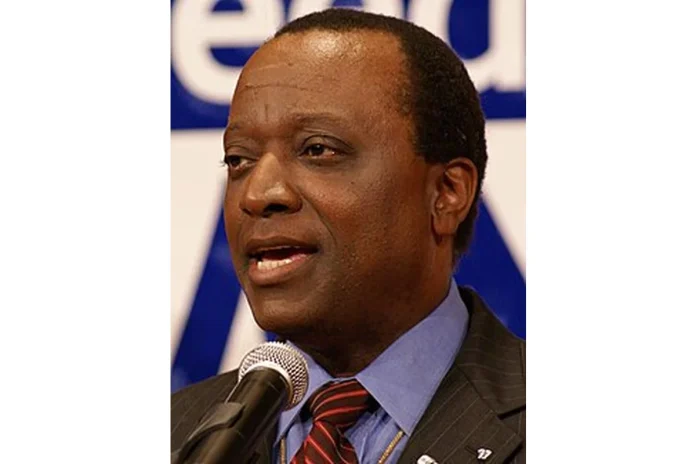
Alan Lee Keyes Bio
Alan Lee Keyes (born August 7, 1950) is an American politician, political scientist, diplomat, and perennial candidate whose career has spanned diplomacy, government service, broadcasting, and multiple bids for federal office. A Harvard-trained scholar with a doctorate in government, he served in senior roles at the United States Department of State under President Ronald Reagan before becoming a long-time voice on the American political right. He has also worked as a radio and television commentator and founded several advocacy organizations.
Over the course of his public life, Keyes has run three times for the Republican presidential nomination, twice for the United States Senate in Maryland, and once for the Senate in Illinois. He has been affiliated with the Republican Party, the Constitution Party, and America’s Independent Party. Though he has never won a general election, he has remained an influential commentator within conservative politics in the United States.
Early Life and Background
Alan Lee Keyes was born at the St. Albans Naval Hospital in the St. Albans neighborhood of Queens, New York City. He is the fifth child of Gerthina (Quick) Keyes and Allison L. Keyes, a United States Army sergeant and teacher. Because of his father’s military assignments, the Keyes family moved often during his childhood. Keyes has lived in Georgia, Maryland, New Jersey, New York, Texas, and Virginia, and he spent time overseas in Italy.
Keyes grew up in a household shaped by military service, and he and his family were strong supporters of the Vietnam War, a conflict in which his father served two tours. Keyes and his father held a traditional Catholic faith that would influence his later political views. He attended Cornell University, where he studied political philosophy under the American philosopher Allan Bloom. Keyes has said that Bloom was the professor who most shaped his undergraduate thinking, and he later cited opposition to Vietnam War protesters on campus as a formative experience.
After a year of study abroad in Paris connected with Bloom’s program, Keyes transferred his studies to Harvard University. He lived in Winthrop House and earned a Bachelor of Arts degree in government in 1972, graduating magna cum laude. He went on to complete a Ph.D. in government at Harvard in 1979, writing his dissertation on Alexander Hamilton and constitutional theory under Harvey C. Mansfield. During his first year of graduate school, his roommate was William Kristol, who would later manage one of his Senate campaigns.
Path to Politics in the United States
While finishing his doctoral work, Keyes joined the United States Department of State in 1979 as a protégé of Jeane Kirkpatrick, the United States Ambassador to the United Nations. He was first assigned to the consulate in Mumbai, India, and the following year was sent to serve at the American embassy in Zimbabwe. These early postings gave him direct experience in foreign service and introduced him to senior Reagan administration officials.
In 1983, President Ronald Reagan appointed Keyes as Ambassador to the United Nations Economic and Social Council. Two years later, in 1985, he was named Assistant Secretary of State for International Organization Affairs, a position he held until November 1987. He also served on the staff of the National Security Council. As a senior State Department official, he helped negotiate the language of the Mexico City Policy and represented the United States at major international conferences.
Alan Lee Keyes Career
Early Career (1979–1987)
Keyes’s early professional career centered on diplomacy. He joined the United States Foreign Service in 1979 under the mentorship of Jeane Kirkpatrick, an experience that connected him with the emerging policy network of the Reagan administration. His assignments in Mumbai and Zimbabwe gave him familiarity with both South Asian and African affairs.
By 1983, he had risen to become Ambassador to the United Nations Economic and Social Council, and in 1985 he was elevated to Assistant Secretary of State for International Organization Affairs. In these roles, he was a vocal defender of Reagan-era foreign policy positions, including opposition to economic sanctions on South Africa and strong support for Israel at the United Nations. His outspoken style drew media attention, with Newsday once describing his diplomatic style in colorful terms.
Diplomatic Breakthrough (1983–1987)
Keyes’s most prominent period of government service came during the Reagan administration, when he served as a senior diplomat at the United Nations and the State Department. As a member of the United States delegation to the 1984 World Population Conference in Mexico City, he was selected by Reagan as deputy chairman and helped negotiate the Mexico City Policy. He also represented the United States at the 1985 Women’s Conference in Nairobi.
At the United Nations, Keyes opposed an Arab-backed resolution calling for investigation of Israeli settlements, and the measure passed overwhelmingly, with Israel and the United States voting against it. He also defended Reagan administration policy on South Africa, arguing that sweeping economic sanctions could cost millions of Black South Africans their jobs. These efforts established his reputation as a combative conservative voice on international affairs.
Post-Government Career (1987–Present)
After leaving government service in 1987, Keyes became a resident scholar at the American Enterprise Institute, where his research focused on diplomacy, international relations, and self-government. He went on to serve as president of Citizens Against Government Waste from 1989 to 1991 and briefly served as Interim President of Alabama A&M University in Huntsville, Alabama, in 1991.
Beginning in 1994, Keyes hosted a syndicated radio call-in program, The Alan Keyes Show: America’s Wake-Up Call, for Radio America, which later was simulcast on National Empowerment Television. In 2002, he hosted a live television commentary program, Alan Keyes Is Making Sense, on the MSNBC cable news network, although the show was canceled after several months due to poor ratings. He has also written as a columnist for World Net Daily and helped launch online advocacy organizations such as Renew America and The Declaration Foundation.
Notable Events and Milestones
Keyes has run for the Republican presidential nomination three times, in 1996, 2000, and 2008, and twice for the United States Senate from Maryland, in 1988 and 1992. He was the Republican nominee for United States Senate in Illinois in 2004, when he was drafted to run against Barack Obama after the original nominee withdrew. Keyes also sought the Constitution Party’s presidential nomination in 2008 and ran as the candidate of America’s Independent Party in the 2008 general election.
Alan Lee Keyes Senate and Presidential Bids
Across his career, Alan Lee Keyes has competed in five major federal elections without winning a general election contest. He first ran for the United States Senate in Maryland in 1988, then again in 1992, and later for the same seat in Illinois in 2004. He campaigned for the Republican presidential nomination in 1996, 2000, and 2008, and also sought the Constitution Party’s presidential nomination in 2008.
United States Senate Highlights
In 1988, Keyes was drafted by the Maryland Republican Party to run for the United States Senate and received 38 percent of the vote against the incumbent Democrat Paul Sarbanes. Four years later, in 1992, Keyes won the Republican primary in a field of thirteen candidates before receiving 29 percent of the general election vote against Barbara Mikulski. The 1992 campaign drew controversy when it was reported that Keyes had taken a salary of roughly eight thousand dollars per month from his campaign fund.
In 2004, the Illinois Republican Party drafted Keyes to run for the United States Senate against Democratic state senator Barack Obama after the original nominee, Jack Ryan, withdrew. Keyes received 27 percent of the vote and won a small number of southern Illinois counties, while Obama won the seat. Keyes declined to congratulate Obama after the election, citing differences over moral issues.
Presidential Campaign Highlights
Keyes first sought the Republican presidential nomination in 1996, when he frequently challenged other candidates on abortion in televised debates. He sought the nomination again in 2000, finishing third in the Iowa caucuses with 14 percent of the vote and placing second in eight primaries, with his best showing in Utah. In 2008, Keyes entered the Republican race late, campaigned mainly in Texas, and later sought the Constitution Party’s nomination before running as the America’s Independent Party candidate in the 2008 general election, in which he received 47,694 votes nationally.
Alan Lee Keyes Family
Family Background and Heritage
Alan Lee Keyes was raised in a military family as the fifth child of Gerthina (Quick) and Allison L. Keyes, an Army sergeant and teacher. Because of his father’s military service, the family relocated frequently during his childhood, with stops across the United States and abroad. Keyes has described his upbringing, his father’s service in Vietnam, and his Catholic faith as central influences on his political views.
Personal Life
Keyes has been married to Jocelyn Marcel Keyes, who is of Indian descent and from Calcutta, since 1979. The couple has three children: Francis, Maya, and Andrew. Keyes is a traditional Catholic and a third-degree Knight of Columbus. He was also a close friend of the Brazilian philosopher Olavo de Carvalho. In 2005, his daughter Maya Marcel-Keyes publicly shared her personal life and her disagreements with her father, an episode that drew significant media attention.