
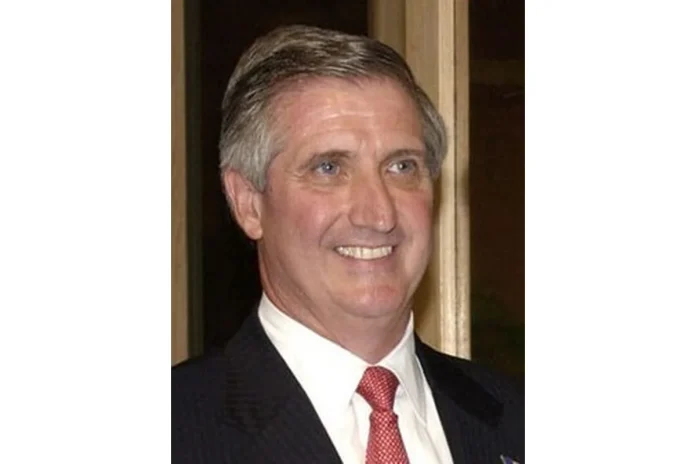
Andrew Card Bio
Andrew Hill Card Jr. (born May 10, 1947) is an American politician and academic administrator who became one of the most recognizable government officials of his generation. He served as White House Chief of Staff to President George W. Bush from 2001 to 2006, after a long career in federal and state government that included senior roles in the Reagan and George H. W. Bush administrations. Card is a member of the Republican Party and has also worked in the private sector and in higher education, building a varied record in public service, industry, and academia.
Beyond his federal service, Card led the American Automobile Manufacturers Association and held a senior role at General Motors. He later served as acting dean of the Bush School of Government and Public Service at Texas A&M University and as president of Franklin Pierce University in Rindge, New Hampshire. He currently serves as chief executive officer of the George & Barbara Bush Foundation.
Early Life and Background
Andrew Hill Card Jr. was born on May 10, 1947, the son of Andrew Hill Card Sr. and Joyce Whitaker. He grew up in Holbrook, Massachusetts, a small town south of Boston, and graduated from Holbrook High School in 1965. As a young man, Card was active in the Boy Scouts of America’s Old Colony Council, where he earned the rank of Life Scout and developed the leadership habits that would later define his career.
Card attended the United States Merchant Marine Academy from 1966 to 1967 before continuing his studies. He graduated from the University of South Carolina with a Bachelor of Science in civil engineering in 1971 and later attended the John F. Kennedy School of Government at Harvard University. His training in engineering and public policy gave him a practical foundation that he would draw on throughout his years in government and the private sector.
Path to US Politics
Card entered politics in Massachusetts during the mid-1970s, serving in the Massachusetts House of Representatives from 1975 to 1983. During his eight years in the state legislature, he built relationships with local officials and gained firsthand experience in the legislative process, which prepared him for more senior roles in Washington.
In 1982, Card sought the Republican nomination for Governor of Massachusetts but was unsuccessful. Even with the loss, his work in the state legislature and on the gubernatorial campaign brought him to the attention of national Republican leaders. Shortly after, he moved to Washington to begin his federal career.
Andrew Card Career
Early Career (1975–1988)
Andrew Card began his public career in the Massachusetts House of Representatives, where he served from 1975 to 1983. He represented his district during a period of economic change in New England and earned a reputation as a hardworking state legislator focused on local issues.
After his 1982 bid for governor, Card was recruited into the Reagan administration. He served in the West Wing as Special Assistant to the President for Intergovernmental Affairs and then as Deputy Assistant to the President and Director of Intergovernmental Affairs. In that role, he served as liaison to governors, statewide elected officials, state legislators, and mayors, building a national network of political relationships that would serve him for decades.
George H. W. Bush Administration (1989–1993)
Card continued to rise in federal service under President George H. W. Bush. From 1989 to 1992, he served as Assistant to the President and Deputy Chief of Staff, helping to coordinate operations across the executive branch. He was then nominated and confirmed as the 11th United States Secretary of Transportation, serving from 1992 to 1993.
During his time at the Department of Transportation, Card coordinated the federal government’s disaster relief response to Hurricane Andrew in August 1992, working with state and local officials to deliver aid to affected communities. Later that year, he directed President Bush’s transition office during the handover to the incoming Clinton administration, guiding the orderly transfer of executive power.
George W. Bush White House (2001–2006)
After years in the private sector, Card was appointed by President-elect George W. Bush to serve as White House Chief of Staff beginning on January 20, 2001. He also served as head of the White House Iraq Group, coordinating communications and policy on Iraq within the executive branch.
Card became widely known for his actions on the morning of September 11, 2001, when he approached President Bush at Emma E. Booker Elementary School in Sarasota, Florida, and whispered that a second plane had hit the World Trade Center, confirming that America was under attack. His tenure as Chief of Staff lasted more than five years, making it the second-longest in the office’s history at the time. He announced his resignation on March 28, 2006, effective April 14, 2006, and was succeeded by Joshua B. Bolten.
Private Sector and Academic Leadership (1993–Present)
Following his time as Secretary of Transportation, Card served as president and chief executive officer of the American Automobile Manufacturers Association from 1993 to 1998, representing Chrysler, Ford, and General Motors. After the trade group dissolved, he joined General Motors as Vice President of Government Relations from 1999 until his selection as White House Chief of Staff in 2000. He also served on the board of directors of Union Pacific Railroad and later joined the board of Draganfly in 2019.
After leaving the White House, Card returned to public life in several ways. He was named acting dean of the Bush School of Government and Public Service at Texas A&M University in 2011, a role he held until 2013. In 2014, he became the fifth president of Franklin Pierce University in Rindge, New Hampshire, serving until he retired in the summer of 2016. He is also a senior counselor at the public relations firm Fleishman-Hillard. Since December 2023, he has served as chief executive officer of the George & Barbara Bush Foundation.
Notable Events and Milestones
One of the defining moments of Andrew Card’s career came on September 11, 2001, when he informed President Bush of the second plane striking the World Trade Center, an act that became part of the historical record of that day. His more than five years as White House Chief of Staff made his tenure the second-longest in the office’s history. He also played a central role in coordinating the federal response to Hurricane Andrew in 1992 and later helped lead the 2000 Republican National Convention in Philadelphia.
Andrew Card Awards and Recognition
Andrew Card has been recognized for his years of public service with academic honors and continued appointments to influential boards. In 2007, he received an honorary degree from the University of Massachusetts Amherst. He has also served on corporate boards, including Union Pacific Railroad and Draganfly, reflecting the breadth of his experience across government, industry, and policy.
Political Honors
Card received an honorary degree from the University of Massachusetts Amherst on May 25, 2007, in recognition of his decades of public service. The event drew attention because, during the ceremony, he was booed by some students and faculty who objected to the choice to honor him.
Other Achievements
Beyond formal awards, Card’s career includes long tenures in senior government posts, including his record-setting time as White House Chief of Staff. He has also been recognized through appointments such as president of Franklin Pierce University, acting dean of the Bush School at Texas A&M University, and chief executive officer of the George & Barbara Bush Foundation.
Andrew Card Family
Family Background
Andrew Hill Card Jr. was born to Andrew Hill Card Sr. and Joyce Whitaker. His upbringing in Holbrook, Massachusetts, and his early involvement with the Boy Scouts of America shaped the values of service and discipline that he carried into his professional life.
Personal Life
Andrew Card is married to Reverend Kathleene Card. The couple lives in Jaffrey, New Hampshire, and has three grown children and six grandchildren.