
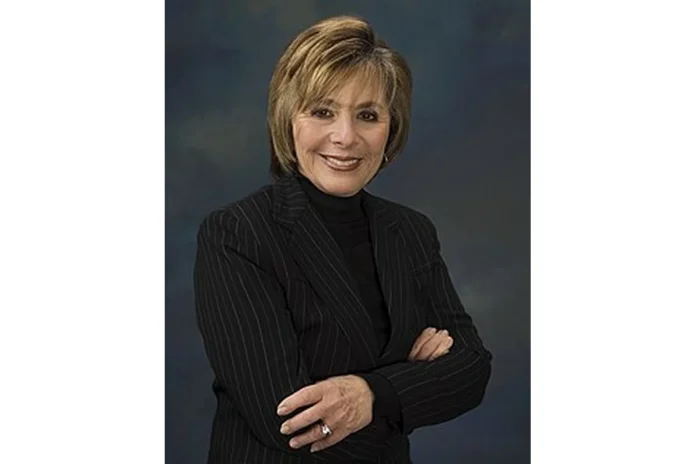
Barbara Boxer Bio
Barbara Sue Boxer (née Levy; born November 11, 1940) is a retired American politician and lobbyist who represented California in the United States Senate from 1993 to 2017. A member of the Democratic Party, she previously served five terms in the U.S. House of Representatives for California’s 6th congressional district from 1983 to 1993, and earlier served on the Marin County Board of Supervisors, where she became the board’s first female president. Known for her liberal positions on environmental protection, health care, and civil rights, Boxer served as ranking member of the Senate Environment and Public Works Committee and as Democratic chief deputy whip. She did not seek re-election in 2016 and was succeeded by Kamala Harris, later the Vice President of the United States.
After leaving the Senate, Boxer transitioned into public affairs and lobbying. She became co-chair of Mercury Public Affairs in January 2020, briefly registered as a foreign agent for a Chinese-owned surveillance company, and later led a group of colleagues to form a new consulting firm. Her long career combined elected office, party leadership, and policy advocacy on issues ranging from climate and reproductive rights to gun violence prevention and campaign finance reform.
Early Life and Background
Barbara Sue Levy was born in Brooklyn, New York City, on November 11, 1940. Her parents were Sophie (née Silvershein) Levy and Ira Levy, members of a Jewish family who raised their daughter in the borough’s public schools. She attended local public schools and graduated from George W. Wingate High School in 1958. Growing up in postwar Brooklyn gave her an early awareness of urban working-class issues that later shaped her political outlook.
In 1962, she married Stewart Boxer, a law student, and the same year graduated from Brooklyn College with a bachelor’s degree in economics. The couple moved to California in 1965. During the early years of her marriage, Boxer worked briefly as a stockbroker in New York while her husband completed his legal studies, an experience that introduced her to the financial world before she turned to journalism and public service on the West Coast.
Path to US Politics
Boxer’s political path began in the late 1960s, when she joined the antiwar movement. In 1968, she worked on the presidential primary campaign of Senator Eugene McCarthy of Minnesota, an antiwar challenger. Two years later, in 1970, she co-founded the Marin Alliance, an anti-Vietnam War group based in Marin County, California. These activities marked her first sustained involvement in organized political action and connected her to a network of California progressives.
In 1972, Boxer ran for a seat on the Marin County Board of Supervisors and lost a close race to the Republican incumbent, Peter Arrigoni. That same year she became a reporter and editor for the Pacific Sun, a local newspaper, working there until 1974. She then managed the Marin campaign of John Burton, a Democratic activist who won a special election to replace a retiring Republican congressman. Burton’s victory gave Boxer an entry into congressional politics: she joined his staff as an aide, learning the practical mechanics of campaigns and legislation.
In 1976, Boxer won a seat on the Marin County Board of Supervisors and served for six years. She rose to become the board’s first female president, a position that gave her visibility and credibility in regional politics. By 1982, she was ready to run for federal office, entering the race for California’s 6th congressional district with the slogan “Barbara Boxer Gives a Damn.” She narrowly won her first House race with 52 percent of the vote and went on to win easy re-election in each subsequent cycle through 1990.
Barbara Boxer Career
Early Career (1983–1992)
Boxer served in the U.S. House of Representatives from 1983 to 1993, representing California’s 6th congressional district. She was a member of the original Select Committee on Children, Youth, and Families, established in 1983, and sat on the Armed Services Committee throughout her tenure. In 1991, during the Anita Hill Senate hearings, she led a group of women House members to the Senate Judiciary Committee to demand that senators take Hill’s sexual harassment allegations against Supreme Court nominee Clarence Thomas seriously.
In 1992, Boxer was implicated in the House banking scandal, in which more than 450 representatives and aides had written overdraft checks covered by the House Bank. Acknowledging the issue, she contributed $15 to the Deficit Reduction Fund for each of her 87 overdrafts, writing that she should have paid more attention to her account. The episode did not derail her career, as she was simultaneously running for the U.S. Senate that year.
Breakthrough (1992–2004)
When four-term Democratic Senator Alan Cranston announced he would not seek re-election in 1992, Boxer entered the Senate race during what observers called the “Year of the Woman.” She won the Democratic primary with 44 percent of the vote, defeating fellow Representative Mel Levine and Lieutenant Governor Leo McCarthy, and went on to defeat Republican Bruce Herschensohn in the general election by 4.9 percent. She was sworn in as U.S. Senator in January 1993.
Boxer won re-election in 1998, defeating California State Treasurer Matt Fong by 10.1 percent of the vote. In 2004, she faced no primary opposition and defeated former California Secretary of State Bill Jones by roughly 20 percent, receiving about 6.96 million votes. That total made her the first person to win more than 6 million votes in a U.S. Senate election, a record later surpassed by her California colleague Dianne Feinstein in 2012. Together, Boxer and Feinstein were the first female pair of U.S. senators to represent any state at the same time.
As a member of Senate Democratic Leadership, Boxer served as Democratic chief deputy whip, helping line up votes on key legislation. She also served as vice chair of the Select Committee on Ethics and as ranking member of the Environment and Public Works Committee. In 2003, she led a successful Senate floor battle to block oil drilling in the Arctic National Wildlife Refuge and introduced the National Oceans Protection Act of 2005. She authored bipartisan HIV/AIDS and tuberculosis legislation in 2007 with Senator Gordon Smith of Oregon.
Democratic Party Era (1993–2017)
Throughout her Senate career, Boxer built a reputation as a vocal liberal. She opposed the Defense of Marriage Act in 1996, voted against the Federal Marriage Amendment in 2004 and 2006, opposed Proposition 8 in California, and by her 2010 re-election campaign expressed strong support for same-sex marriage. She co-sponsored the Matthew Shepard Act to expand federal hate-crime protections to include crimes based on sexual orientation and gender identity. In reproductive rights, she authored the Freedom of Choice Act of 2004 and supported access to abortion services.
Boxer was a leading Senate critic of the Bush administration’s foreign policy. She voted against the joint resolution authorizing the use of military force in Iraq in October 2002 and, in 2005, publicly challenged Secretary of State Condoleezza Rice about the human cost of the war. She voted against the confirmation of Chief Justice John Roberts and Associate Justice Samuel Alito, and she led the Senate opposition to John Bolton’s nomination as U.S. Ambassador to the United Nations, forcing the Bush administration to use a recess appointment.
In domestic policy, Boxer authored a Patients’ Bill of Rights in 1997, supported comprehensive Medicare prescription drug coverage, and advocated for embryonic stem-cell research. She worked on environmental protections, including the Northern California Coastal Wild Heritage Wilderness Act, which President George W. Bush signed into law in 2006, protecting more than 275,000 acres. She also opposed the U.S.-India civilian nuclear energy deal and was sharply critical of warrantless surveillance legislation in 2008, breaking with Senator Feinstein to vote against the FISA Amendments Act.
Notable Events and Milestones
One of Boxer’s signature moments came in January 2005, when she joined Representative Stephanie Tubbs Jones of Ohio in filing a congressional objection to Ohio’s Electoral College votes from the 2004 presidential election, only the second such objection to an entire state’s electoral delegation in U.S. history. She also co-authored the 2005 Count Every Vote Act and, in November 2016, days after the 2016 presidential election, introduced a constitutional amendment to abolish the Electoral College in favor of a national popular vote for president.
Barbara Boxer Career Wins
Barbara Boxer’s electoral record includes one U.S. Senate primary win, four U.S. Senate general election wins, and five consecutive U.S. House election wins, along with a successful campaign for the Marin County Board of Supervisors in 1976. Her 2004 re-election total of about 6.96 million votes set a record for the most votes ever received in a U.S. Senate election at that time.
U.S. Senate Highlights
Boxer won her first Senate race in 1992, defeating Republican Bruce Herschensohn by 4.9 percent. She won a second term in 1998 against California State Treasurer Matt Fong, a third term in 2004 against former Secretary of State Bill Jones, and a fourth term in 2010 against former Hewlett-Packard chief executive Carly Fiorina. Her 2010 victory margin was about 10 percent. She did not seek re-election in 2016 and was succeeded by Kamala Harris.
Other Wins and Achievements
Boxer won five consecutive elections to the U.S. House of Representatives in California’s 6th congressional district from 1982 to 1990, with her first victory coming by 52 percent. She was elected to the Marin County Board of Supervisors in 1976, serving six years and becoming the board’s first female president. She also passed major legislative achievements, including a 2006 wilderness protection law covering more than 275,000 acres of Northern California coastal land.
Barbara Boxer Family
Family Background and Public Service Lineage
Barbara Sue Boxer was born to Ira Levy and Sophie (née Silvershein) Levy, a Jewish couple in Brooklyn, New York. Her family background was rooted in the working-class neighborhoods of mid-20th-century New York City, and her parents’ experience shaped her early commitment to public service. Although Boxer’s own family did not include a political dynasty, she entered politics through ties formed in California’s progressive movement, including her close working relationship with John Burton, who mentored her early congressional campaigns.
Personal Life
Barbara married Stewart Boxer in 1962, and the couple has two children, Doug Boxer and Nicole Boxer. Nicole married Tony Rodham, the brother of Hillary Clinton, at the White House on May 28, 1994, in the first White House wedding since 1971, and the couple had a son, Zachary, before divorcing. Barbara and Stewart Boxer sold their home in Greenbrae, California, in 2006 and moved to Rancho Mirage, where she has since resided. On July 26, 2021, she was assaulted and robbed of her phone in Oakland, California, but was not seriously injured.