
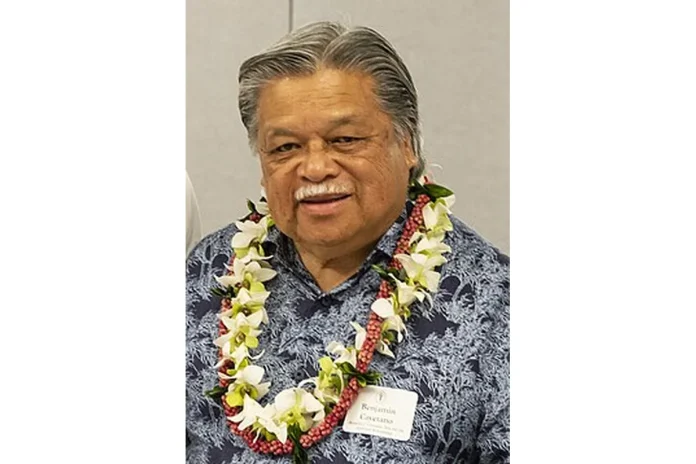
Ben Cayetano Bio
Benjamin Jerome Cayetano (born November 14, 1939) is an American politician and author best known as the fifth governor of Hawaii, an office he held from 1994 to 2002. A member of the Democratic Party, he was the first Filipino American to serve as a governor of any U.S. state and previously spent two terms as Hawaii’s lieutenant governor. After leaving the governorship, Cayetano remained active in state politics, campaigning for Honolulu Mayor in 2012 and continuing to weigh in on major public-policy issues in the islands.
Early Life and Background
Born in Honolulu in the Territory of Hawaii, Benjamin Jerome Cayetano grew up largely without his mother and was raised by his father in Kalihi, a Filipino-American neighborhood west of downtown Honolulu. As a latchkey child, he spent long stretches on his own while his father worked. The neighborhood and his family shaped his early sense of community and the cultural identity he would carry into public life.
Cayetano attended Wallace Rider Farrington High School, a public school whose buildings were named after early Hawaii statesmen and which locals nicknamed the “Home of the Governors.” His high-school record was marked by poor grades and frequent discipline, and he barely qualified to graduate. After graduation he married his high-school sweetheart, Lorraine Gueco, and in 1959 the couple welcomed their son Brandon. To support his young family, Cayetano worked a series of entry-level jobs, including metal-packer in a junkyard, truck driver, apprentice electrician, and draftsman.
Frustrated by what he saw as racially and politically unfair hiring practices, Cayetano moved with his family to Los Angeles in 1963 to pursue a legal education. He attended Los Angeles Harbor College and transferred to the University of California, Los Angeles, earning a bachelor’s degree in political science with a minor in American history in 1968. He completed his Juris Doctor at Loyola Law School of Loyola Marymount University in 1971.
Path to US Politics
Benjamin Jerome Cayetano’s political path began almost immediately after law school. In 1972, Hawaii Governor John A. Burns appointed him to the Hawaii Housing Authority, giving him his first direct experience with state government and public administration. Two years later, in 1974, Cayetano won election to the Hawaii State House of Representatives as a Democrat representing Pearl City, launching a legislative career rooted in the same party he would later lead at the statewide level.
His work in the state House and in housing policy helped him build a reputation as a practical, detail-oriented lawmaker focused on fiscal management. That reputation led John D. Waihe’e III to select Cayetano as his running mate in 1986. Their ticket won, and Cayetano became the first Filipino American lieutenant governor in the United States. He was re-elected with Waihe’e in 1990, using the role to champion programs such as the A+ Program, a state-funded, universal after-school care initiative.
Ben Cayetano Career
Early Career (1972–1986)
Ben Cayetano’s early career in public service began at the Hawaii Housing Authority, where he was appointed by Governor John A. Burns in 1972. After two years learning the workings of state agencies, he transitioned to elected office in 1974, winning a seat in the Hawaii State House of Representatives for Pearl City. As a Democratic legislator, he focused on practical governance and the issues facing working-class families in his district.
Through the late 1970s and into the mid-1980s, Cayetano built a steady record in the state House, earning a reputation for fiscal discipline. His combination of legal training and legislative experience made him an attractive candidate for higher office, and in 1986 he joined John D. Waihe’e III’s gubernatorial ticket as the running mate for lieutenant governor.
Breakthrough (1986–1994)
Ben Cayetano’s breakthrough came in 1986 when he was elected lieutenant governor of Hawaii alongside Governor John D. Waihe’e III, becoming the first Filipino American to hold that office in any U.S. state. The Waihe’e–Cayetano ticket won re-election in 1990, giving Cayetano another four years to expand his policy portfolio. During this period he created the A+ Program, a state-funded, universal after-school care initiative that placed chartered organizations at each public elementary school in Hawaii, an effort that raised his profile as an innovator in education policy.
When term limits forced Waihe’e to retire, the Hawaii Democratic Party nominated Cayetano for governor in 1994. He chose attorney Mazie Hirono as his running mate and won the general election, ascending to the governorship and making history as the first Filipino American governor in the United States. The victory capped a steady rise from state representative to the highest office in Hawaii.
Democratic Era (1994–2002)
As governor of Hawaii from 1994 to 2002, Benjamin Jerome Cayetano governed as a Democrat during a period of economic uncertainty. Declining tax revenues produced repeated budget shortfalls, and he frequently clashed with fellow Democrats in the state legislature as he pushed for cuts to balance the budget. Despite those fiscal pressures, he won a second term in 1998 in the closest election in Hawaii history, edging Republican Linda Lingle by about a single percentage point after an official recount.
On education, the Cayetano administration built thirteen new public schools and persuaded the teachers’ union to extend the school year by seven days. The University of Hawaii System also gained greater autonomy over internal affairs under his leadership. His tenure was not without controversy, however: simultaneous strikes by University of Hawaii professors and public-school teachers in April 2001 shut down the state’s educational system for roughly three weeks. He left office in December 2002 and was succeeded by Linda Lingle.
Notable Events and Milestones
The defining milestones of Ben Cayetano’s career include becoming the first Filipino American lieutenant governor in U.S. history in 1986 and, eight years later, the first Filipino American state governor. His 1998 re-election, decided by roughly a single percentage point and confirmed by an official recount, remains one of the closest gubernatorial races in Hawaii history.
Ben Cayetano Career Wins
Across his political career, Benjamin Jerome Cayetano built a record of electoral success at the state level in Hawaii, anchored by his service as lieutenant governor and two terms as governor.
Statewide Office Highlights
Cayetano won his first statewide race in 1986 as part of the Waihe’e–Cayetano ticket and was re-elected in 1990. In 1994, he won the governorship with Mazie Hirono as his running mate, and in 1998 he secured a second term against Republican Linda Lingle in one of the closest elections in Hawaii history, prevailing after an official recount.
Other Wins & Achievements
Beyond electoral victories, Cayetano’s achievements include establishing the A+ Program, a state-funded universal after-school care system, and overseeing the construction of thirteen new public schools along with a seven-day extension of the school year during his governorship. He also guided the University of Hawaii System toward greater internal autonomy.
Ben Cayetano Family
Family Background and Personal Lineage
Benjamin Jerome Cayetano was raised by his father in Honolulu’s Kalihi neighborhood after becoming estranged from his mother at a young age. Growing up in a predominantly Filipino-American community shaped his cultural identity and informed much of his later political life.
Personal Life
Cayetano married his high-school sweetheart, Lorraine Gueco, shortly after graduation, and the couple had three children: Brandon, born in 1959, and daughters Janeen and Samantha. Their 37-year marriage ended in divorce in 1996, making Ben Cayetano the first sitting governor of Hawaii to divorce while in office. On May 5, 1997, he married Vicky Tiu, who had previously played a small role opposite Elvis Presley in the film It Happened at the World’s Fair and was president of United Laundry Services. Vicky brought two children, Marissa and William, from a previous marriage, and Cayetano and Vicky have five children in their combined family.