
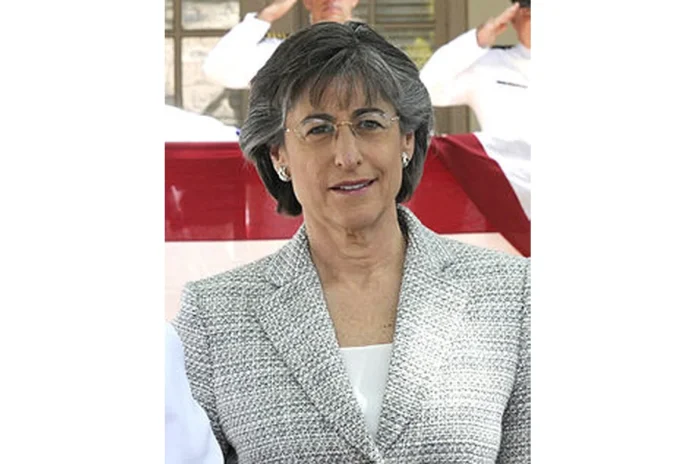
Linda Lingle Bio
Linda Lingle (née Cutter; born June 4, 1953) is an American politician and publisher who served as the sixth Governor of Hawaii from 2002 to 2010. A Republican, she was the first Republican elected governor of Hawaii since statehood in 1959, and the state’s first female and Jewish governor. Before becoming governor, Lingle served as mayor of Maui County from 1991 to 1999 and as chair of the Hawaii Republican Party from 1999 to 2002.
After leaving the governor’s office, Lingle was the Republican nominee for the United States Senate in 2012, when she lost to Democrat Mazie Hirono. She later worked as a senior adviser in Illinois government, served on university and policy boards, and has remained active in civic and Republican causes. She is the only woman to have served as governor of Hawaii.
Early Life and Background
Linda Lingle was born Linda Cutter in St. Louis, Missouri, in 1953, the daughter of Mildred and Richard Cutter. She was raised in a Jewish family and grew up in the American Midwest before her family moved to Southern California when she was twelve years old. Her uncle later founded the Cutter Ford car dealerships in Hawaii, giving the family a long-running connection to the islands.
She graduated from Birmingham High School in Lake Balboa, California, a community that was then part of Van Nuys. Lingle went on to earn a bachelor’s degree in journalism, graduating cum laude from California State University, Northridge, in 1975. During her college years, she married her first husband, Charles Lingle, in 1972.
Soon after finishing college, Lingle followed her father to Hawaii. She first worked in Honolulu as a public information officer for the Teamsters and Hotel Workers Union. She later moved to the island of Molokai, where she founded the Molokai Free Press, a small community newspaper that launched her publishing career.
Path to US Politics
Lingle’s entry into elected office began in 1980, when she won a seat on the Maui County Council. She served five two-year terms, three of them representing Molokai and two as an at-large member, gaining steady experience in local government and budgeting.
In 1990, Lingle challenged former Maui mayor and longtime Hawaii Speaker of the House Elmer Cravalho for the mayoral seat after Hannibal Tavares retired. Despite early polls that showed her trailing badly, she won the race, becoming both the youngest and the first woman elected Mayor of Maui County. She was sworn into office on January 2, 1991.
Lingle won a comfortable re-election in 1994 against Maui County councilman Goro Hokama. After being term-limited, she ran for governor in 1998 and lost a famously close race to incumbent Benjamin J. Cayetano. She was then elected chair of the Hawaii Republican Party in 1999, a role she used to rebuild the state party before winning the governorship in 2002.
Linda Lingle Career
Early Career (1991-1999)
As Mayor of Maui County, Linda Lingle focused on modernizing local government and strengthening the island economy. Under her leadership, Maui County adopted performance-based budgeting, a move that earned her the Distinguished Budget Presentation Award from the Government Finance Officers Association for four years. She was also credited with attracting tourism and supporting job growth in Maui during a difficult period for Hawaii’s broader tourism industry.
After leaving the mayor’s office, Lingle was elected chair of the Hawaii Republican Party in 1999, serving until 2002. During her tenure, she pushed internal reforms that she believed were needed to make the party competitive in a state long dominated by Democrats. Those efforts helped elect more Republicans to the state legislature and gave the party a more youthful public image.
2002 Gubernatorial Breakthrough (2002-2006)
Lingle ran for governor again in 2002 and won, running on an Agenda for New Beginnings that emphasized reform after four decades of Democratic control of state government. She selected former state judge Duke Aiona as her lieutenant governor. Her victory was historic: she was the first Republican elected governor of Hawaii since 1959, the first woman to hold the office, and the state’s first Jewish governor.
During her first term, Lingle signed the Three Strikes Law and a Sex Offender Registry Website Law. She also vetoed a bill that would have required all Hawaii hospitals to provide emergency contraception to rape victims, citing concerns about Catholic hospitals. Her approval ratings usually hovered around 70 percent, and she led a 2004 delegation to Israel paid for by the Israeli government.
Lingle gained national attention when she chaired the 2004 Republican National Convention in New York City during the absence of permanent chair Dennis Hastert. She spent much of 2004 campaigning for Republican candidates, including President George W. Bush, and pushed for legislative gains in the state legislature, though Democrats ultimately expanded their supermajority.
2006 Re-election and Second Term (2006-2010)
In 2006, Lingle sought a second term and won by the largest margin in state history, defeating Democrat Randy Iwase 63 percent to 35 percent. The campaign drew significant spending on both sides, with Lingle outspending Iwase by a wide margin. In January 2006, she received an honorary doctorate in public management from the University of the City of Manila during an official visit to the Philippines.
Her second term included high-profile clashes over the Hawaii Superferry, a high-speed inter-island service. When the Hawaii Supreme Court invalidated an exemption from environmental review, Lingle pushed a legislative fix known as Act Two, which the court later struck down as unconstitutional. In 2009, her administration ended the Hawaii Immigrant Health Initiative, a move that drew a federal court challenge over equal-protection concerns.
In 2010, Lingle vetoed a civil unions bill, arguing the issue should be decided by referendum. Ineligible to run for a third term, she was succeeded by Democrat Neil Abercrombie and left office on December 6, 2010, having been the only Republican to be re-elected governor of Hawaii by popular vote.
2012 Senate Race and Post-Office Work (2010-2017)
After leaving office, Lingle taught a public policy seminar at California State University, Northridge, and worked with the Bipartisan Policy Center’s Governor’s Council and Energy Security Council. In January 2015, she was appointed senior adviser to Illinois Governor Bruce Rauner, serving until July 2016. She delivered an opening-day speech at the 2016 Republican National Convention focused on Jewish support for the party.
In 2011, Lingle announced she would run for the United States Senate seat vacated by retiring Senator Daniel Akaka. She won the Republican primary in August 2012 and faced Democrat Mazie Hirono in a rematch of the 2002 gubernatorial race. Hirono defeated Lingle with 63 percent of the vote to Lingle’s 37 percent, making the campaign Lingle’s final major bid for statewide office.
Notable Events and Milestones
Lingle’s career is defined by a series of historic firsts: the first Republican governor of Hawaii since statehood, the first woman elected to the office, and the state’s first Jewish governor. She also remains the only woman to have served as Hawaii’s governor, and she and Duke Aiona are the last Republicans to have won or held statewide office in Hawaii.
Linda Lingle Family
Family Background and Public Service
Lingle was born to a Jewish family in St. Louis, Missouri, the daughter of Richard Cutter and Mildred Cutter. She has spoken about her family connection to Hawaii through her uncle, who founded the Cutter Ford car dealerships on the islands and helped draw the family westward.
Personal Life
Lingle has been married and divorced twice. She married her first husband, Charles Lingle, in 1972 while still in college, and they divorced in 1975 after she moved to Hawaii, though she kept the Lingle name. She later married Maui attorney William Crockett in 1986, and they divorced in 1997 during her tenure as Mayor of Maui County. Lingle is currently single and has no children. She remains active in the Republican Jewish Coalition and was appointed by President George W. Bush to the honorary delegation accompanying him to Jerusalem for the 60th anniversary of the State of Israel in May 2008.