
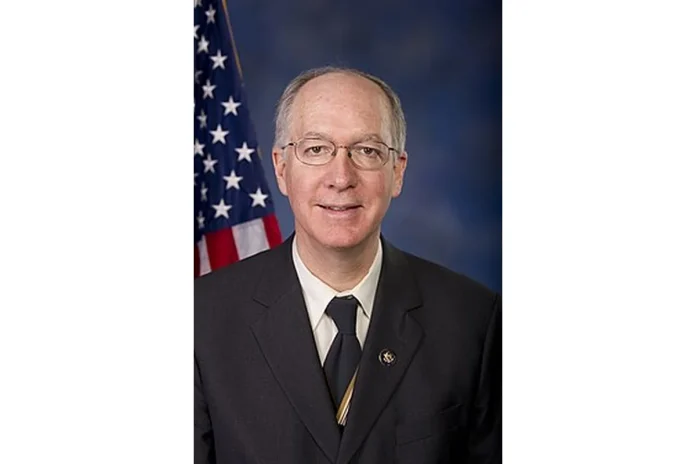
Bill Foster Bio
George William Foster, widely known as Bill Foster, is an American businessman, physicist, and politician who has served as the U.S. representative for Illinois’s 11th congressional district since 2013. A member of the Democratic Party, he previously represented Illinois’s 14th congressional district from 2008 to 2011. Before entering politics, Foster built a long career in high-energy physics at Fermilab and co-founded a leading theatrical lighting company. His work in Congress has focused on science policy, financial regulation, healthcare, and middle-class tax issues.
Early Life and Background
Bill Foster was born on October 7, 1955, in Madison, Wisconsin. As a teenager, he attended James Madison Memorial High School, where he developed an early interest in science and engineering. Growing up in a household that valued problem-solving and entrepreneurship shaped his future path in both physics and business.
He went on to earn a Bachelor of Science in physics from the University of Wisconsin–Madison in 1976. He then attended Harvard University, where he completed his Ph.D. in physics in 1983. His doctoral dissertation reported an experimental limit on proton decay, a topic at the heart of particle physics research.
Path to Politics
After finishing his doctorate, Foster moved with his family to the Fox Valley area in Illinois to take a position at Fermilab, the Department of Energy’s national laboratory for high-energy physics. Over twenty-two years at Fermilab, he worked on the design of equipment and data analysis software for the CDF detector, tools that supported the discovery of the top quark. He also helped manage the design and construction of a 3-kilometer Anti-Proton Recycler Ring for the Main Injector.
At the age of nineteen, Foster had also co-founded Electronic Theatre Controls with his younger brother, Fred. The company grew into a major manufacturer of theatrical lighting fixtures and control systems, providing Foster with business experience that complemented his scientific work. Recognition for his physics career included the 1989 Bruno Rossi Prize for cosmic ray physics related to the discovery of the neutrino burst from supernova SN 1987A, election as a Fellow of the American Physical Society in 1998, and the Robert R. Wilson Prize for Achievement in the Physics of Particle Accelerators in 2022, shared with Stephen D. Holmes.
Bill Foster Career
Early Career (2007–2010)
Bill Foster entered politics in 2007 after longtime Republican House Speaker J. Dennis Hastert resigned from Illinois’s 14th congressional district. Foster announced his candidacy in May 2007 and won the March 2008 special election against Republican Jim Oberweis, 53% to 47%. He was sworn in on March 11, 2008, and joined a small group of research physicists ever elected to Congress.
On his first day in office, Foster cast the deciding vote to keep alive an ethics bill that would have created an independent panel to investigate complaints against House members. In November 2008, he won a full term by defeating Oberweis again, this time 58% to 42%. His early legislative work included support for the American Recovery and Reinvestment Act of 2009 and co-sponsorship of the Employee Free Choice Act of 2009.
Breakthrough (2010–2012)
In 2010, Foster faced State Senator Randy Hultgren and lost his seat in the 14th district, 51% to 45%, despite endorsements from the Chicago Tribune, the Chicago Sun-Times, and The Daily Herald. After the defeat, he sold his home in Geneva and moved to Naperville, setting the stage for a comeback in the neighboring 11th district.
Foster announced a run for the 11th district in 2011 and won the general election on November 6, 2012, with 58% of the vote. That year, he also voted for the Affordable Care Act and the Dodd–Frank Wall Street Reform and Consumer Protection Act, with all ten of his proposed amendments to Dodd–Frank included in the final bill.
Democratic Era (2013–Present)
Since returning to Congress in 2013, Bill Foster has built a reputation as a reliable Democratic vote. He has been unopposed in several Democratic primaries and has defeated Republican challengers Darlene Senger, Tonia Khouri, and Nick Stella by wide margins, reaching 60.4% in 2016 and 63.8% in 2018. In 2020, he won the Democratic primary against Rachel Ventura with 58.7% of the vote and the general election against Rick Laib with 63.3%.
In 2022, Foster won the June Democratic primary and defeated Catalina Lauf in the general election with 56.45% of the vote. According to a FiveThirtyEight analysis, he voted with President Joe Biden’s stated position 100% of the time during the 117th Congress. His policy focus has included financial reform, healthcare coverage, and support for scientific research at national laboratories.
Notable Events and Milestones
Foster’s most defining moment was his 2008 special election win in a Republican-leaning district, making him one of only a few research physicists ever elected to Congress. He has since won seven House elections across two districts, often by comfortable margins, and he has been a steady voice for science funding, workers’ rights, and consumer protection.
Bill Foster Family
Family Background and Personal Life
Bill Foster and his younger brother, Fred, co-founded Electronic Theatre Controls when Bill was nineteen, beginning a family business tradition in engineering and manufacturing. Foster’s work in physics took him across the country, from his Wisconsin roots to Harvard and finally to the Chicago suburbs.
Personal Life
Foster lives in Naperville, Illinois, with his wife, Aesook Byon, whom he married in 2008. He has two adult children from his first marriage to Ann Foster, which ended in divorce in the mid-1990s. Foster is a grandfather, and he is among the few U.S. representatives who do not identify with any religion.