
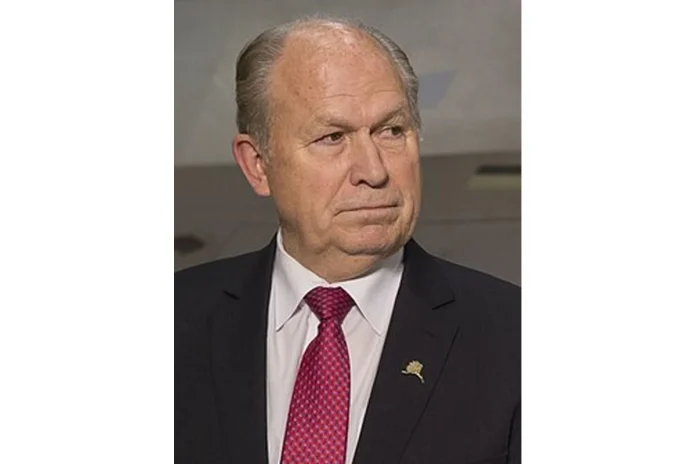
Bill Walker Bio
William Martin Walker, widely known as Bill Walker, is an American attorney and politician who served as the 11th governor of Alaska from 2014 to 2018. He was the second Alaska-born governor in state history, following William A. Egan. Walker is notable for winning the governorship as an independent after a high-profile campaign merger with Democrat Byron Mallott, and for his centrist mix of policy positions on energy, gun rights, and Medicaid expansion.
Before entering statewide politics, Walker built a long career in Valdez as a lawyer, city councilor, mayor, and city attorney. He later represented the Alaska Gasline Port Authority as general counsel, establishing himself as a leading voice on Alaska oil and gas issues.
Early Life and Background
William Martin Walker was born on April 16, 1951, in Fairbanks, Alaska, and was raised in the rural community of Delta Junction and the coastal port of Valdez on Prince William Sound. He was the fourth child of Alaskan pioneers Frances (Park) Walker and businessman Ed Walker. His parents represented a generation shaped by the territory’s development: during World War II, Ed served as an Alaskan Scout with Castner’s Cutthroats in the Aleutian Islands, while Frances worked on the Alaska-Canadian Highway.
When Walker was 12, the 1964 Alaska earthquake devastated Valdez, and the Walker family lost most of their personal and business possessions. To help his family recover, Walker took a job as a janitor at a young age, an experience that grounded his later commitment to working-class Alaskan communities. The family’s reconstruction work on the Trans-Alaska Pipeline later provided him with employment that helped fund his education.
Walker graduated from Valdez High School in 1969. He went on to earn a Bachelor of Science in business management from Lewis & Clark College in 1973 and a Juris Doctor from the University of Puget Sound School of Law, now Seattle University School of Law, in 1983.
Path to Alaska Politics
Walker’s entry into public life began at the local level in Valdez. From 1977 to 1979, he served on the Valdez city council, and in 1979 he was elected mayor of Valdez, serving through 1980. At 27, he was the youngest mayor in the city’s history. After his mayoral term, he and his wife Donna established a law firm, which became a leading practice representing the city of Valdez and the Alaska Gasline Port Authority.
As an attorney, Walker earned a reputation in Alaska’s energy sector. He represented the city of Valdez in lawsuits charging oil companies with undervaluing the property tax assessment of the Trans-Alaska Pipeline, and he worked on proposals to build a natural gas pipeline in the state. His combination of municipal service and oil and gas law positioned him as a credible candidate when he decided to pursue the governorship.
Bill Walker Career
Early Career (1977–2009)
Walker’s early career combined public office with private legal practice in Valdez. After his time on the city council and a one-year mayoral term, he transitioned into a career as a prominent oil and gas attorney, working on cases involving pipeline tax valuations and large infrastructure projects. He also served as city attorney for Valdez and as general counsel for the Alaska Gasline Port Authority, roles that connected him to the state’s most consequential energy debates.
During this period, Walker built a regional profile through his work on Alaska energy policy and his involvement in community rebuilding efforts following the 1964 earthquake and the later construction of the Trans-Alaska Pipeline. These experiences gave him direct insight into the intersection of municipal government, resource development, and fiscal policy in Alaska.
Breakthrough: 2010 Republican Primary
Walker first ran for governor in 2010, challenging incumbent Sean Parnell in the Republican primary. The Republican primary election on August 24, 2010, drew a crowded field, with Walker finishing second with 33.95 percent of the vote. Parnell won the nomination with 49.49 percent and went on to win the general election against Democrat Ethan Berkowitz. Though Walker lost, his strong primary showing established him as a serious statewide candidate.
Following the 2010 race, Walker continued his legal work and considered another gubernatorial run. In 2013, he announced his intention to run for governor in 2014 as a Republican, but later that year he switched to a nonpartisan, independent course, drawing on advice he had received before his first campaign from former Alaska governor Wally Hickel.
Independent Campaign and 2014 Gubernatorial Victory
Walker selected Craig Fleener, a former Deputy Commissioner of the Alaska Department of Fish and Game, as his 2014 running mate and campaigned on a centrist platform. He opposed the construction of the Pebble Mine, acknowledged the existence of climate change, and supported gun rights, state sovereignty, increased oil and gas pipeline capacity, new drilling in the Arctic National Wildlife Refuge, and Medicaid expansion under the Affordable Care Act.
On September 2, 2014, Walker held a joint press conference with Democratic gubernatorial nominee Byron Mallott, announcing that they would merge their campaigns with Mallott as his new running mate. The Alaska Supreme Court ruled the merger valid, and the combined Walker-Mallott ticket gained momentum against Parnell, whose standing was weakened by unpopular oil tax cuts and a scandal in the Alaska National Guard. After a close count, media outlets called the race for Walker and Mallott on November 14, 2014, and Parnell conceded two days later.
Governorship and 2018 Campaign
Walker took the oath of office as the 11th governor of Alaska on December 1, 2014, taking on a Republican-controlled legislature. He used his veto authority to expand Medicaid, a signature early achievement, and proposed a statewide income tax in late 2015 to address a projected $4 billion budget shortfall caused by low oil prices. In June 2016, a partial veto of legislation tied to the Alaska Permanent Fund sharply reduced annual payments to state residents, a decision later described by The New Yorker as deeply unpopular and damaging to his reelection prospects.
Walker ran for reelection in 2018 with Lieutenant Governor Byron Mallott initially on his ticket. After Mallott resigned on October 16, 2018, citing inappropriate comments, Alaska Health and Social Services Commissioner Valerie Davidson was sworn in as his replacement the same day. Facing low polling numbers, Walker suspended his campaign on October 19, 2018, and endorsed Democratic candidate Mark Begich, who ultimately lost to Republican Mike Dunleavy. Despite withdrawing, Walker still received 2.03 percent of the vote.
2022 Independent Run and Later Years
On August 17, 2021, Walker announced a third gubernatorial run as an independent in the 2022 election, selecting Heidi Drygas, his former commissioner of the Department of Labor and Workforce Development from 2014 to 2018, as his running mate. He finished third behind Republican incumbent Mike Dunleavy and Democratic candidate Les Gara.
Notable Events and Milestones
Among Walker’s most defining moments was his 2014 independent campaign merger with Byron Mallott, a political move later upheld by the Alaska Supreme Court that produced one of the most competitive and consequential gubernatorial races in Alaska history. His early governing decisions, including the expansion of Medicaid through executive action and his 2016 partial veto of Permanent Fund legislation, marked him as a governor willing to use his authority against a hostile legislature, with mixed political consequences.
Bill Walker Family
Family Background and Alaskan Roots
Walker is the fourth child of Alaskan pioneers Frances (Park) Walker and Ed Walker, whose wartime service and pioneering experiences shaped the family’s deep roots in the territory. After the 1964 Alaska earthquake destroyed much of what the family had built in Valdez, the Walkers rebuilt their lives and business, a process in which the future governor participated as a young worker. The family later worked on the Trans-Alaska Pipeline construction, an experience that helped fund Walker’s legal education.
Personal Life
Bill Walker is married to Donna Walker, his longtime partner in both family and professional life, and the couple previously owned a law firm together. Before becoming governor, the Walkers lived in Anchorage and later moved to Juneau during his term. As of 2017, the couple had two sons, two daughters, and five grandchildren. In November 2016, Walker publicly disclosed that he had been diagnosed with prostate cancer and would undergo routine outpatient surgery the following month.