
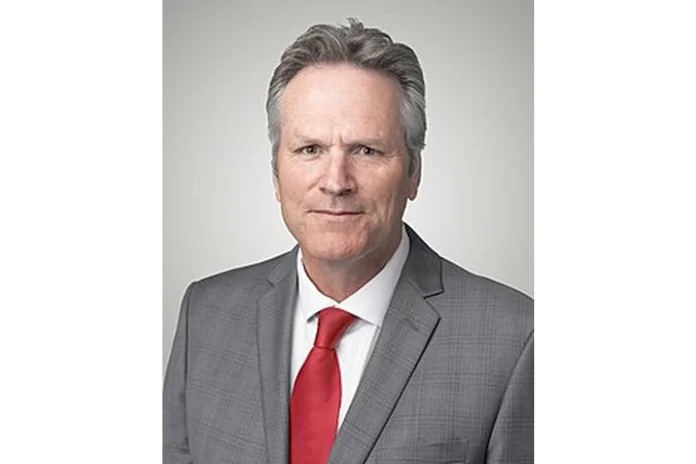
Mike Dunleavy Bio
Michael James Dunleavy (born May 5, 1961) is an American politician and educator serving since 2018 as the 12th governor of Alaska. A Republican, he served in the Alaska Senate from 2013 until his resignation to focus on his 2018 gubernatorial campaign. He defeated former U.S. senator Mark Begich in the general election and was reelected in 2022, becoming the first Republican governor of Alaska to win a second term since Jay Hammond in 1978.
Before entering politics full-time, Dunleavy spent nearly two decades as a teacher, principal, and superintendent in northwest Arctic communities, and later ran an educational consulting firm in Wasilla. He is married to Rose Newlin, and the couple has three children.
Early Life and Background
Michael James Dunleavy was born and raised in Scranton, Pennsylvania, where he graduated from Scranton Central High School in 1979. He went on to earn a Bachelor of Arts in history from Misericordia University in 1983. That same year, he moved to Alaska and took his first job at a logging camp in Southeast Alaska.
Dunleavy later completed a master’s degree in education at the University of Alaska Fairbanks, deepening his commitment to working in rural education. He spent nearly two decades in northwest Arctic communities serving as a teacher, principal, and superintendent, gaining firsthand experience with the challenges of education in remote regions.
In 2004, Dunleavy and his family relocated to Wasilla, where he established an educational consulting firm and contributed to statewide education projects. Before his election to the Alaska Senate, he served on the board of the Matanuska-Susitna Borough School District, including two years as board president.
Path to US Politics
Dunleavy’s path into Alaska politics began in 2012, when he defeated incumbent state senator Linda Menard in the Republican primary for District D. He won the general election unopposed and took office in 2013. During his first term in the Alaska Senate, he chaired the Senate Labor and Commerce Committee and the Senate Education Committee, and served as co-chair of the Trans-Alaska Pipeline System (TAPS) Throughput Special Committee.
After redistricting, Dunleavy represented District E from 2015 through his resignation in January 2018. In his second term, he chaired the Senate Education Committee and worked on legislation to expand charter schools, correspondence study programs, and Alaska’s parental bill of rights. His sponsorship of SB 100 in 2013 helped establish Alaska’s correspondence school allotment program, allowing families to use state education funds for a wider range of instructional materials and services.
In 2017, Dunleavy announced his first campaign for governor but withdrew that September, citing heart problems. He returned to the race in December 2017 and resigned his Senate seat in January 2018 to focus on his campaign full-time. His reputation as a reformer and education advocate positioned him as a leading voice among Alaska’s conservative electorate.
Mike Dunleavy Career
Early Career (2013–2018)
Dunleavy’s early political career was defined by his work in the Alaska Senate. He represented District D from 2013 to 2014, where he chaired committees dealing with labor, commerce, and education. He also served as vice-chair of the Senate Education Committee and as a member of the Senate Finance Committee and Legislative Council.
After redistricting moved him to District E, Dunleavy continued to focus on education reform and resource development. His bipartisan work on legislation supporting charter schools, correspondence programs, and tax credits for educational contributions earned him recognition as a leading voice for parental choice in Alaska.
2018 Gubernatorial Victory and Early Tenure (2018–2019)
Dunleavy won the 2018 gubernatorial election alongside lieutenant governor candidate Kevin Meyer, defeating former U.S. senator Mark Begich after incumbent governor Bill Walker dropped out of the race. He was sworn in as the 12th governor of Alaska on December 3, 2018, just three days after a 7.1 magnitude earthquake struck Southcentral Alaska.
Within hours of taking office, Dunleavy visited the State Emergency Operations Center to coordinate with the outgoing Walker administration. In January 2019, he requested a Presidential Major Disaster Declaration, which President Donald Trump approved on January 31. He later sponsored the Disaster Relief Act of 2019, signed into law on April 5, 2019, to fund repairs to roads and bridges damaged in the quake.
In August 2019, Dunleavy issued a disaster declaration in response to widespread wildfires that burned approximately 2.6 million acres. That same year, he exercised line-item veto authority to cut $433 million from the state budget, including a $130 million reduction in state contributions to the University of Alaska. The cuts, along with vetoes affecting public assistance, sparked a public backlash and a recall effort.
COVID-19 Response and Second Term Push (2020–2022)
Dunleavy declared a state of emergency on March 11, 2020, a day before Alaska’s first confirmed COVID-19 case. He ordered public schools closed in mid-March and activated the State Emergency Operations Center to coordinate the Alaska National Guard and other agencies. In May 2020, he lifted all state mandates for businesses and gatherings while maintaining a quarantine requirement for out-of-state travelers.
In April 2021, Dunleavy announced free COVID-19 vaccinations for tourists at major Alaska airports as part of a broader federal campaign. By October 2021, he declined to issue another disaster declaration, arguing that existing tools were sufficient, and in November 2021 ordered state agencies to ignore federal vaccine mandates on constitutional grounds.
Dunleavy announced his reelection campaign in August 2021. He won a second term in November 2022 with 50.3 percent of the vote, becoming the first Republican governor of Alaska to be reelected since Jay Hammond in 1978 and the first Alaska governor of any party to win reelection since Tony Knowles in 1998.
Second Term and Ongoing Initiatives (2023–Present)
In his second term, Dunleavy has continued to pursue education, energy, and public safety priorities. In 2023, he issued Administrative Order 343, removing four-year degree requirements for most state jobs to address workforce shortages. He also signed House Bill 61 in 2023, blocking state and local officials from closing gun stores during declared disasters unless the closures applied to all businesses.
In 2024, Dunleavy signed a comprehensive crime bill targeting fentanyl, child exploitation, and human trafficking, and signed a major carbon storage and offsets bill in 2023 to diversify Alaska’s revenue. In March 2025, he announced a definitive agreement with Glenfarne Group to advance the Alaska LNG Project, with a final investment decision targeted by the end of 2025 and operations expected to begin by 2030.
Notable Events and Milestones
Dunleavy’s tenure has been marked by several signature moments, including his response to the November 30, 2018 Southcentral Alaska earthquake, the 2019 recall effort that ultimately failed to gather enough signatures, and his signing of the Alaska Reads Act in 2022, which has shown measurable gains in early literacy. A 2023 Morning Consult poll ranked him as the fifth-most popular governor in the United States with a 63 percent job approval rating.
Mike Dunleavy Family
Family Background and Education Lineage
Dunleavy was born and raised in Scranton, Pennsylvania, in a working-class household that valued education and public service. He earned a Bachelor of Arts in history from Misericordia University and later completed a Master of Education at the University of Alaska Fairbanks, credentials that shaped his decades-long career in education before he entered public office.
Personal Life
Dunleavy is married to Rose Newlin, who is from the Noorvik community in the Kobuk River Valley. The couple has three children, who were raised in both rural and urban Alaska. The family has deep ties to the state, having lived in northwest Arctic communities and later in Wasilla.