

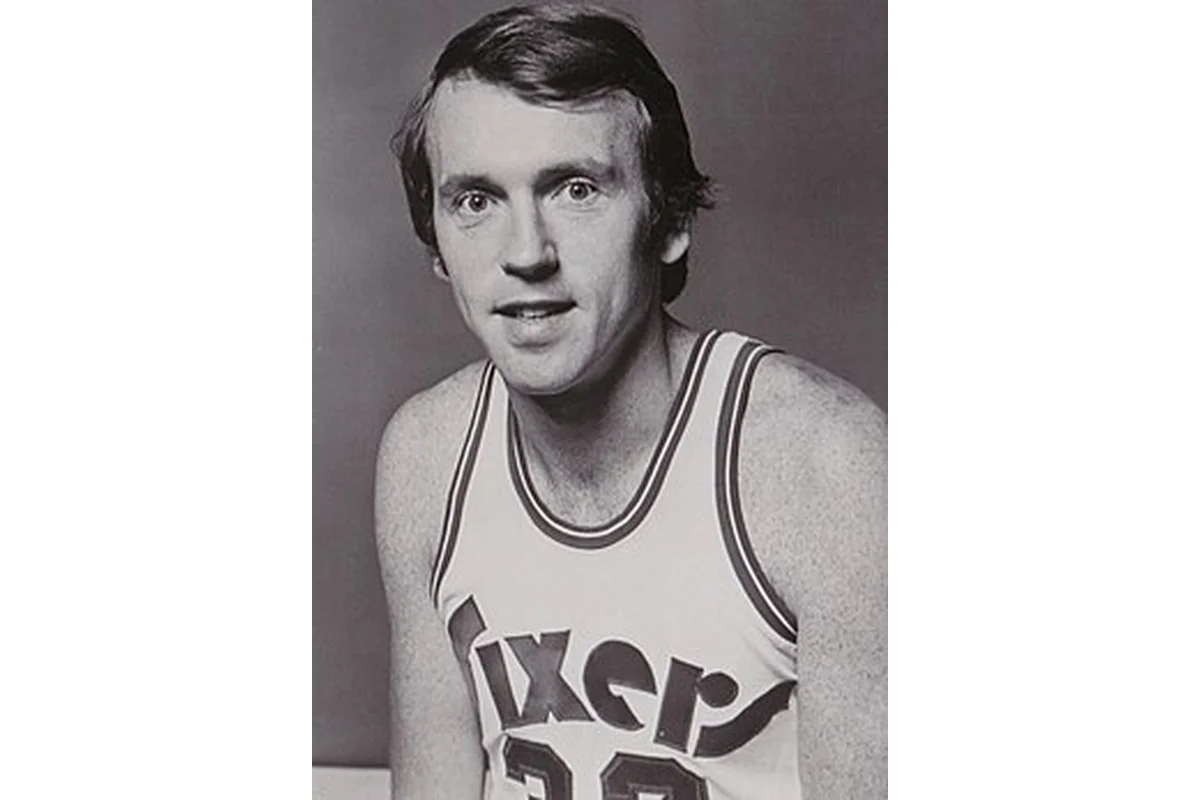
Billy Cunningham Bio
William John Cunningham, known by the nickname the Kangaroo Kid, is an American former professional basketball player and coach born on June 3, 1943, in Brooklyn, New York. He spent a total of 17 seasons with the NBA’s Philadelphia 76ers, including nine seasons as a player and eight seasons as the team’s head coach, and also played two seasons for the Carolina Cougars of the ABA. He is one of the few figures in basketball history to win an NBA championship both as a player, in 1967, and as a head coach, in 1983.
Billy Cunningham Career
Early Career (1961-1965)
Billy Cunningham first gained recognition while starring at St. Rose of Lima and later Erasmus Hall High School in Brooklyn, where he was named the Most Valuable Player of the Brooklyn League in 1961. That same year, he led an undefeated Erasmus Hall squad to the New York City Championship, earned first-team All-New York City honors, and was selected to the Parade Magazine All-America Team. Recruited by Frank McGuire, who was then the coach at the University of North Carolina, Cunningham joined the Tar Heels and began his varsity career in 1962 under new head coach Dean Smith.
At North Carolina, Cunningham emerged as Smith’s first true star player. He set a North Carolina single-game record with 27 rebounds against Clemson on February 16, 1963, and later poured in 48 points against Tulane on December 10, 1964. He finished his college career with 1,709 points and 1,062 rebounds, averaging double-doubles from 1962 to 1965, an NCAA record at the time. He was an All-ACC selection, ACC Player of the Year, and an All-American, and his number 32 jersey is honored at the Dean E. Smith Center.
Philadelphia 76ers (1965-1972)
The 76ers selected Cunningham with the seventh overall pick in the 1965 NBA draft, signing him on the recommendation of Frank McGuire. In his rookie year, he settled into a sixth-man role, playing 80 games and averaging 14.3 points and 7.5 rebounds per game, which earned him a place on the NBA All-Rookie First Team. The following season he became a member of the powerful 1966-67 Philadelphia 76ers championship team, which also featured Wilt Chamberlain, Hal Greer, Chet Walker, and Luke Jackson, and is considered one of the greatest teams in NBA history. In Game 2 of the 1967 NBA Finals, Cunningham scored 28 points during a 126-95 win over the San Francisco Warriors, finishing the finals with 19.7 points per game on average.
After Wilt Chamberlain left the team in 1968, Cunningham became the 76ers’ franchise player and was moved into the starting power forward role. During the 1968-69 season, he averaged 24.8 points and 12.8 rebounds per game, leading Philadelphia to 55 wins, and he earned the first of three straight All-NBA First Team selections. On December 20, 1970, he scored 31 points and pulled down a career-high 27 rebounds in a 134-132 road win over the Portland Trail Blazers. He was also a multi-time NBA All-Star and was later named to both the NBA’s 50th Anniversary Team in 1996 and the NBA 75th Anniversary Team in October 2021.
Carolina Cougars and ABA Controversy (1971-1974)
Cunningham signed a three-year contract on August 5, 1969, to begin play with the American Basketball Association’s Carolina Cougars in 1971-72, but he later reversed course and signed a four-year, $950,000 contract extension to stay with the 76ers through the 1974-75 season. After a series of legal rulings, he was obligated to honor his Cougars contract until October 1974. In his first ABA season, he averaged 24.1 points and 12.0 rebounds per game, led the league in total steals, led the Cougars to the best regular-season record in the league, and was named the ABA Most Valuable Player while earning All-ABA First Team honors.
In the 1973-74 season, Cunningham and the Cougars finished third in the Eastern Division, and after a kidney operation he still played through the Eastern Division Semifinals against the Kentucky Colonels. The Cougars were coached by Hall of Fame coach Larry Brown, a former North Carolina teammate of Cunningham’s. This postseason run proved to be the final playoff appearance of his playing career.
Return to the 76ers (1974-1976)
After the 1973-74 ABA season, Cunningham returned to the Philadelphia 76ers, where he played until torn knee cartilage and ligaments ended his career as an active player early in the 1975-76 season. He finished his career with 16,310 points, 7,981 rebounds, and 3,305 assists across both the NBA and the ABA, including 14 triple-doubles in the NBA and five in the ABA, ranking 43rd all-time in the NBA and 5th in the ABA. In 1996, he was voted one of the 50 Greatest Players in NBA History, and in October 2021 he was named to the NBA 75th Anniversary Team, with The Athletic later ranking him the 66th greatest player in NBA history.
Coaching Career and Broadcast Work (1977-1991)
Cunningham succeeded Gene Shue as head coach of the 2-4 76ers on November 4, 1977, and his first act was hiring future Hall of Fame coach Chuck Daly as an assistant. His teams featured stars such as Bobby Jones, Maurice Cheeks, Andrew Toney, Moses Malone, and Julius Erving, and he reached the 200, 300, and 400-win milestones faster than any coach in NBA history. He led Philadelphia to the playoffs every year as coach and advanced to the NBA Finals three times, in the 1979-80, 1981-82, and 1982-83 seasons, with the 76ers finally winning the franchise’s third NBA Championship in 1983 behind a 12-1 playoff run.
Upon his retirement on May 28, 1985, his 454 wins as a head coach ranked 12th best in NBA history, and he held the second-best regular-season winning percentage in league history at .698, behind only Phil Jackson. He remains the winningest coach in Sixers history. Hall of Famer Doug Collins later suggested that Cunningham might be the greatest 76er of all time when considering his overall impact on the franchise.
Broadcasting and Ownership
Cunningham joined CBS in the 1976-77 season as a basketball analyst, often paired with Brent Musburger or Don Criqui, including coverage of the 1977 All-Star Game and several playoff games. He rejoined CBS starting with the 1985-86 season, and in 1987 he replaced Tom Heinsohn as the lead color commentator alongside play-by-play announcer Dick Stockton for the network’s NBA telecasts. He later left CBS to become a minority owner and general manager of the Miami Heat expansion franchise, selling his interest in early 1995, and returned briefly to CBS to help cover the 1990 NBA Playoffs and the 1991 NCAA men’s basketball tournament.
Billy Cunningham Family
Family Background
Billy Cunningham was born in the Parkville section of Brooklyn, New York, the son of John Cunningham, a New York City fireman who had served in World War II and ultimately rose to the rank of Assistant Chief of the New York City Fire Department. His parents wanted him to attend the University of North Carolina, a connection that helped introduce the family to coach Frank McGuire through McGuire’s sister, who was their neighbor in Brooklyn.