

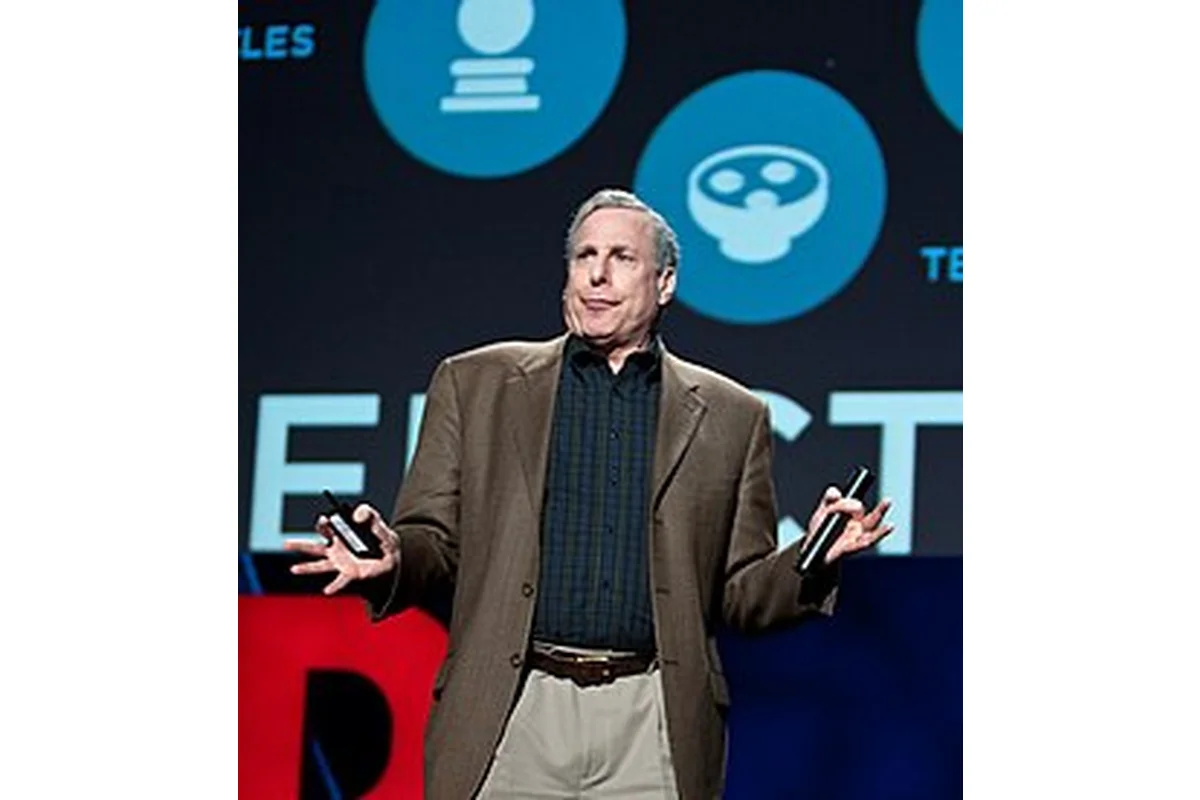
Bruce Bueno de Mesquita Bio
Bruce Bueno de Mesquita (born November 24, 1946) is an American political scientist and academic whose work has reshaped how scholars and policymakers think about international relations and political forecasting. He is best known for applying formal game-theoretic models to predict the behavior of political leaders, governments, and international organizations. Bueno de Mesquita is a professor at New York University and a senior fellow at Stanford University’s Hoover Institution. Over a career spanning more than five decades, he has combined academic research, university leadership, and policy consulting to influence both scholarship and government decision-making.
In addition to his academic roles, Bueno de Mesquita co-originated selectorate theory and developed influential forecasting frameworks, including an expected utility model and a multi-dimensional approach known as the Predictioneer’s Game. He directed New York University’s Alexander Hamilton Center for Political Economy from 2006 to 2016 and founded the consulting firm Selectors, LLC, which advises governments and organizations using his forecasting methods. He is the author or coauthor of several books, including The Dictator’s Handbook, and he has three children.
Early Life and Background
Bruce Bueno de Mesquita was born on November 24, 1946, and raised in New York City, where he attended Stuyvesant High School, graduating in 1963. Stuyvesant, long recognized as one of the city’s premier public specialized high schools, exposed him to a competitive academic environment that nurtured his early interest in mathematics and political theory. He shared his 1963 graduating class with figures such as Nobel laureate Richard Axel and philosopher Alexander Rosenberg.
After high school, Bueno de Mesquita enrolled at Queens College of the City University of New York, where he completed his Bachelor of Arts degree in 1967. He then pursued graduate study at the University of Michigan, earning both his Master of Arts and Doctor of Philosophy degrees. His training at Michigan, a leading center for political science research, provided the formal training in mathematical modeling and international relations that would define his later work.
Path to Political Science
Bueno de Mesquita’s path to political science was shaped by his graduate training at the University of Michigan, where he specialized in international relations, foreign policy, and nation building. His early research interests focused on formal modeling, drawing on rational choice theory and game theory to explain political decision-making. This foundation would later allow him to translate abstract mathematical tools into practical forecasting tools for real-world events.
During the early phase of his academic career, Bueno de Mesquita began developing an expected utility model, or EUM, that applied the expected utility hypothesis from mathematical economics to political bargaining. The first known application of the model successfully predicted the successor of Indian Prime Minister Y. B. Chavan after his government collapsed, correctly forecasting that Charan Singh would become prime minister, that Y. B. Chavan would serve in Singh’s cabinet, that Indira Gandhi would briefly support the new government, and that the government would soon collapse. A declassified assessment by the Central Intelligence Agency later rated his model as being 90 percent accurate.
Bruce Bueno de Mesquita Career
Early Career (1967–2000)
After completing his PhD, Bruce Bueno de Mesquita began his academic career teaching and researching international relations and foreign policy. He established himself as one of the leading figures in formal political theory, contributing to scholarship on war, coercion, and rational choice. His early work laid the groundwork for his later forecasting models and his co-development of selectorate theory, which explains political survival through the size of a leader’s winning coalition.
During this period, Bueno de Mesquita also began consulting work, eventually becoming a founding partner at Mesquita & Roundell, a firm that applied his models to policy analysis. He later merged that firm with another company he created, Selectors, LLC, which used the selectorate model for macro-level policy analysis. The combined firm continued under the name Selectors, LLC and applied both the forecasting model and the selectorate approach in consulting engagements with governments and organizations.
Breakthrough (2000–2008)
Bruce Bueno de Mesquita’s breakthrough came through the widespread recognition of his expected utility model and the public release of its forecasting record. A declassified Central Intelligence Agency assessment rated his model as being 90 percent accurate, drawing attention from intelligence agencies, journalists, and policymakers. His predictions on a range of international events, including leadership succession and policy shifts, demonstrated that formal models could outperform expert intuition in many cases.
Media coverage helped broaden his public profile. In December 2008, the History Channel aired a two-hour special titled The Next Nostradamus that featured Bueno de Mesquita, and an August 16, 2009, New York Times Magazine article titled Can Game Theory Predict When Iran Will Get the Bomb? discussed his work in detail. These appearances helped establish him as one of the most visible public-facing political scientists of his generation.
NYU and Hoover Era (2006–Present)
In 2006, Bruce Bueno de Mesquita was named director of New York University’s Alexander Hamilton Center for Political Economy, a position he held until 2016. Under his leadership, the center became a forum for scholarship on political economy, bringing together economists, political scientists, and legal scholars. His appointment reflected NYU’s commitment to interdisciplinary research and his standing within the profession.
Bueno de Mesquita also continued his role as a senior fellow at Stanford University’s Hoover Institution, where he contributes to research on foreign policy and governance. In parallel, he developed a successor forecasting model known as the Predictioneer’s Game, or PG, which forecasts in a multi-dimensional space, uses the Schofield mean voter theorem, and solves for Perfect Bayesian Equilibrium in an N-player bargaining game. This model predicts significantly more accurately than the earlier expected utility approach and was documented in A New Model for Predicting Policy Choices and in his book The Predictioneer’s Game.
He was later featured in the 2021 Netflix series How to Become a Tyrant, which drew on selectorate theory to explain how authoritarian rulers maintain power. He also published The Invention of Power in January 2022, extending his argument about how political elites shape the rules of the game to serve their own survival.
Notable Events and Milestones
Among Bruce Bueno de Mesquita’s most notable milestones is the early success of his expected utility model in predicting the rise of Charan Singh in India, a forecast that few experts in Indian politics had anticipated. The Central Intelligence Agency’s declassified assessment of his model’s accuracy, together with his selection for the History Channel’s The Next Nostradamus special and his appearance in the New York Times Magazine, marked him as a leading public intellectual in political forecasting. His authorship of The Dictator’s Handbook, co-written with Alastair Smith, brought his selectorate theory to a broad international readership.
Bruce Bueno de Mesquita Works and Writings
Bruce Bueno de Mesquita is the author of numerous academic papers and several widely read books that have shaped the study of political forecasting and political survival. His books apply selectorate theory and game-theoretic models to questions ranging from authoritarian rule to foreign policy decision-making. His published forecasts appear regularly in academic journals, and his models are widely cited in international relations research.
Selected Books
Among his most recognized books is The Dictator’s Handbook, co-authored with Alastair Smith, which translates selectorate theory for general readers and explains why rulers behave as they do. He is also the author of The Predictioneer’s Game, which documents his multi-dimensional forecasting approach and applies it to real-world policy choices. In January 2022, he published The Invention of Power, which traces how political elites have constructed systems of rule throughout history.
Forecasting Record and Consulting
Bueno de Mesquita has published dozens of forecasts in academic journals, and a declassified Central Intelligence Agency assessment rated his model as being 90 percent accurate. Through Selectors, LLC, he has advised governments and organizations using both the forecasting model and the selectorate approach. The full technical details of his models have never been released to the general public, even as their track record has attracted attention from intelligence agencies and policymakers.
Bruce Bueno de Mesquita Family
Family Background and Personal Life
Bruce Bueno de Mesquita has three children and six grandchildren. His son, Ethan Bueno de Mesquita, is a political scientist currently serving as dean of the Harris School of Public Policy at the University of Chicago, continuing the family’s engagement with political science and public policy. Beyond these details, little additional public information about his family background is documented.
Legacy
Bruce Bueno de Mesquita’s legacy rests on his combination of rigorous formal modeling, real-world forecasting, and accessible writing. His selectorate theory and forecasting frameworks have influenced how scholars study political survival, and his consulting work has shaped how governments and organizations plan around policy choices. As both an academic and a public intellectual, he has helped make political science more quantitative and more relevant to international affairs.