
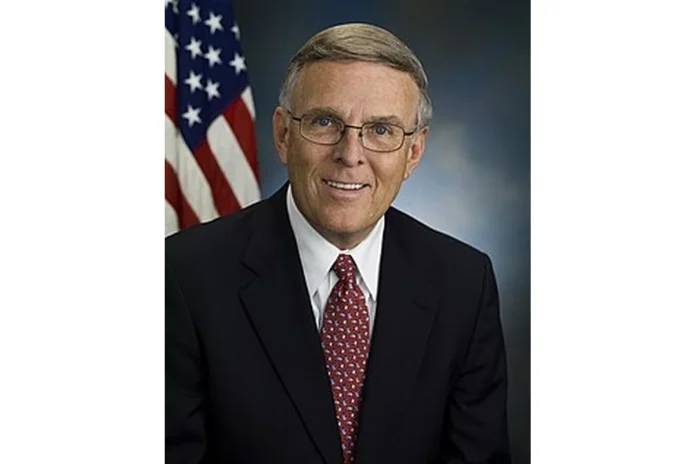
Byron Dorgan Bio
Byron Leslie Dorgan (born May 14, 1942) is an American author, businessman, and former politician who represented North Dakota in the United States Congress for three decades. A member of the Democratic Party (D–NPL), he served in the U.S. House of Representatives from 1981 to 1992 and in the United States Senate from 1992 to 2011. During his long Senate career, Dorgan held senior leadership posts, including Assistant Democratic Floor Leader, Chairman of the Democratic Policy Committee, and Chairman of the Committee on Indian Affairs.
After leaving the Senate, Dorgan joined the Washington, D.C. law firm Arent Fox as a senior policy advisor, became a senior fellow at the Bipartisan Policy Center, and taught as an adjunct professor at Georgetown University. He has written several books, including New York Times best-sellers that focus on economic and political issues as well as eco-thrillers.
Early Life and Background
Byron Leslie Dorgan was born in Dickinson, North Dakota, the son of Dorothy and Emmett Patrick Dorgan. He was raised in the small community of Regent, North Dakota, where he graduated from Regent High School. His father’s family had Irish and Swedish roots, while his mother’s family was of German and Norwegian heritage, reflecting the broader immigrant makeup of the northern plains.
Dorgan earned a Bachelor of Science degree from the University of North Dakota and later completed a Master of Business Administration at the University of Denver. Before entering public service, he worked in the aerospace industry for Boeing and the Martin-Marietta Corporation, gaining a practical view of large-scale American manufacturing and engineering.
Path to US Politics
Dorgan’s public service career began early. At age 26, he was appointed North Dakota State Tax Commissioner to fill a vacancy created by the death of the incumbent, becoming the youngest constitutional officer in the state’s history. He was re-elected to the post by large margins in 1972 and 1976 and was honored as one of the Ten Outstanding State Officials in the United States by Washington Monthly magazine. His future Senate colleague, Kent Conrad, worked in the same office before later succeeding Dorgan.
After an unsuccessful 1974 bid for Congress, Dorgan won a U.S. House seat in 1980. He served in the House for six terms, building a record on energy, agriculture, and rural development issues that prepared him for a statewide run. In 1992, when Democratic incumbent Kent Conrad stepped aside from his Senate seat, Dorgan won the election and began a Senate career that would last nearly two decades.
Byron Dorgan Career
Early Career (1969–1980)
Following his aerospace industry work, Dorgan moved into state government with his appointment as North Dakota State Tax Commissioner. He won two statewide elections in that role, earning a reputation as a careful fiscal manager and a rising star in the state Democratic Party.
His unsuccessful 1974 congressional bid gave him campaign experience that paid off in 1980, when he won a U.S. House seat from North Dakota. He was sworn in to the House in 1981 and began working on issues central to his state, including energy, tribal affairs, and farm policy.
Breakthrough (1981–1992)
In the House, Dorgan served from 1981 until 1992, winning re-election five times. He used his position on energy and tax-writing panels to advocate for renewable fuels, Native American programs, and rural economic development. His visibility grew nationally as he chaired party panels and pushed for stricter oversight of government spending.
The defining moment of his House career came in 1992, when he won the open U.S. Senate seat vacated by Kent Conrad. He was sworn in that same year, jumping from the House to the Senate and joining Democratic leadership ranks.
Democratic Party Era (1992–2011)
As a Senator, Dorgan chaired the Senate Energy and Water Appropriations Subcommittee and served as a senior member of the Senate Energy Committee. He was an early champion of renewable energy, sponsoring the production tax credit for wind energy and helping establish the Renewable Fuels Standard mandate that fueled the ethanol and biofuels industries. He persuaded the U.S. Geological Survey to produce the first official estimate of recoverable oil in the Bakken Formation, a figure that eventually reached up to 4.3 billion barrels and reshaped North Dakota’s economy.
On financial regulation, Dorgan was an early voice warning about unregulated derivatives. He voted against the 1999 repeal of key Glass-Steagall provisions and later was quoted by The New York Times on the eve of the 2008 financial crisis. He also chaired the Aviation Subcommittee of the Senate Commerce Committee, served as co-chairman of the Eno Center for Transportation project on next-generation air traffic control, and earmarked funds for the Red River Valley Research Corridor, anchoring it at North Dakota State University and the University of North Dakota.
Notable Events and Milestones
Among the signature moments of his career, Dorgan supported net neutrality legislation in 2007, sponsored multiple bills modeled on the Truman Committee to root out government contract waste, and voted in 2009 for the $838 billion economic stimulus package. In January 2010, he announced he would not seek re-election, gave his Senate farewell speech on December 9, 2010, and left office in January 2011.
Byron Dorgan Career Wins
Byron Dorgan compiled a long record of election victories in North Dakota, winning multiple terms as State Tax Commissioner, six terms in the U.S. House, and three terms in the U.S. Senate. His political career spanned more than four decades and was anchored by consistently strong margins in statewide races.
North Dakota Political Highlights
Dorgan won his first statewide office in a 1969 appointment, then won re-election as State Tax Commissioner in 1972 and 1976. After losing a 1974 House bid, he won a U.S. House seat in 1980 and was re-elected five times. In 1992, he won the U.S. Senate seat vacated by Kent Conrad, and he was re-elected to the Senate in 1998 and 2004 before retiring in 2011.
Other Wins & Achievements
Beyond elections, Dorgan helped pass the Renewable Fuels Standard, secured federal funding for the Red River Valley Research Corridor, and authored multiple New York Times best-sellers. He also founded the Center for Native American Youth at the Aspen Institute, donating $1 million of unused campaign funds to launch the program.
Byron Dorgan Family
Family Background and Personal Roots
Dorgan was raised in Regent, North Dakota, by Dorothy and Emmett Patrick Dorgan. His paternal family had Irish and Swedish ancestry, while his mother’s family was of German and Norwegian heritage, a heritage that shaped his lifelong interest in rural and small-community life on the northern plains.
Personal Life
Dorgan is married to the former Kimberly Olson, a former Executive Vice President and lobbyist for The American Council of Life Insurers. Together they have two children, Brendon and Haley. From a previous marriage, Dorgan has a son, Scott, who has two children, Mason and Madison, and a daughter, Shelly, who is deceased.