
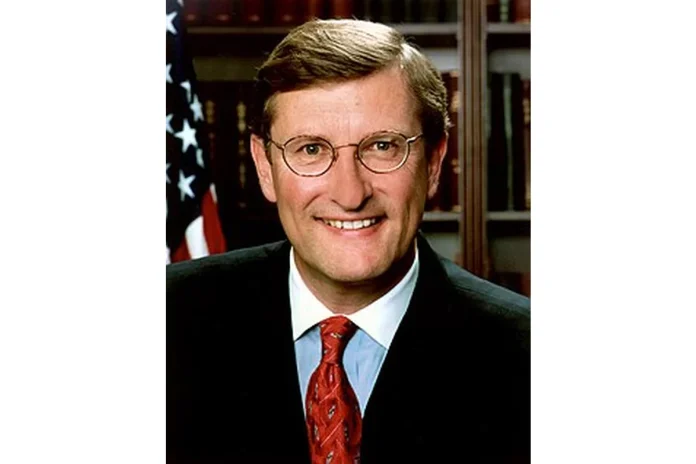
Kent Conrad Bio
Gaylord Kent Conrad (born March 12, 1948) is a former American politician who served as a United States senator from North Dakota. A member of the Democratic–NPL Party, he was first elected to the Senate in 1986 and went on to represent his state in Washington for more than two decades. Conrad became one of the most respected voices in the chamber on federal budget and fiscal policy, spending twelve years as either chairman or ranking member of the Senate Budget Committee. After announcing his retirement in January 2011, he chose not to seek reelection in 2012, and his Senate seat passed to fellow Democrat Heidi Heitkamp.
Conrad is widely regarded as a deficit hawk with a deep command of monetary and economic issues. Since leaving public office he has continued to influence national policy debates through work with think tanks and reform coalitions, including co‑chairing the Bipartisan Policy Center’s Commission on Retirement Security and Personal Savings.
Early Life and Background
Gaylord Kent Conrad was born on March 12, 1948, in Bismarck, North Dakota, the son of Abigail Conrad and Gaylord E. Conrad. He was orphaned at a young age and was subsequently raised by his grandparents in the same city. Growing up in the capital of his home state, Conrad absorbed the political rhythms of North Dakota at an early age, an experience that helped shape the career he would later pursue.
Conrad attended Roosevelt Elementary and Hughes Junior High in Bismarck before his schooling took him abroad to Wheelus Air Base high school in Tripoli, Libya. He eventually returned to the United States to complete his secondary education at the prestigious Phillips Exeter Academy in New Hampshire. His time at Exeter broadened his academic interests and prepared him for the rigors of higher education.
Conrad went on to study at Stanford University, where he earned a Bachelor of Arts degree. He later obtained a Master of Business Administration from The George Washington University School of Business. Together, his early schooling, family roots, and strong academic training laid the foundation for his work in public finance.
Path to US Politics
After graduating from Stanford, Conrad entered public service in his home state. He began his career as a civil servant, working as an assistant to the North Dakota State Tax Commissioner, Byron Dorgan, who would later become a close Senate colleague. This early role gave Conrad firsthand exposure to state-level fiscal management and connected him with the Democratic–NPL network that shaped North Dakota politics.
Conrad made his first run for elective office in 1976, when he campaigned unsuccessfully for the North Dakota Auditor’s office. He persisted, and in 1980 he succeeded Byron Dorgan as State Tax Commissioner, a position he held for six years. During his tenure, Conrad became known for his careful study of tax policy and government finance, building the reputation that would later define his Senate career.
By 1986 Conrad was ready to take his fiscal expertise to Washington. He entered the U.S. Senate race against the Republican incumbent Mark Andrews, drawing on his years in the State Tax Commissioner’s office to make the campaign a referendum on responsible budgeting. That election marked the start of a long Senate career built on his commitment to federal fiscal discipline.
Kent Conrad Career
Early Career (1976–1986)
Conrad’s early political years were shaped by his work in the North Dakota State Tax Commissioner’s office. After his 1976 loss in the race for state auditor, he spent the next several years building expertise in taxation and public administration. In 1980, when Byron Dorgan vacated the tax commissioner post to run for Congress, Conrad stepped into the role and held it until 1986.
During his six years as tax commissioner, Conrad earned a reputation for diligence and a nonpartisan approach to fiscal management. These years gave him the policy foundation and statewide visibility that would prove essential when he set his sights on the United States Senate.
1986 Senate Election and First Years (1986–1992)
In the 1986 election, Conrad pulled off an upset by defeating Republican incumbent Mark Andrews by just 2,120 votes. Andrews had represented North Dakota at the federal level since 1963, first in the House and then in the Senate, making the victory a notable achievement for the relatively young state tax commissioner. During the campaign Conrad pledged not to seek reelection unless the federal budget deficit had fallen substantially by the end of his term.
By 1992 it was clear that the deficit promise would not be kept. Despite polls suggesting voters would have welcomed a reversal, Conrad honored his pledge and refrained from running for reelection to his own seat. Byron Dorgan won the Democratic primary for that seat. However, when long-serving Senator Quentin Burdick died in September 1992, a special election opened the other North Dakota seat. Conrad entered that race, won the Democratic–NPL nomination, and prevailed in the special election. He was sworn in on December 14, 1992, resigning his original Senate seat the same day so that Dorgan could be appointed to the remainder of that term.
Budget Committee Leadership and Senate Years (1992–2012)
Conrad was comfortably reelected in 1994, a year in which Republicans swept most congressional seats outside heavily Democratic states. He went on to win additional Senate terms in 2000 and 2006, and he served as chairman or ranking member of the powerful Senate Budget Committee for twelve years. In that role he became a central figure in the nation’s debates over deficits, spending, and taxation.
His command of budget figures was widely recognized. In April 2006 Time magazine named Conrad one of “America’s 10 Best Senators,” and The American also praised his command of economic issues. He was a leading member of the “Gang of 10,” a bipartisan group that pushed for expanded offshore drilling, and he became famous for using colorful charts as visual aids in his floor speeches, earning him the nickname “Godfather of Charts.” Conrad was a strong supporter of the Simpson-Bowles deficit reduction plan developed by the National Commission on Fiscal Responsibility and Reform.
Retirement and Post-Senate Work (2012–Present)
On January 18, 2011, Conrad announced that he would not run for reelection in 2012, choosing to devote his time to deficit and budget work rather than another campaign. Fellow Democrat Heidi Heitkamp ultimately won the seat. After leaving the Senate, Conrad continued to shape fiscal debates as co-chair of the Bipartisan Policy Center’s Commission on Retirement Security and Personal Savings.
He is also a member of the ReFormers Caucus of Issue One and serves on the board of directors of the Committee for a Responsible Federal Budget. Through these roles, Conrad has remained a prominent voice for fiscal responsibility and bipartisan policy reform.
Notable Events and Milestones
One of Conrad’s most closely watched moments came in 2009, when he was one of only four Democrats to vote to confirm Judge Samuel Alito to the Supreme Court. Earlier, in 2008, he faced scrutiny over favorable mortgage loans from Countrywide Financial, but the Senate Ethics Committee exonerated him in August 2009 after a yearlong investigation.
Kent Conrad Career Wins
Conrad’s electoral record reflects decades of steady support from North Dakota voters, including a 1986 upset, a 1992 special election victory, and reelection bids in 1994, 2000, and 2006.
U.S. Senate Highlights
Conrad’s first Senate victory in 1986 came against incumbent Mark Andrews in one of the closest races of the cycle, decided by just 2,120 votes. His special election win in December 1992 allowed him to continue his Senate career, and his 1994 reelection bucked the national Republican wave. His 2000 and 2006 victories cemented his status as one of North Dakota’s longest-serving senators.
Other Achievements
Conrad was named one of “America’s 10 Best Senators” by Time in 2006, and his nickname “Godfather of Charts” reflected his reputation for making complex budget data accessible. He also served as a member of the National Commission on Fiscal Responsibility and Reform.
Kent Conrad Family
Family Background and Public Lineage
Conrad was born in Bismarck, North Dakota, the son of Gaylord E. Conrad and Abigail Conrad. Orphaned at a young age, he was raised by his grandparents in Bismarck. His first wife, Pam Schafer, is the sister of former North Dakota Governor and U.S. Secretary of Agriculture Ed Schafer.
Personal Life
Conrad has been married twice. He and his first wife, Pam, have a daughter, Jessamyn Conrad, who is the author of the book What You Should Know About Politics … But Don’t. On February 14, 1987, Conrad married Lucy Calautti, his 1986 Senate campaign manager, who has since worked as a lobbyist for Major League Baseball.