
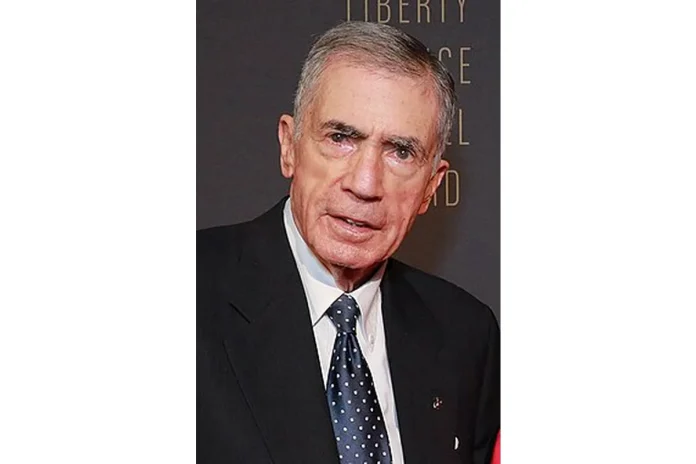
Chuck Robb Bio
Charles Spittal Robb (born June 26, 1939) is an American politician, lawyer, and former United States Marine Corps officer who built a long career in Virginia public life. He served as the 64th governor of Virginia from 1982 to 1986 and later represented Virginia in the United States Senate from 1989 to 2001. A moderate Democrat known for fiscal conservatism and a strong focus on national security, Robb chaired the Democratic Senatorial Campaign Committee and served on key defense and intelligence panels during his time in Washington.
After leaving the Senate, Chuck Robb remained active in public service, co-chairing the Iraq Intelligence Commission from 2004 to 2005 and later serving on the President’s Intelligence Advisory Board. He is married to Lynda Bird Johnson, daughter of President Lyndon B. Johnson, and the couple has three daughters. Since 2001 he has served on the board of trustees of the MITRE Corporation and has been involved with several nonpartisan policy organizations.
Early Life and Background
Charles Spittal Robb was born on June 26, 1939, in Phoenix, Arizona, the son of James Spittal Robb and Frances Howard Woolley Robb. He grew up in the Mount Vernon area of Fairfax County, Virginia, and graduated from Mount Vernon High School. His upbringing in Northern Virginia placed him close to the political center of the country and shaped his early interest in public affairs.
Robb attended Cornell University before transferring to the University of Wisconsin–Madison, where he earned a Bachelor of Arts in 1961. While at Wisconsin, he was a member of Chi Phi fraternity. He later returned to Virginia, graduating from the University of Virginia School of Law with a Juris Doctor in 1973. After law school, he clerked for Judge John D. Butzner Jr. on the United States Court of Appeals for the Fourth Circuit and entered private legal practice at Williams & Connolly in Washington, D.C.
Path to US Politics
Robb’s entry into public service began through the military. After graduating from the Marine Corps Officers’ Candidate School at Quantico as an honor graduate, he served as a White House social aide, a posting that introduced him to the highest levels of American political life. He went on to serve a tour of duty in Vietnam, where he commanded Company I of the 3rd Battalion, 7th Marines and earned the Bronze Star and the Vietnam Gallantry Cross with Star.
Following his military service and law career, Chuck Robb became active in Democratic politics in Virginia. He served on the Fairfax County Democratic Committee and the Virginia Democratic State Central Committee, building a reputation as a thoughtful, policy-oriented Democrat. In 1977 he won election as lieutenant governor of Virginia, becoming the only Democratic statewide winner that year and positioning himself as the leading figure of his party in the state.
Chuck Robb Career
Early Career (1978–1986)
Chuck Robb served as lieutenant governor of Virginia from 1978 to 1982, providing him with a statewide platform and four years of executive-branch experience. In 1981 he led the Democratic ticket as the party’s candidate for governor, appealing to conservative voters who were uncomfortable with his Republican opponent, J. Marshall Coleman. He won the governorship and took office as the 64th governor of Virginia in 1982.
During his single term as governor, Robb was known as a capable but reserved communicator who preferred detailed policy discussions to short sound bites. He balanced the state budget without raising taxes, directed an additional $1 billion toward education, and appointed a record number of women and minorities to state positions, including the first African American justice to the Virginia Supreme Court. He also founded the Democratic Governors Association in 1983 and helped create the Super Tuesday primary system that strengthened Southern states’ influence in presidential nominations.
Breakthrough (1986–1994)
Chuck Robb won a second term as governor in 1985, when Democrats swept all three statewide offices, a result widely viewed as an endorsement of his leadership. He left the governorship in 1986 and set his sights on the United States Senate. In 1988 he won the seat in a decisive victory over Maurice Dawkins, capturing 71 percent of the vote and beginning a twelve-year tenure in the upper chamber.
Robb quickly established himself as one of the most ideologically centrist members of the Senate, often working behind the scenes to build bipartisan deals. In 1991 he was one of only a handful of Democratic senators to support authorizing the use of force to expel Iraqi forces from Kuwait, and he was one of eleven Democrats who voted to confirm Clarence Thomas to the Supreme Court. As chairman of the Democratic Senatorial Campaign Committee in 1992, he helped raise record funds and elect seven new Democratic senators, including four new female senators in what was called the Year of the Woman.
His biggest electoral test came in 1994, when he faced Oliver North, a national figure from the Iran-Contra affair. Despite being outspent roughly four to one, Robb narrowly defeated North in a race that became one of the most closely watched Senate contests of the decade. The campaign was later documented in the 1996 film A Perfect Candidate and in Brett Morgen’s documentary Ollie’s Army.
Democratic Party Era (1994–2001)
Following his 1994 re-election, Chuck Robb continued to champion fiscal discipline and a strong national defense. He was the only Senate Democrat to vote for every item in the Republican Party’s Contract with America that reached the floor, including a balanced budget amendment and a line-item veto. He also became the only senator to serve simultaneously on all three national security committees: Armed Services, Foreign Relations, and Intelligence.
On social issues, Robb charted a more liberal course. He voted for the Federal Assault Weapons Ban, opposed the execution of minors, and rejected a constitutional amendment to ban flag burning. In 1993 he supported the don’t-ask-don’t-tell policy for gay service members, and in 1996 he was the only senator from a Southern state to vote against the Defense of Marriage Act. After twelve years in the Senate, he was defeated in 2000 by Republican former governor George Allen, becoming the only Democratic incumbent senator to lose that year.
Notable Events and Milestones
Chuck Robb’s career is marked by several signature moments, including his 1967 White House wedding to Lynda Bird Johnson, the first such ceremony held in the White House since 1942. He played a central role in creating the Super Tuesday primary and co-founded the Democratic Leadership Council, two institutional changes that reshaped Southern politics for decades. His 1994 victory over Oliver North remains one of the most dramatic Senate races in modern Virginia history.
Chuck Robb Career Wins
Chuck Robb compiled a strong record of electoral victories across more than two decades in statewide politics in Virginia. He won three successive statewide races, was re-elected as governor, and secured two Senate terms before his final defeat in 2000.
Virginia Statewide Highlights
Chuck Robb won the Virginia lieutenant governorship in 1977, the governorship in 1981, and re-election as governor in 1985, making him one of only a few Democrats to hold the office twice in the twentieth century. His 1981 victory was particularly significant because he was the only Democrat to win a statewide race that year. In 1988 he added a United States Senate seat with a commanding 71 percent of the vote, and in 1994 he survived a fierce challenge from Oliver North to win a second Senate term.
Other Wins and Achievements
Beyond elections, Chuck Robb earned distinction as a Marine Corps officer, receiving the Bronze Star and the Vietnam Gallantry Cross with Star for his service in Vietnam, along with the Presidential Service Badge for his time as a White House social aide. He is also the author of the 2021 autobiography In the Arena: A Memoir of Love, War, and Politics, published by the University of Virginia Press.
| Position | Wins | Year |
|---|---|---|
| Lieutenant Governor of Virginia | 1 | 1977 |
| Governor of Virginia | 2 | 1981, 1985 |
| United States Senator from Virginia | 2 | 1988, 1994 |
Chuck Robb Family
Family Background and Public Lineage
Chuck Robb was born to James Spittal Robb and Frances Howard Woolley Robb and raised in the Mount Vernon area of Fairfax County, Virginia. His marriage in 1967 to Lynda Bird Johnson, daughter of President Lyndon B. Johnson and First Lady Lady Bird Johnson, made him a son-in-law of the thirty-sixth President of the United States. The wedding, held in the White House, was the first such ceremony there since 1942 and drew national attention.
Personal Life
Chuck and Lynda Bird Johnson Robb have three daughters, Jennifer, Catherine, and Lucinda, and five grandchildren. The family has long resided in McLean, Virginia, in a home they purchased in 1973. In December 2021, the McLean house was destroyed by fire, and both Senator and Mrs. Robb were hospitalized; he was treated for burns and released, while she was treated for smoke inhalation and non-life-threatening burn injuries.