
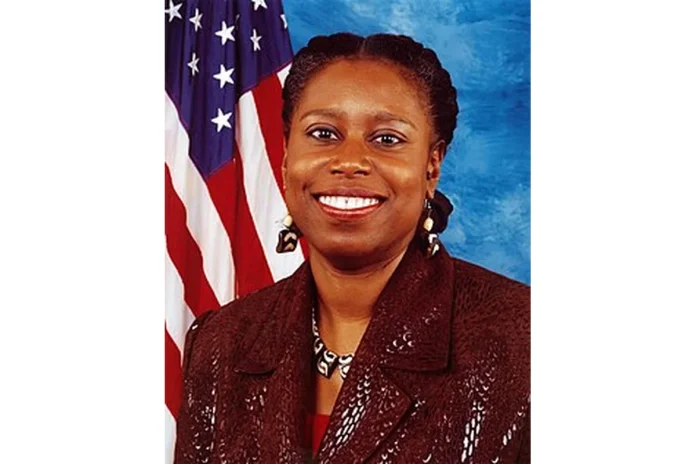
Cynthia Ann McKinney Bio
Cynthia Ann McKinney (born March 17, 1955) is an American politician and educator who represented Georgia in the United States House of Representatives for six terms. First elected in 1992, she was the first African American woman to represent Georgia in Congress. McKinney served in the Georgia House of Representatives from 1988 to 1992 before moving to the U.S. House, where she represented Georgia’s 11th congressional district (1993–1997) and later the 4th congressional district (1997–2003, 2005–2007). A member of the Democratic Party for most of her career, she left the party in 2007 and became the Green Party’s 2008 presidential nominee.
McKinney is widely recognized for her outspoken criticism of U.S. foreign policy, her advocacy for civil rights, and her activism around the September 11 attacks and Hurricane Katrina. Beyond politics, she has worked as a high school teacher and a university professor, and she completed a doctorate in 2015. She later ran for vice president on the Green Party ticket in 2020.
Early Life and Background
Cynthia McKinney was born and raised in the Collier Heights neighborhood of Atlanta, Georgia, the daughter of Billy McKinney, a law enforcement officer, and Leola McKinney, a retired nurse. The family was part of Atlanta’s affluent middle-class African American community, and her upbringing exposed her to public service and political engagement from a young age.
Her father was an active participant in the Civil Rights movement and frequently joined demonstrations across the South. As a police officer, he publicly challenged discriminatory practices within the Atlanta Police Department, often carrying young McKinney on his shoulders to protests. Billy McKinney went on to serve in the Georgia House of Representatives, and his daughter later attributed his election victory to the federal protections guaranteed by the Voting Rights Act.
McKinney earned a Bachelor of Arts degree in international relations from the University of Southern California in 1978, followed by a Master of Arts in Law and Diplomacy from the Fletcher School at Tufts University in 1979. She later completed a Ph.D. in Leadership and Change at Antioch University in 2015, with her dissertation focused on Hugo Chavez.
Path to U.S. Politics
Before entering elected office, McKinney worked as a high school teacher and university professor. In 1984, she served as a diplomatic fellow at Spelman College in Atlanta. She went on to teach political science at Agnes Scott College in Decatur and at Clark Atlanta University, building a foundation in both scholarship and public engagement.
Her formal entry into politics came in 1986, when her father submitted her name as a write-in candidate for a Georgia House seat while she was living in Jamaica. Despite her absence from the district, she received roughly 20 percent of the vote. Two years later, in 1988, McKinney won the same seat, making the McKinneys the first father and daughter to serve simultaneously in the Georgia legislature.
Cynthia Ann McKinney Career
Early Career (1988–1992)
During her four years in the Georgia House of Representatives, McKinney established a reputation for independent thinking. In 1991, she delivered a floor speech decrying the Gulf War, a remark that prompted many of her colleagues to walk out of the chamber. Her early career reflected the political conviction that would define her national profile.
In the 1992 election, McKinney won the newly recreated 11th congressional district, becoming the first African American woman to represent Georgia in the U.S. House of Representatives. She was re-elected in 1994 without serious challenge.
Breakthrough (1993–2003)
McKinney served in the U.S. House of Representatives on the committees of Foreign Affairs, Banking and Finance, and Armed Services. She eventually became the ranking Democrat on the International Relations Subcommittee on International Operations and Human Rights, where she frequently challenged American foreign policy. She opposed U.S. intervention in Kosovo, sanctions against Iraq, and a range of Middle East policy decisions.
In 1995, the U.S. Supreme Court ruled in Miller v. Johnson that her 11th district was an unconstitutional racial gerrymander. McKinney’s district was redrawn and renumbered as the 4th, covering most of DeKalb County. She won the new district easily in 1996 and was re-elected twice more with little substantive opposition. In 2000, she was one of the House members who objected to the certification of Florida’s electoral votes following the disputed presidential election.
Following the September 11, 2001 attacks, McKinney gained national attention by calling for an investigation into what she said were prior warnings the administration had received. Her public questioning of the Bush administration’s handling of the attacks became a defining and controversial chapter of her career.
Green Party Era (2007–Present)
After losing the 2002 Democratic primary to Denise Majette, McKinney returned to Congress in 2004 following Majette’s Senate run. She was defeated again in the 2006 Democratic primary by Hank Johnson. In September 2007, McKinney left the Democratic Party and joined the Green Party.
In 2008, McKinney secured the Green Party’s presidential nomination with journalist and community activist Rosa Clemente as her running mate. She received 161,797 votes, or 0.12 percent of the national total. She later was the Green Party’s vice presidential nominee in 2020. McKinney also briefly affiliated with the Libertarian Party between 2019 and 2020.
Notable Events and Milestones
On March 29, 2006, McKinney was involved in a widely reported confrontation with a U.S. Capitol Police officer at a House office building, an incident that drew national media attention and an apology on the House floor. In 2005, she was the only member of Congress to march across the Crescent City Connection Bridge in Louisiana to protest the treatment of Hurricane Katrina evacuees. A portion of Memorial Drive in her former district was renamed Cynthia McKinney Parkway in June 2000.
Cynthia Ann McKinney Career Wins
McKinney’s electoral record includes six terms in the U.S. House of Representatives, two terms in the Georgia House of Representatives, and a Green Party presidential nomination in 2008. She was the first African American woman elected to represent Georgia in Congress and the first Green Party presidential nominee to appear on ballots in multiple states.
Congressional Election Highlights
McKinney won her initial 1992 race for Georgia’s 11th district and was re-elected in 1994. After redistricting, she won the 4th district in 1996, 1998, and 2000, each time with comfortable margins. She returned to Congress in 2004 after her successor ran for the U.S. Senate, then lost the 2006 Democratic primary to Hank Johnson. In 2012, she attempted a Green Party comeback in the same district but failed to qualify for the ballot.
Other Wins and Achievements
In 2008, McKinney received the Green Party’s presidential nomination at the party’s national convention and earned more than 161,000 votes nationwide. Her achievements also include a 2015 doctorate from Antioch University and ongoing academic work as an assistant professor at North South University.
Cynthia Ann McKinney Family
Family Background and Political Lineage
McKinney was born into a politically engaged family in Atlanta. Her father, Billy McKinney, was a law enforcement officer, civil rights activist, and Georgia state representative whose election was made possible by the Voting Rights Act. Her mother, Leola McKinney, was a retired nurse. McKinney and her father made history as the first father and daughter to serve simultaneously in the Georgia House of Representatives.
Personal Life
McKinney was married to Coy Grandison Sr., a Jamaican politician; the couple later divorced. In 2007, she moved from her longtime residence in Stone Mountain, a suburb of Atlanta, to California. She is a practicing Catholic.