
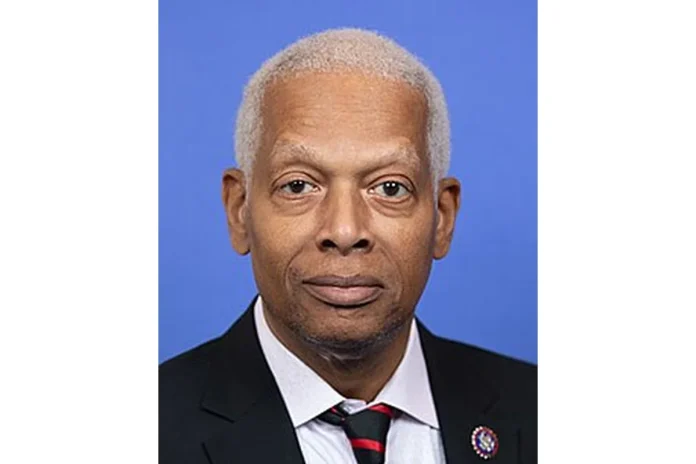
Hank Johnson Bio
Henry Calvin Johnson Jr., widely known as Hank Johnson, is an American lawyer and politician who has served as the U.S. Representative for Georgia’s 4th congressional district since 2007. A member of the Democratic Party, he represents a district anchored in Atlanta’s inner eastern suburbs, including most of DeKalb County and parts of Gwinnett County, along with a small portion of the city of Atlanta. Before his election to Congress, Johnson built a long legal career in Decatur, Georgia, and held local judicial and county offices.
Throughout his tenure in the House of Representatives, Johnson has been involved in foreign policy debates, civil justice legislation, impeachment proceedings, and efforts related to the Israeli-Palestinian conflict. He has consistently won reelection in his heavily Democratic district and is recognized as one of the few Buddhists to have served in the United States Congress.
Early Life and Background
Henry Calvin Johnson Jr. was born on October 2, 1954, in Washington, D.C. He grew up in the nation’s capital, where his father worked for the Bureau of Prisons and rose to become the director of classifications and paroles. At the time, his father was the highest-ranking African American in the Bureau of Prisons, an achievement that shaped Johnson’s understanding of public service and government from a young age.
Johnson pursued his higher education in the South, earning a Bachelor of Arts degree from Clark College in Decatur, Georgia, in 1976. During his college years, he joined the Kappa Alpha Alpha chapter of Omega Psi Phi fraternity. He then went on to receive his Juris Doctor from Texas Southern University’s Thurgood Marshall School of Law in Houston in 1979, setting the stage for a lengthy legal career in Georgia.
Path to US Politics
After completing his law degree, Johnson returned to Decatur, Georgia, where he practiced law for more than 25 years. His early professional life combined private legal work with civic engagement in DeKalb County. In 1989, he was appointed as an associate judge of the DeKalb County magistrate’s court, a position he held until 2001, gaining firsthand experience with the local justice system.
Johnson transitioned to elected office in 2000 when he won a seat on the DeKalb County Commission, where he served from 2001 to 2006. His years as a county commissioner deepened his familiarity with local government operations and prepared him for higher office. By 2006, he was ready to challenge incumbent Representative Cynthia McKinney in the Democratic primary for Georgia’s 4th congressional district, setting in motion the campaign that would launch his national political career.
Hank Johnson Career
Early Career (1989-2006)
Johnson’s public service career began in 1989 when he joined the DeKalb County magistrate’s court as an associate judge. Over the following twelve years, he presided over cases and developed a reputation as a fair and thoughtful jurist. His judicial experience gave him a practical understanding of the law beyond courtroom advocacy, and it strengthened his connection to the residents of DeKalb County.
In 2000, Johnson won election to the DeKalb County Commission, taking office in 2001. Over the next five years, he worked on issues affecting the county’s rapid suburban growth, infrastructure, and public services. His work as a county commissioner gave him a strong political base and positioned him to run for federal office, leading directly to his 2006 congressional campaign against Cynthia McKinney.
U.S. House of Representatives Breakthrough (2006-2008)
The 2006 Democratic primary for Georgia’s 4th congressional district was the real contest in the heavily Democratic seat. Johnson forced McKinney into a runoff by holding her under fifty percent of the vote in the July 18 primary. On August 8, 2006, Johnson won the runoff decisively, capturing 41,178 votes, or fifty-nine percent, compared with McKinney’s 28,832 votes. In the November general election, he defeated Republican nominee Catherine Davis with seventy-six percent of the vote, one of the largest margins for a Democrat in a contested election in the district’s history.
Johnson made aggressive use of the internet during his primary campaign, and the National Journal noted that of all congressional candidates nationwide in 2006, he had the most unique blog strategy. He became the first congressional candidate invited to blog for The Hill’s Congress Blog, a platform usually reserved for sitting members of Congress. On July 30, 2007, Johnson became the first Democratic congressman in Georgia to publicly endorse Barack Obama in the 2008 Democratic presidential primary, demonstrating his early alignment with the rising progressive wing of the party.
Congressional Tenure and Committee Work (2007-Present)
From his earliest days in Congress, Johnson took strong positions on foreign policy and civil liberties. On January 25, 2007, he responded to President George W. Bush’s State of the Union address by criticizing the war in Iraq. On February 8, 2007, he introduced his first bill, a resolution requesting that Defense Secretary Robert Gates take U.S. troops off street patrol duty in Iraq. He also introduced H.Con.Res.80, a resolution calling for peaceful resolution to the Ugandan civil war, which unanimously passed both the House and the Senate, becoming his first successful piece of legislation.
Johnson has served on several high-profile House committees and task forces. He was a member of the United States House Judiciary Task Force on Judicial Impeachment, and in 2009 he served as an impeachment manager for the trial of Judge Samuel B. Kent. In 2010, he again served as an impeachment manager, this time for the trial of Judge Thomas Porteous. He sat on the House Committee on the Judiciary during the 2019 impeachment inquiry into President Donald Trump, voting in favor of both articles of impeachment, and in 2021 he voted for the sole article of impeachment during Trump’s second impeachment trial.
Notable Events and Milestones
One of the most discussed moments of Johnson’s career occurred during a March 25, 2010, House Armed Services Committee hearing on the U.S. military installation in Guam. Johnson suggested to Admiral Robert F. Willard that relocating thousands of Marines and their dependents to the island could cause it to become so overly populated that it would tip over and capsize. His office later clarified that the comment was a deadpan metaphor meant to highlight the scale of the proposed relocation. In 2014, a study by Vanderbilt University and the University of Virginia ranked Johnson as the 18th most effective Democrat in the 112th Congress, placing him higher than any of his Republican colleagues from Georgia. In a separate Washingtonian biennial survey, congressional staffers voted him the “Most Clueless” member of Congress, a designation that has followed him in public discourse.
Hank Johnson Career Wins
Hank Johnson has compiled a long string of election victories since first winning his congressional seat in 2006. He has won reelection in every cycle through 2024, often by wide margins in a district rated as one of the most Democratic in Georgia. His electoral record reflects both his strong local support and the district’s deep partisan lean toward the Democratic Party.
Congressional Election Highlights
Johnson’s first congressional victory came in the 2006 Democratic primary runoff against Cynthia McKinney, followed by a commanding seventy-six percent win in the November general election. He was unopposed for reelection in 2008, winning 99.9 percent of the vote, and won seventy-four percent of the vote in 2010 against Republican Liz Carter. He was reelected without opposition in 2012 and 2014, and continued his winning streak against Republican challengers in 2016, 2018, 2020, 2022, and 2024.
Other Wins and Achievements
Beyond his election victories, Johnson earned recognition for his legislative effectiveness, ranking 18th among House Democrats in the 112th Congress according to a Vanderbilt University and University of Virginia study. He also secured passage of H.Con.Res.80, calling for peaceful resolution to the Ugandan civil war, which was his first successful piece of legislation. His sustained presence on the House Judiciary Committee and his service as an impeachment manager in two separate judicial impeachment trials stand out as notable professional accomplishments.
Hank Johnson Family
Family Background and Public Service Lineage
Johnson was born into a family with a strong record of public service. His father worked for the federal Bureau of Prisons and rose to become the director of classifications and paroles, becoming the highest-ranking African American in the bureau at that time. This legacy of federal service influenced Johnson’s own decision to pursue a career in law and public office, and shaped his understanding of institutional responsibility from an early age.
Personal Life
Johnson is married to Mereda Davis Johnson, an attorney and DeKalb County commissioner. The couple wed in 1979 and have two children together. In December 2009, Johnson publicly disclosed that he had been battling Hepatitis C for more than a decade, a condition that had caused slow speech and occasional difficulty concentrating. He completed an experimental treatment for the disease in February 2010 and reported restored mental acuity, weight gain, and increased energy. Johnson is a practicing Buddhist and a member of Soka Gakkai International, a Nichiren Buddhism-based organization, making him one of only a small number of Buddhists to have served in the United States Congress.