
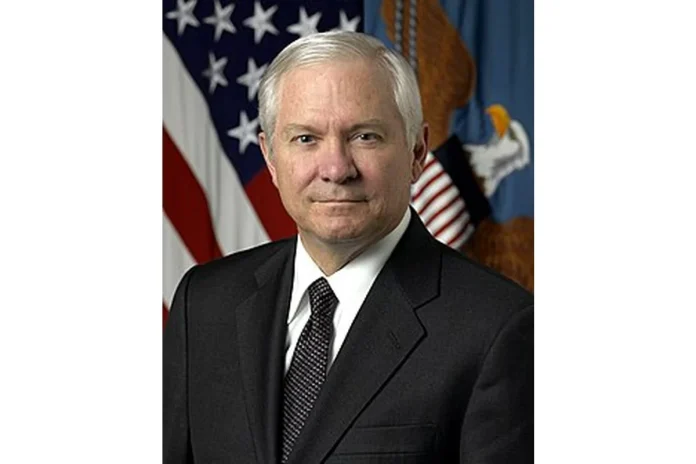
Robert Gates Bio
Robert Michael Gates (born September 25, 1943) is an American intelligence analyst, academic administrator, and former senior government official. He has served as the 24th chancellor of the College of William & Mary since 2012, after a long career in intelligence and national security. Gates also served as the 22nd United States secretary of defense from 2006 to 2011, working under Presidents George W. Bush and Barack Obama, and earlier led the Central Intelligence Agency as the 15th Director of Central Intelligence from 1991 to 1993. A former United States Air Force officer, he spent twenty-six years at the CIA before leading Texas A&M University as its president.
Early Life and Background
Robert Michael Gates was born in Wichita, Kansas, the son of Melville A. “Mel” Gates and Isabel V. (née Goss) Gates. He grew up in Wichita and attended Wichita High School East, graduating in 1961. During his youth, Gates became deeply involved with the Boy Scouts of America, eventually attaining the rank of Eagle Scout. As an adult he received the Distinguished Eagle Scout Award and the Silver Buffalo Award from the BSA, and was later selected as the 2017 BSA National Alumnus of the Year. He is also a Vigil Honor member of the Order of the Arrow, the national honor society of the Boy Scouts.
After high school, Gates received a scholarship to attend the College of William & Mary, where he earned a Bachelor of Arts degree in history in 1965. At William & Mary he was active in the Alpha Phi Omega service fraternity, serving as chapter president, and was president of the Young Republicans. He also served as business manager for the William and Mary Review literary magazine, and received the Algernon Sydney Sullivan Award recognizing the graduate who made the greatest contribution to his fellow students.
Gates continued his education at Indiana University Bloomington, where he earned a Master of Arts in 1966, focusing on the history of Eastern Europe and the South Slavs. He later completed a Ph.D. in Russian and Soviet history at Georgetown University in 1974. His doctoral dissertation examined Soviet sinology and the views of the Kremlin regarding contemporary events in China.
Path to US Politics
While studying at Indiana University, Gates was recruited by the Central Intelligence Agency and joined the agency in 1966. The following year he was commissioned as a Second Lieutenant in the United States Air Force after attending Officer Training School under CIA sponsorship. From 1967 to 1969 he served as an intelligence officer with the Strategic Air Command, including a year at Whiteman Air Force Base in Missouri, where he delivered briefings to intercontinental ballistic missile crews. After completing his military service, he returned to the CIA as a professional intelligence analyst while finishing his doctoral work.
Gates rose steadily through the intelligence community, serving on the staff of the National Security Council in 1974 and returning to the CIA in 1979. He was named deputy director for intelligence in 1982 and deputy director of central intelligence from 1986 to 1989. In early 1987 he was nominated to become Director of Central Intelligence, but withdrew his name after it became clear the Senate would reject the nomination over concerns about his role in the Iran-Contra Affair. His bipartisan career in intelligence and national security eventually led President George H. W. Bush to nominate him a second time for the top intelligence post.
Robert Gates Career
Early Career (1966–1991)
Gates began his intelligence career in 1966 with the CIA and spent the next two decades in a series of analytical and management roles. He worked as an intelligence analyst, served on the National Security Council staff, and held senior positions including director of the Strategic Evaluation Center, director of the DCI/DDCI Executive Staff, deputy director for intelligence, and deputy director of central intelligence. During this period he became closely associated with senior policymakers and developed expertise in Soviet and Cold War issues.
President George H. W. Bush nominated Gates a second time to be Director of Central Intelligence on May 14, 1991, after his earlier nomination was withdrawn. Gates was confirmed by the Senate on November 5, 1991, and sworn in the following day. He served as the 15th Director of Central Intelligence until 1993, overseeing the intelligence community during the collapse of the Soviet Union and the early stages of the Yugoslav conflicts.
Director of Central Intelligence Breakthrough (1991–1993)
As DCI, Gates took charge of the agency during a period of historic global change, including the breakup of the Soviet Union. He oversaw a substantial reorganization of the intelligence community and worked to refocus CIA resources on emerging threats. His tenure, however, included criticism from former colleagues, including Melvin Goodman, who accused Gates of having helped inflate Soviet threat assessments during the Reagan era.
Texas A&M Era (1999–2006)
After leaving the CIA, Gates worked as an academic and lecturer, evaluating theses at the University of Washington and speaking at universities including Harvard, Yale, Georgetown, and Indiana. He also published his autobiography, From the Shadows, in 1996. In 1999 he became interim dean of the Bush School of Government and Public Service at Texas A&M University, and on August 1, 2002, he became the 22nd president of Texas A&M University.
As president, Gates advanced the university’s “Vision 2020” plan to become one of the top ten public universities by 2020. He supported the addition of 440 new faculty positions and oversaw a $300 million campus construction program. He also worked to increase minority enrollment and improve the undergraduate and graduate experience. On February 2, 2007, the Texas A&M University System Board of Regents conferred on him the title of president emeritus.
Secretary of Defense Era (2006–2011)
On November 8, 2006, President George W. Bush nominated Gates to replace Donald Rumsfeld as Secretary of Defense. Gates was confirmed by the United States Senate Armed Services Committee on December 5, 2006, and by the full Senate the following day by a 95–2 vote. He was sworn in on December 18, 2006, and served under Presidents Bush and Obama. He was the first Secretary of Defense to serve under two presidents of different parties.
During his tenure, Gates directed the troop surge in Iraq and later oversaw the beginning of the troop withdrawal. He also implemented a temporary surge of troops in Afghanistan in 2009 and replaced General David D. McKiernan with General Stanley A. McChrystal. In 2010 he lifted the ban on women serving on submarines and worked to prepare the armed forces for the repeal of the “don’t ask, don’t tell” policy. He also directed U.S. military operations during the 2011 intervention in Libya and was present in the White House Situation Room during the raid that killed Osama bin Laden on May 1, 2011.
Gates pursued major budgetary reforms, proposing cuts to traditional weapons programs such as the F-22 Raptor while increasing funding for special operations. He sought $100 billion in defense savings through 2015, closed the Joint Forces Command, and reduced general and flag officer positions. In 2007 Time named him one of the year’s most influential people, and in 2008 U.S. News & World Report named him one of America’s Best Leaders. He retired on July 1, 2011, and received the Presidential Medal of Freedom from President Obama.
Chancellor Era (2012–Present)
On September 6, 2011, it was announced that Gates had accepted the position of chancellor at the College of William & Mary, succeeding Sandra Day O’Connor. He took office on February 3, 2012, and was reappointed in September 2018 to a second seven-year term. As chancellor, he has continued his involvement in education policy, nonprofit leadership, and corporate governance. He was elected as a fellow of the National Academy of Public Administration in 2012 and later served as national president of the Boy Scouts of America from 2014 to 2016.
Gates also serves as a principal in RiceHadleyGates LLC, a strategic consulting firm he co-founded with Condoleezza Rice and Stephen Hadley, and sits on several corporate boards, including Starbucks Corporation. In January 2021 he joined all other living former secretaries of defense in a Washington Post op-ed urging President Trump not to involve the military in determining the outcome of the 2020 elections.
Robert Gates Family
Family Background and Public Service Lineage
Gates was born in Wichita, Kansas, to Melville A. “Mel” Gates and Isabel V. (née Goss) Gates. He grew up in a household that valued civic engagement, an ethic that carried into his decades of public service. His long involvement with the Boy Scouts of America, beginning in his youth and continuing through his later roles as national president, also reflects the influence of his early family and community life.
Personal Life
Robert Michael Gates married Rebecca “Becky” Wilkie on January 7, 1967. The couple has two children. They have spent more than five decades together, including years in Washington, D.C., Texas, and Virginia. Gates’s memoir, Duty: Memoirs of a Secretary at War, was published after his retirement from the Department of Defense and reflects on his long career in intelligence and government.
Robert Gates Awards
Honors and Distinctions
Gates received the Presidential Medal of Freedom, the highest civilian honor in the United States, from President Barack Obama at his retirement ceremony in 2011. He also received the Distinguished Eagle Scout Award and Silver Buffalo Award from the Boy Scouts of America, and was selected as the 2017 BSA National Alumnus of the Year. He has been awarded honorary doctorates by the College of William & Mary (1998), the University of Oklahoma (2011), Kansas State University (2012), and Georgetown University (2014).