
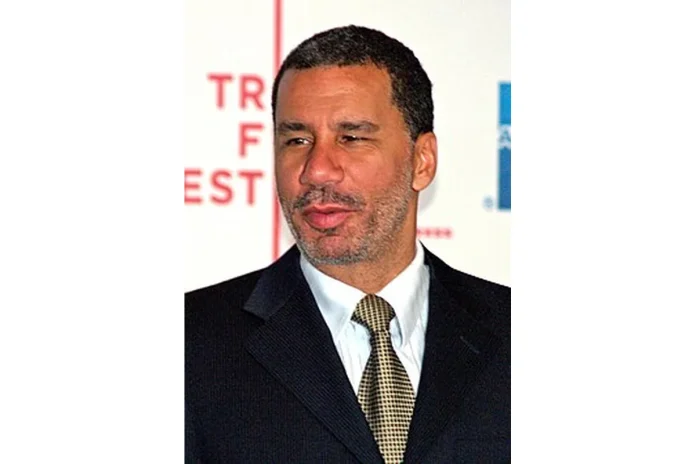
David Paterson Bio
David Alexander Paterson (born May 20, 1954) is an American politician who served as the 55th governor of New York from March 2008 to December 2010. A member of the Democratic Party, he first entered statewide office as lieutenant governor before ascending to the governorship after Eliot Spitzer resigned. Paterson is the first African-American governor of New York and the first legally blind person sworn in as a U.S. state governor. After leaving office, he became a radio talk show host, served on public boards, and published a memoir.
Before his time in the governor’s office, Paterson spent more than two decades in the New York State Senate, including a tenure as Senate minority leader. His career has been defined by historic firsts, fiscal challenges during the Great Recession, and a reputation for sharp political skill and consensus-building.
Early Life and Background
David Alexander Paterson was born in Brooklyn, New York, to Portia Hairston Paterson, a homemaker, and Basil Paterson, a labor law attorney. His father went on to serve as a New York state senator for Harlem, secretary of state under Governor Hugh Carey, and deputy mayor of New York City under Mayor Ed Koch. On his mother’s side, Paterson traces his roots to pre-Civil War African American families in North Carolina and South Carolina, with additional Eastern European Jewish ancestry. His paternal grandmother, Evangeline Rondon Paterson, a Jamaican immigrant, was secretary to Black Nationalist leader Marcus Garvey, and his paternal grandfather, Leonard James Paterson, arrived in the United States from Carriacou in 1917.
At three months old, Paterson contracted an ear infection that spread to his optic nerve, leaving him sightless in his left eye and with severely limited vision in his right. New York City public schools would not guarantee him an education outside special education classes, so his family moved to the Long Island suburb of South Hempstead. He became the first student with a disability in the Hempstead public schools, graduating from Hempstead High School in 1971. Paterson went on to earn a Bachelor of Arts in history from Columbia College of Columbia University in 1977 and a Juris Doctor from Hofstra Law School in 1983.
Path to US Politics
Following his graduation from Hofstra Law School, Paterson worked in the Queens County District Attorney’s office and on the staff of Manhattan borough president David Dinkins. Although he did not pass the New York bar examination, an experience he has linked to insufficient accommodation for his visual impairment, he remained active in civic and political life. In 1985, Paterson obtained the Democratic nomination for a Harlem-area state senate seat left vacant by the death of Leon Bogues and won a virtually uncontested special election that October.
He was re-elected ten times and rose through the Senate, eventually being elected Minority Leader by the Senate Democratic Conference on November 20, 2002. In that role, Paterson became the first non-white state legislative leader in New York and the highest-ranking Black elected official in the state’s history. He gained a reputation for consensus-building and sharp political instincts, and he drew national attention in 2006 when he was selected as the running mate of Democratic gubernatorial nominee Eliot Spitzer.
David Paterson Career
Early Career (1985–2002)
Paterson’s first notable political victory came in the 1985 special election for the 29th Senate district, a Harlem-area seat once held by his father. He won 58 percent of the Democratic committee vote on the first ballot and easily won the general election. He was repeatedly returned to office, representing Manhattan neighborhoods including Harlem, Manhattan Valley, and the Upper West Side.
During this period, Paterson briefly ran in the 1993 Democratic primary for New York City Public Advocate but was defeated by Mark Green. He continued to author reform proposals and developed a reputation for unusual candor, drawing coverage from major state newspapers for his sharp wit and willingness to challenge political conventions.
Senate Minority Leader Breakthrough (2002–2006)
Paterson’s elevation to Senate minority leader in late 2002 marked a turning point in his career. He unseated incumbent leader Martin Connor and became the first non-white state legislative leader in New York history. In this role, he gained statewide prominence and built relationships across the aisle that would later shape his executive leadership.
His stature as minority leader caught the attention of Eliot Spitzer, then the state’s attorney general, who chose Paterson as his running mate for the 2006 gubernatorial race. The Spitzer–Paterson ticket won a landslide with roughly 65 percent of the vote, the largest margin in a New York gubernatorial race at that time, and Paterson was sworn in as lieutenant governor on January 1, 2007.
Governor of New York Era (2008–2010)
Paterson ascended to the governorship on March 17, 2008, after Spitzer resigned amid a personal scandal. He was sworn in by New York Chief Judge Judith Kaye, becoming both the first African-American governor of New York and the first legally blind person to serve as a U.S. state governor. He faced immediate pressure to close a projected $4.7 billion budget deficit and pass a state budget by the April 1 deadline.
Throughout his tenure, Paterson managed the state’s fiscal challenges during the Great Recession, signing a $121.7 billion budget in April 2008 and proposing deep spending cuts in his January 2009 State of the State address. He also took a 10 percent pay cut in March 2009 in solidarity with state workers. In January 2009, he appointed U.S. Representative Kirsten Gillibrand to the U.S. Senate seat vacated by Hillary Clinton, and in July 2009 he named Richard Ravitch as lieutenant governor during a legislative leadership crisis.
Notable Events and Milestones
Paterson’s governorship was marked by several historic firsts, including his appointments of Gillibrand and Ravitch and his role in steering New York through the national financial crisis. He also directed state agencies to recognize same-sex marriages performed elsewhere, a decision that drew national attention, and launched a 2007 bond issue supporting more than $1 billion in stem-cell research funding.
David Paterson Family
Family Background and Political Lineage
Paterson comes from a prominent New York political family. His father, Basil Paterson, served in the state senate and later as secretary of state and deputy mayor, while his mother, Portia Hairston Paterson, was a homemaker with roots in the African American community of the Carolinas. His paternal grandmother worked alongside Black Nationalist leader Marcus Garvey, and his paternal grandfather emigrated from the island of Carriacou in 1917.
Personal Life
Paterson married Michelle Paige in 1992, and the couple had a son. He and his wife publicly acknowledged having had extramarital affairs after his inauguration as governor. They separated in 2012 and filed for divorce in January 2014. In 2019, Paterson married Mary Sliwa, also known as Mary Galda, in a New York City ceremony officiated by former Mayor David Dinkins. Paterson is Catholic.