
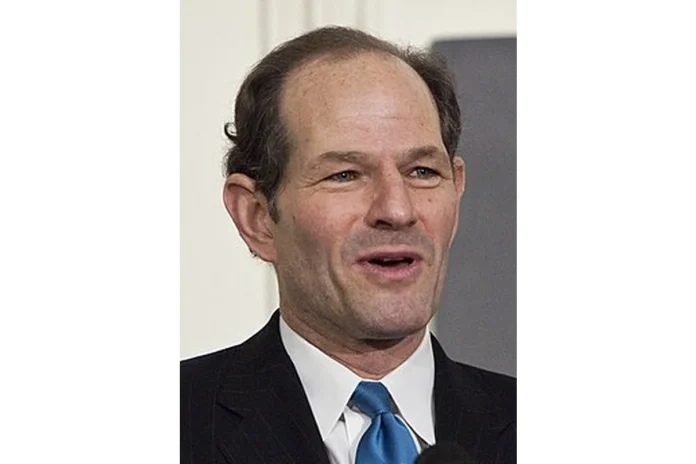
Eliot Spitzer Bio
Eliot Laurence Spitzer (born June 10, 1959) is an American politician and attorney known nationally for his aggressive pursuit of corporate and financial misconduct. A member of the Democratic Party, he served as the 63rd Attorney General of New York from 1999 to 2006 and as the 54th Governor of New York from January 2007 until his resignation in March 2008. During his time as state attorney general, he earned the nickname “Sheriff of Wall Street” for bringing landmark cases against major financial institutions. After leaving the governorship, Spitzer transitioned into media work, teaching, and private business, including leadership of his family’s real estate firm.
Early Life and Background
Eliot Laurence Spitzer was born in 1959 in the Bronx, New York City, the son of Bernard Spitzer, a real estate developer, and Anne Spitzer, née Goldhaber, an English literature professor. He is the youngest of three children and was raised in the affluent Riverdale section of the Bronx. His paternal grandparents were Galician Jews born in Tluste, Poland, while his maternal grandparents were Jewish emigrants from Ottoman-era Palestine. The family was not religious, and Spitzer did not have a bar mitzvah.
Spitzer graduated from the Horace Mann School in 1977 after scoring 1590 out of 1600 on the Scholastic Aptitude Test. He went on to attend Princeton University, where he earned a Bachelor of Arts from the Woodrow Wilson School of Public and International Affairs in 1981. His 151-page senior thesis examined Soviet reactions to revolutions in post-Stalin Eastern Europe. At Princeton, he was elected chairman of the undergraduate student government.
After Princeton, Spitzer attended Harvard Law School, where he served as an editor of the Harvard Law Review and earned his Juris Doctor. He has stated that he received a perfect score on the Law School Admission Test. It was during law school that he met Silda Wall, whom he would later marry in 1987.
Path to US Politics
After clerking for Judge Robert W. Sweet of the U.S. District Court for the Southern District of New York, Spitzer joined the law firm Paul, Weiss, Rifkind, Wharton & Garrison. He then moved to the New York County District Attorney’s office under Robert Morgenthau, where he became chief of the labor-racketeering unit. In 1992, he led a high-profile investigation that broke the Gambino crime family’s control of Manhattan’s trucking and garment industries, an effort that included a creative sting operation involving a phony sweatshop.
Spitzer left the District Attorney’s office in 1992 for the law firm Skadden, Arps, Slate, Meagher & Flom, and from 1994 to 1998 he worked at Constantine and Partners on consumer rights and antitrust cases. In 1994, he made his first run for statewide office, seeking the Democratic nomination for New York Attorney General. He finished last in a four-person primary, capturing 19 percent of the vote. Four years later, in 1998, he ran again and won the Democratic primary with 42 percent of the vote before defeating Republican incumbent Dennis Vacco by a margin of 0.6 percent. Much of his campaign had been financed through loans from his father, a fact that became a campaign controversy.
Eliot Spitzer Career
Early Career (1986–1998)
Spitzer’s early legal career centered on organized crime and white-collar prosecution. As chief of the labor-racketeering unit in the Manhattan District Attorney’s office from 1986 to 1992, he built a reputation for taking on powerful interests. His 1992 case against the Gambino family resulted in guilty pleas from several defendants, including Joseph and Thomas Gambino, $12 million in fines, and a landmark use of antitrust law in a traditionally extortion-focused case.
Following his time as a prosecutor, Spitzer spent several years in private practice, working first at Skadden, Arps and then at Constantine and Partners, where he focused on consumer rights and antitrust matters. These cases helped lay the groundwork for the aggressive style he would bring to the Attorney General’s office. His narrow victory over Dennis Vacco in 1998 launched his statewide political career.
Attorney General Breakthrough (1999–2006)
As New York’s Attorney General, Spitzer fundamentally reshaped the role of the office. He broke with the traditional deference shown to federal regulators and pursued civil actions and criminal prosecutions in corporate white-collar crime, securities fraud, internet fraud, and environmental protection. This approach earned him the nickname “Sheriff of Wall Street” and brought a series of high-profile settlements with major Wall Street firms.
He was re-elected in 2002, defeating Republican Judge Dora Irizarry by a 66 to 30 percent margin. During his tenure, he commissioned a 1999 study of the NYPD’s stop-and-frisk practices, and The Nation endorsed him in 2004 as a possible Democratic vice presidential candidate, calling him the single most effective battler against corporate abuses in either party. He also hired a young attorney named Alvin Bragg, who would later become Manhattan District Attorney.
Governor Era (2007–2008)
Spitzer was elected Governor of New York on November 7, 2006, defeating Republican John Faso and others with 69 percent of the vote, the largest margin of victory ever recorded in a New York gubernatorial race. He was sworn in during a traditional midnight ceremony on January 1, 2007, followed by a public outdoor inauguration, the first such outdoor ceremony in more than a century, accompanied by a concert headlined by James Taylor and Natalie Merchant.
His governorship quickly ran into political turbulence. Controversies over issuing driver’s licenses to undocumented immigrants, the “Troopergate” surveillance scandal involving Senate Majority Leader Joseph Bruno, and conflicts with the state legislature drove his approval rating down to 33 percent by November 2007. On March 10, 2008, The New York Times reported that Spitzer had patronized a high-priced escort service. Five days later, on March 12, 2008, he announced his resignation, effective March 17, 2008. Lieutenant Governor David Paterson succeeded him as governor.
Notable Events and Milestones
Spitzer’s career-defining moments include his successful dismantling of the Gambino crime family’s grip on Manhattan’s garment industry, his string of Wall Street settlements as Attorney General, and his historic 2006 gubernatorial landslide. His abrupt fall from office following the March 2008 prostitution scandal and subsequent resignation remain one of the most dramatic reversals in modern American political history.
Eliot Spitzer Career Wins
Although Spitzer’s career was defined less by election victories than by courtroom and enforcement actions, he compiled a strong record at the ballot box. He won the 1998 Attorney General race against Dennis Vacco, secured re-election in 2002 with a 66 to 30 percent margin, and captured the 2006 gubernatorial election by the largest margin in New York history.
Attorney General and Governor Highlights
His first major win came in 1998 when he defeated Republican incumbent Dennis Vacco by a narrow 0.6 percent margin. His most decisive victory was the 2006 gubernatorial election, in which he took 69 percent of the vote against John Faso. His re-election as Attorney General in 2002 was equally lopsided, signaling broad public support for his confrontational approach to corporate crime.
Other Wins and Achievements
Spitzer’s enforcement record at the Attorney General’s office produced billions of dollars in settlements with financial institutions, including cases against major Wall Street firms for securities fraud and conflicts of interest. He was also instrumental in the 1992 Gambino family prosecution, which resulted in guilty pleas and $12 million in fines.
Eliot Spitzer Family
Family Background and Political Lineage
Spitzer was born into a prominent New York family. His father, Bernard Spitzer, was a wealthy real estate developer, while his mother, Anne Spitzer, was an English literature professor. His paternal grandparents were Galician Jews from Tluste, Poland, and his maternal grandparents were Jewish emigrants from Ottoman-era Palestine. The family’s real estate holdings and Bernard Spitzer’s later financial support of his son’s political campaigns would become a recurring theme in Eliot Spitzer’s public life.
Personal Life
Spitzer married Silda Wall in 1987, and the couple had three daughters. Silda Wall Spitzer stood beside her husband at his March 2008 resignation announcement. In 2013, the couple publicly announced the end of their marriage. Spitzer later had a relationship with Lis Smith, a political spokeswoman, from 2014 to 2015. In 2019, he announced his engagement to Roxana Girand, founder of the real estate agency Sebastian Capital. Although the April 2020 wedding was initially postponed due to the COVID-19 pandemic, Spitzer revealed in 2024 that a small wedding had taken place that same day at his Columbia County home.