

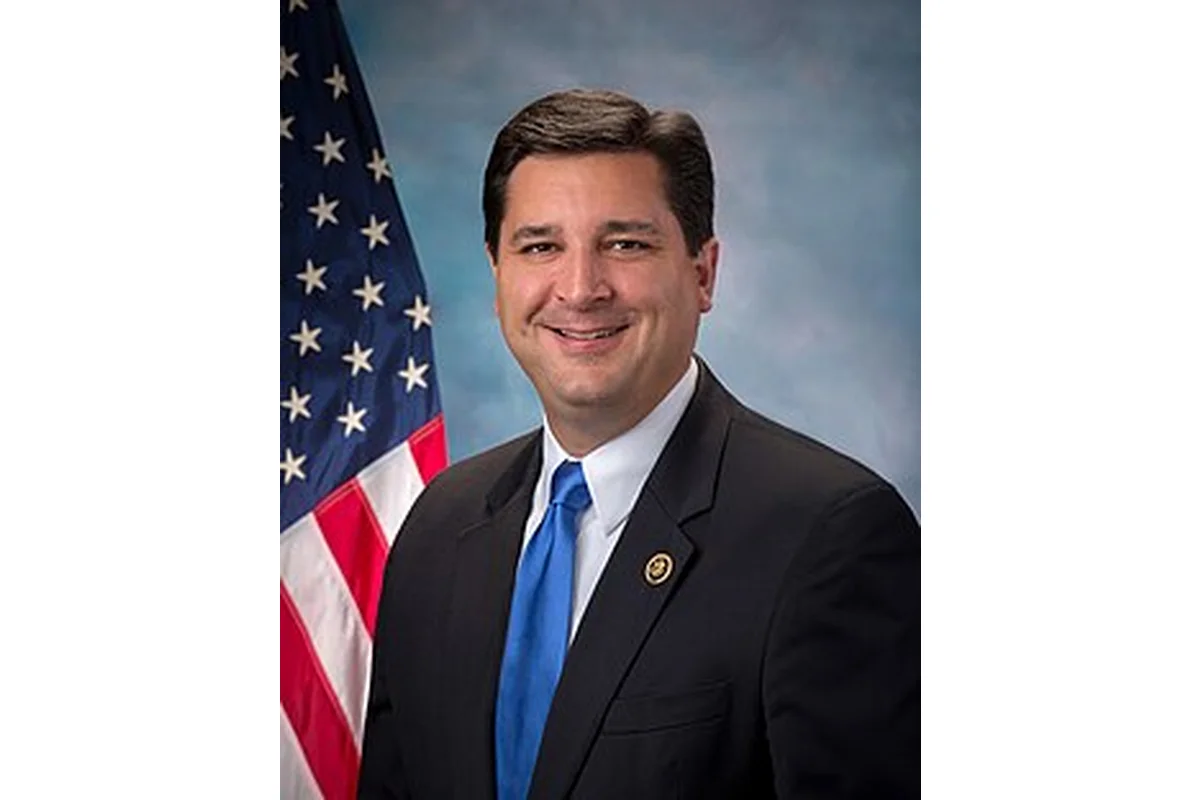
David Rouzer Bio
David Cheston Rouzer is an American politician who has served as the U.S. representative for North Carolina’s 7th congressional district since 2015. A member of the Republican Party, he represents a largely rural stretch of eastern North Carolina that includes Wilmington and Goldsboro. Before his time in the U.S. House of Representatives, Rouzer served in the North Carolina Senate, where he represented the 12th district covering Johnston and Wayne counties.
Born in 1972 and raised in Durham, North Carolina, Rouzer built a career that combined agricultural policy, business, and government service. He has focused his work in Congress on issues important to coastal and rural communities, including agriculture, infrastructure, and conservative policy priorities. His career has included stints as a legislative aide to senior U.S. senators and as a small business owner.
Early Life and Background
David Cheston Rouzer was born on February 16, 1972, at Landstuhl Army Medical Center in Landstuhl, West Germany, where his father was stationed at the time. After his family returned to the United States, he was raised in Durham, North Carolina, and attended Northern High School, where he completed his secondary education.
Rouzer went on to attend North Carolina State University, where he joined the Phi Delta Theta fraternity and developed an interest in agricultural policy. In 1994, he earned a Bachelor of Arts degree with concentrations in agricultural business management, agricultural economics, and chemistry. He later completed additional programs through the Fund for American Studies, including institutes on Business and Government Affairs and on American Economic and Political Systems.
Following his time at NC State, Rouzer pursued opportunities that blended business and public service. He became a small business owner, running companies known as The Rouzer Company and the Warehouse Distribution. Between 2001 and 2002, he also served as an assistant to the dean at the NC State College of Agriculture and Life Sciences, and from 2005 to 2006 he worked as an associate-rural administrator for the U.S. Department of Agriculture.
Path to US Politics
Rouzer’s entry into politics began in the mid-1990s, when he served as a legislative aide and senior policy adviser to U.S. Senators Jesse Helms and Elizabeth Dole. Working in the Senate from 1996 to 2001 gave him direct experience with federal policymaking and helped him build a network within the Republican Party in North Carolina.
In 2000, he ran for North Carolina Commissioner of Agriculture but lost in the Republican primary. Two years later, he found success at the state level. After incumbent Republican state senator Fred Smith retired to run for governor, Rouzer won the 2008 Republican primary for the 12th district with 68 percent of the vote and went on to defeat his Democratic opponent in the general election. He was reelected in 2010 with 70 percent of the vote, establishing himself as a rising figure in North Carolina Republican politics.
David Rouzer Career
Early Career (2008–2012)
Rouzer’s first notable political role came with his election to the North Carolina Senate in 2008, representing a district that included Johnston and Wayne counties. During his four years in the state legislature, he worked on issues such as strengthening laws allowing youths to obtain driver’s licenses and was a proponent of 2012 legislation addressing sea-level rise policy. He also sponsored 17 bills that were signed into law during his tenure.
In 2012, after Republican-led redistricting, Rouzer gave up his state Senate seat to run in the newly redrawn North Carolina’s 7th congressional district, challenging longtime Democratic incumbent Mike McIntyre. After an initial count showed him losing by 655 votes, Rouzer requested a recount, making it the closest House race in the country that year. He ultimately conceded, but the narrow loss positioned him for a future rematch.
Congressional Breakthrough (2014–2018)
When McIntyre retired rather than face another competitive race, Rouzer ran again for the 7th district in 2014 and won the general election with almost 60 percent of the vote. Upon taking office in January 2015, he became only the second Republican to represent a significant portion of eastern North Carolina in the U.S. House since Reconstruction. He was sworn in for the 114th Congress and quickly began focusing on legislation affecting agriculture, coastal communities, and small business.
During his early terms, Rouzer also worked across the aisle on local projects. He coauthored a provision, along with U.S. Senator Thom Tillis, that was added to the John D. Dingell Jr. Conservation, Management, and Recreation Act. The provision gave the U.S. Secretary of the Interior authority to designate a World War II Heritage city each year. The measure was signed into law by President Donald Trump in 2019, and Wilmington was expected to be among the first cities considered for the designation.
Current Tenure in the U.S. House (2019–Present)
After court-ordered redistricting, Rouzer’s district was redrawn to be slightly more compact, dropping most of Johnston County and adding Wilmington and Goldsboro. He won his next election unopposed in the Republican primary and defeated Democrat J. Wesley Casteen with 60.9 percent of the vote. Around this time, he sold his home in Benson and moved to Wilmington, noting that the coastal city was where he spent most of his time.
Rouzer has since continued to win reelection. He secured a third term with 55.5 percent of the vote, his narrowest margin to that point, and later defeated Democratic nominee Christopher Ward with about 60 percent of the vote. As a member of Congress, he is affiliated with the Republican Study Committee and has built a record focused on the priorities of his eastern North Carolina constituents.
Notable Events and Milestones
One of the most defining early moments of Rouzer’s federal career was his 2012 near-miss against Mike McIntyre, a race that ended in the closest House contest in the country that year. His later involvement in the World War II Heritage city designation reflected his focus on honoring the history of his region. In December 2020, he was one of 126 Republican members of the House to sign an amicus brief supporting Texas v. Pennsylvania, a lawsuit that sought to challenge the 2020 presidential election results; the Supreme Court declined to hear the case. On January 6, 2021, he was among 147 Republican lawmakers who objected to the certification of electoral votes.
David Rouzer Family
Family Background and Personal Life
David Cheston Rouzer was born into a family with ties to the U.S. military, as his father was stationed at Landstuhl Army Medical Center in West Germany at the time of his birth. He was raised in Durham, North Carolina, where he completed his early education. Details about his parents and immediate family members are not widely documented in publicly verified sources.
Rouzer currently resides in Wilmington, North Carolina. His decision to relocate there from Benson reflected the geographic center of his congressional district and the location where he spends most of his time serving constituents in eastern North Carolina.