
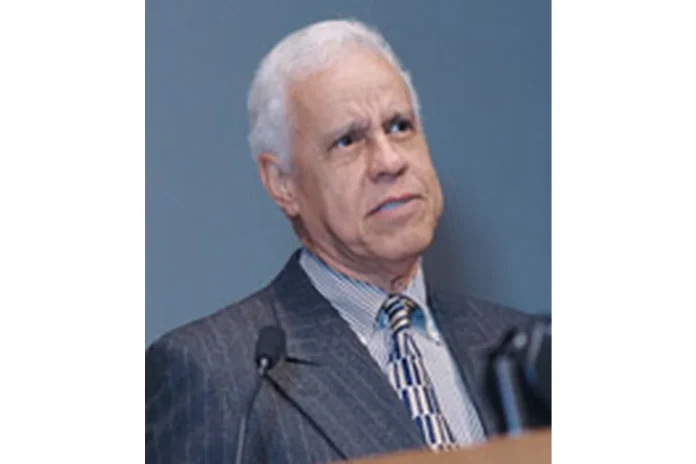
Douglas Wilder Bio
Lawrence Douglas Wilder (born 17 January 1931) is an American lawyer, politician, and professor who served as the 66th governor of Virginia from 1990 to 1994. A member of the Democratic Party, he was the first African American elected governor of a U.S. state since the Reconstruction era, and the first African American ever elected to the office in American history. Wilder later returned to elected office in 2005 when he became the first directly elected mayor of Richmond, serving until 2009. He is currently a professor at the L. Douglas Wilder School of Government and Public Affairs at Virginia Commonwealth University.
Early Life and Background
Lawrence Douglas Wilder was born on January 17, 1931, in the segregated Church Hill neighborhood of Richmond, Virginia. He is the son of Robert Judson Wilder, who sold insurance, and Beulah Olive (Richards) Wilder, who worked as a maid. The seventh of eight brothers and sisters, Wilder was the grandson of enslaved people, his paternal grandparents having been enslaved in Goochland County. He was named for two prominent African American writers, Paul Laurence Dunbar and Frederick Douglass. Although the family was never completely destitute, Wilder recalled his early years during the Great Depression as a childhood of gentle poverty.
Wilder graduated from Armstrong High School in 1947, where one of his classmates was the dancer and choreographer Nat Horne. He then worked his way through Virginia Union University, a historically black university, by waiting tables at hotels and shining shoes, earning a degree in chemistry in 1951. Drafted into the United States Army during the Korean War, he volunteered for combat duty. During the Battle of Pork Chop Hill, he and two other men were cut off from their unit but bluffed nineteen North Korean soldiers into surrendering, an act that earned him the Bronze Star Medal. He left the Army as a sergeant in 1953.
Path to US Politics
Following the war, Wilder worked in the state medical examiner’s office and pursued a master’s degree in chemistry. In 1956, he changed direction and entered Howard University School of Law, graduating in 1959. He then established a law practice in Richmond, the Virginia capital. Wilder’s first entry into elective office came in 1969, when he won a special election for the Virginia State Senate from a Richmond-area district, becoming the first African American elected to the chamber since Reconstruction. A 1970 redistricting handed him a predominantly African American district, and he became a liberal voice in a largely conservative, white-majority legislature.
In 1985, Wilder was narrowly elected as the 35th Lieutenant Governor of Virginia on a Democratic ticket headed by Attorney General Gerald L. Baliles, becoming the first African American to win a statewide election in Virginia. He achieved that breakthrough with a two-month back roads campaign tour of the state’s rural central and western regions, which strengthened his name recognition among white voters. That coalition set the stage for his historic run for the governorship four years later.
Douglas Wilder Career
Early Career (1969-1985)
Wilder represented Richmond in the Virginia Senate from 1969 to 1986, building a record as a skilled legislator on fiscal and social issues. In 1982, he briefly considered an independent run for the United States Senate after the leading Democratic contender honored the segregation-era Byrd Organization, but he abandoned the plan when the rival dropped out. During his tenure in the Senate, Wilder also opposed the death penalty, a position he would later change.
His years in the chamber made him a leading voice for African American political participation in Virginia. He used his platform to push for civil rights enforcement and to challenge the old guard of state politics. By the time he ran for lieutenant governor in 1985, he had become one of the best-known Democratic figures in the state.
Breakthrough (1985-1990)
Wilder’s election as Lieutenant Governor in 1985 was a major breakthrough, the first time an African American had won a statewide race in Virginia. He used the office to expand his coalition and prepare for a gubernatorial campaign. In 1989, he ran for governor against Republican Marshall Coleman in a race that drew national attention. Polls had shown Wilder with a comfortable lead, but the final result was extraordinarily close. Some observers pointed to the Bradley effect, suggesting that some white voters were reluctant to tell pollsters they would not support him. Wilder ultimately won by less than half a percent, a margin that triggered an automatic recount, which reaffirmed his election on November 8, 1989.
Democratic Party Era (1990-1994)
Douglas Wilder was sworn in as governor on January 13, 1990, by former U.S. Supreme Court Justice Lewis F. Powell, Jr. In recognition of his landmark achievement, the National Association for the Advancement of Colored People awarded him the Spingarn Medal for 1990. During his term, Wilder focused on crime and gun control initiatives, lobbied Congress to reallocate federal highway money to Virginia, and won passage of state bond issues to support transportation improvements. In May 1990, he ordered state agencies and universities to divest from South Africa over its apartheid policies.
He also carried out Virginia’s capital punishment law, overseeing fourteen executions in the state’s electric chair, including the controversial case of Roger Keith Coleman, even though he had previously opposed the death penalty. In January 1994, he commuted the sentence of Earl Washington Jr., an intellectually disabled man, after DNA testing raised questions about his guilt. Washington was later fully exonerated in 2000. Wilder left office in 1994 because the Virginia constitution prohibits governors from immediately seeking re-election, and he was succeeded by George Allen.
Notable Events and Milestones
Wilder’s 1989 victory remains one of the most significant moments in American political history, as he became the first African American elected governor in the United States. He also briefly sought the 1992 Democratic presidential nomination before withdrawing before the first primaries. Later, in 1994, he briefly ran as an independent for the U.S. Senate before dropping out of the race. In 2004, he led a successful campaign to make Richmond’s mayor a directly elected position, and he won the first such election with 79 percent of the vote, becoming the first directly elected mayor of the city in sixty years.
Douglas Wilder Career Wins
Wilder’s political career includes a series of historic firsts, beginning with his 1969 special election victory for the Virginia Senate, the first such win for an African American since Reconstruction. He won the office of Lieutenant Governor in 1985, the governorship in 1989, and the mayoralty of Richmond in 2004. Each of these victories broke racial barriers and reshaped Virginia politics.
Governorship Highlights
Wilder’s 1989 victory over Republican Marshall Coleman, decided by less than half a percent and confirmed by recount, was his most consequential win. The result made national headlines and drew comparisons to other civil rights milestones. He served a single four-year term, leaving office in 1994.
Other Wins & Achievements
Earlier, Wilder’s 1985 win as Lieutenant Governor made him the first African American to win a statewide election in Virginia. His 2004 mayoral victory, with 79 percent of the vote, ended a system in which the Richmond City Council had chosen the mayor from among its own members. He was sworn in as mayor on January 2, 2005, and announced in May 2008 that he would not seek another term.
Douglas Wilder Family
Family Background and Political Lineage
Wilder was raised in a large family in Richmond’s Church Hill neighborhood, the seventh of eight children. His father, Robert Judson Wilder, sold insurance, and his mother, Beulah Olive (Richards) Wilder, worked as a maid. His paternal grandparents had been enslaved in Goochland County, a heritage that shaped his later commitment to civil rights. He was named for the African American writers Paul Laurence Dunbar and Frederick Douglass.
Personal Life
Wilder married Eunice Montgomery in 1958, and the couple had three children, Lynn Diana, Lawrence Douglas Jr., and Loren Deane, before divorcing in 1978. He has continued to live in Richmond, Virginia, and remains connected to the city where he was born, raised, and first entered public life.