

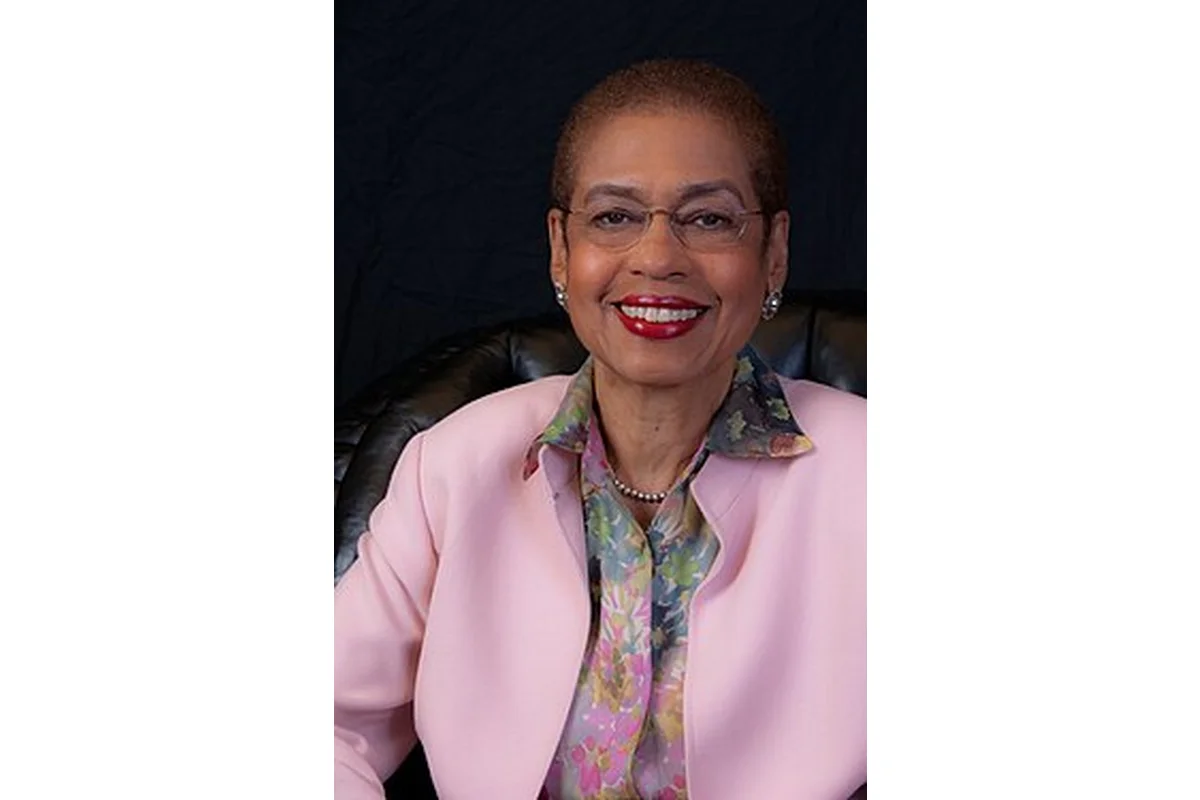
Eleanor Holmes Norton Bio
Eleanor Holmes Norton (born June 13, 1937) is an American politician, lawyer, and human rights activist who has served as the non-voting congressional delegate for the District of Columbia since 1991. A member of the Democratic Party, she is the longest-serving delegate in House history and has spent more than three decades championing voting rights, civil rights, and equality for the residents of Washington, D.C. Beyond her work in Congress, she is widely recognized as a founding figure in American feminist legal thought and as the first woman to chair the Equal Employment Opportunity Commission (EEOC).
Before entering electoral politics, Eleanor Holmes Norton built her reputation in courtrooms, classrooms, and federal agencies. She is a graduate of Yale Law School, a former assistant legal director of the American Civil Liberties Union, and a longtime professor at Georgetown University Law Center. In early 2026, her campaign office announced that she will not seek reelection to the House of Representatives in 2026, closing a congressional career that has spanned more than thirty years.
Early Life and Background
Eleanor Holmes Norton was born in Washington, D.C., the daughter of Vela Lynch, a schoolteacher, and Coleman Holmes, a civil servant. Growing up in the capital, she attended Dunbar High School, a school long celebrated for educating Black students, where she was a member of its last segregated graduating class. She was elected junior class president and graduated as a member of the National Honor Society.
After high school, Eleanor Holmes Norton attended Antioch College, where she earned a Bachelor of Arts degree in 1960. She went on to Yale University, completing a Master of Arts in American studies in 1963, and then graduated from Yale Law School with a Bachelor of Laws in 1964. Her time in the classroom was matched by activism outside it; while still a student, she organized and participated in sit-ins in Washington, D.C., Maryland, and Ohio, and was arrested in the process. During law school, she traveled to Mississippi for the Mississippi Freedom Summer and worked alongside civil rights leaders such as Medgar Evers.
Path to Politics in the United States
Eleanor Holmes Norton’s path into American politics ran through the civil rights movement, the courts, and federal institutions. While at Antioch and Yale, she became an organizer for the Student Nonviolent Coordinating Committee (SNCC), and her early experiences in the South, including a meeting with the beaten activist Fannie Lou Hamer, sharpened her lifelong commitment to social justice. After law school, she clerked for Federal District Court Judge A. Leon Higginbotham Jr. and joined the American Civil Liberties Union in 1965 as assistant legal director, a post she held until 1970.
During the 1970s, Eleanor Holmes Norton built a national profile as a legal advocate and public servant. In 1970, New York City Mayor John Lindsay appointed her to lead the New York City Human Rights Commission, where she convened the country’s first public hearings on discrimination against women. In 1977, President Jimmy Carter named her chair of the EEOC, making her the first woman to lead the agency and the official who issued the EEOC’s first regulations recognizing sexual harassment as a form of sex discrimination. She joined Georgetown University Law Center as a professor in 1982 and continued anti-apartheid activism through the Free South Africa Movement before turning toward electoral politics in 1990.
Eleanor Holmes Norton Career
Early Career (1965–1981)
Eleanor Holmes Norton’s early career was defined by high-profile legal work. As assistant legal director of the American Civil Liberties Union from 1965 to 1970, she argued Carroll v. President and Commissioners of Princess Anne before the Supreme Court on behalf of the white supremacist National States’ Rights Party, a case often cited as a landmark defense of the First Amendment. In 1970, she represented sixty female employees of Newsweek who had filed a claim with the EEOC over the magazine’s policy of allowing only men to serve as reporters; the women won, and Newsweek agreed to hire women as reporters.
In 1977, President Jimmy Carter appointed Eleanor Holmes Norton as chair of the EEOC, making her the first woman to head the agency. During her four-year tenure, she issued the commission’s first formal regulations defining sexual harassment as unlawful sex discrimination under federal civil rights law, a decision that reshaped American workplace protections and made her a central figure in the history of equal employment law.
EEOC and Public Service Breakthrough (1977–1981)
Eleanor Holmes Norton’s chairmanship of the EEOC from 1977 to 1981 was a turning point in her career. She used the position to translate years of advocacy on behalf of women into binding federal policy, declaring sexual harassment a violation of the law. Her time at the commission also elevated her standing as a national voice on civil rights, paving the way for her later appointments and her eventual run for Congress.
Alongside her government work, Eleanor Holmes Norton continued to teach and write. She served as a senior fellow of the Urban Institute and joined the faculty of Georgetown University Law Center in 1982, where she would remain for decades. Her early-career record, blending litigation, regulation, and scholarship, established her as one of the most influential legal minds of her generation.
Congressional Delegate Era (1991–Present)
Eleanor Holmes Norton was elected in 1990 as the Democratic delegate to the House of Representatives, defeating city council member Betty Ann Kane in the primary and going on to win 59 percent of the vote in the general election. She took office on January 3, 1991, and has been reelected every two years since, currently serving in her eighteenth term. As delegate, she sits in the House of Representatives, votes in committee, and offers amendments in the Committee of the Whole, although she is not permitted to vote on the House floor.
Throughout her tenure, Eleanor Holmes Norton has focused on D.C. statehood, voting rights, and progressive policy. She has introduced the Nuclear Disarmament and Economic Conversion Act in successive Congresses and championed the District of Columbia House Voting Rights Act of 2009, which passed the Senate but stalled in the House. She is a member of the Congressional Progressive Caucus and the Congressional Black Caucus. In 2025, colleagues and D.C. officials publicly raised concerns about her health and ability to carry out her duties; her campaign announced in late January 2026 that she will not seek reelection in 2026.
Notable Events and Milestones
Among Eleanor Holmes Norton’s signature accomplishments are the EEOC’s first sexual-harassment regulations, her long fight for full voting representation for the District of Columbia, and her role in landmark First Amendment litigation. She received a Foremother Award from the National Research Center for Women and Families in 2011 in recognition of her lifetime of public service and advocacy.
Eleanor Holmes Norton Career Wins
Eleanor Holmes Norton’s career is marked by sustained electoral success in the District of Columbia, with consistent reelection to the House of Representatives every two years since 1991. Her most consequential wins, however, have been legal and policy victories: a Supreme Court First Amendment ruling in Carroll v. President and Commissioners of Princess Anne, the successful Newsweek discrimination case, and the EEOC regulations that defined sexual harassment as sex discrimination.
Congressional Highlights
Eleanor Holmes Norton has won reelection as the District of Columbia’s delegate in every cycle since 1991, building one of the longest streaks of constituent service in modern House history. Her 1990 general-election victory, in which she received 59 percent of the vote, launched the run.
Other Wins and Achievements
Beyond Congress, Eleanor Holmes Norton has been honored with a 2011 Foremother Award from the National Research Center for Women and Families, and she has been a longtime senior fellow of the Urban Institute and a professor at Georgetown University Law Center.
Eleanor Holmes Norton Family
Family Background and Civic Lineage
Eleanor Holmes Norton was raised in Washington, D.C., by her father, Coleman Holmes, a civil servant, and her mother, Vela Lynch Holmes, a schoolteacher. Her parents’ careers in public service helped shape her lifelong commitment to civic life and equality under the law.
Personal Life
Eleanor Holmes Norton was married to Edward Norton, and the couple separated in 1990; Edward Norton died in 2014. She has two children, John and Katherine; Katherine has Down syndrome. Norton is an Episcopalian and has long made her home in Washington, D.C.