

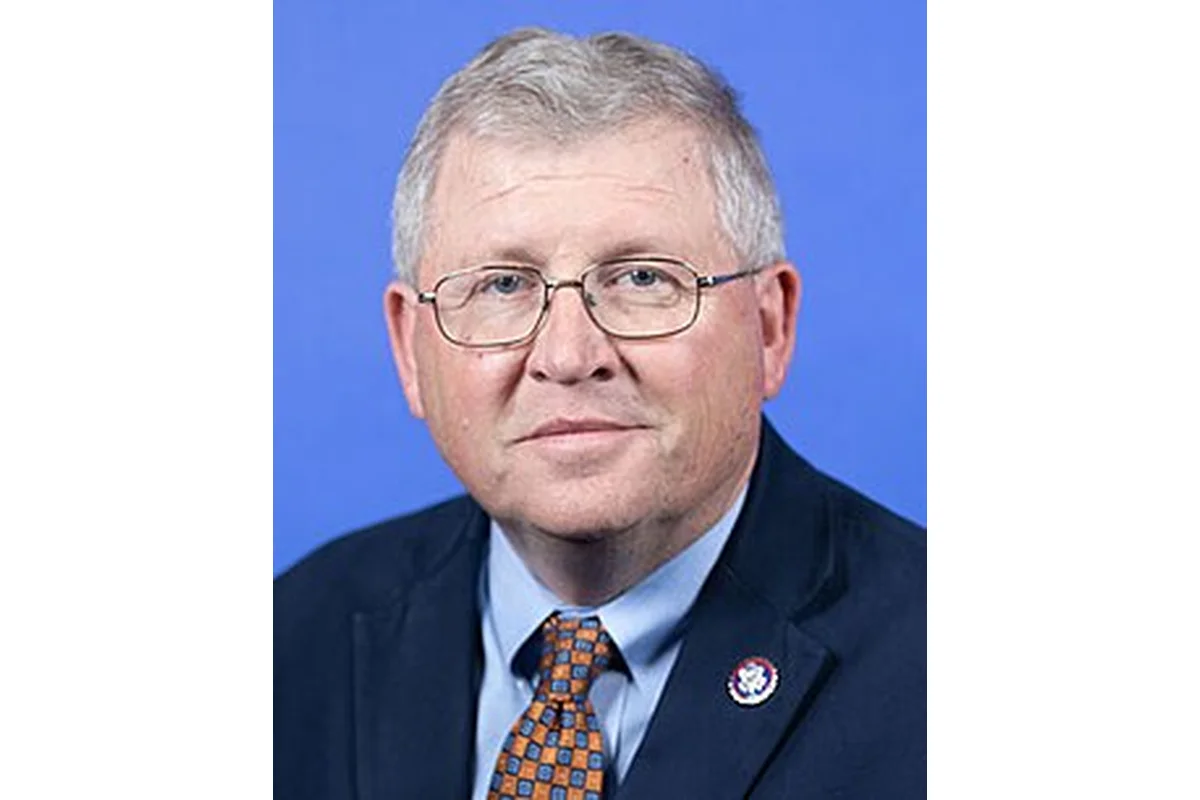
Frank Lucas Bio
Frank Dean Lucas (born January 6, 1960) is an American politician and farmer serving as the United States Representative for Oklahoma’s 3rd congressional district. A member of the Republican Party, he first entered Congress by winning a 1994 special election for Oklahoma’s 6th district and has held his seat continuously since then. His vast, largely rural district covers nearly half of Oklahoma’s land area, stretching from the Panhandle to the western suburbs of Tulsa.
Lucas became dean of Oklahoma’s congressional delegation in 2023 after Senator Jim Inhofe retired from office. A fifth-generation Oklahoman and longtime farmer and rancher, he has also chaired the House Science, Space, and Technology Committee since 2023. He lives in Cheyenne, Oklahoma, with his wife, Lynda Bradshaw, and the couple have three children.
Early Life and Background
Frank Dean Lucas was born on January 6, 1960, in Cheyenne, Oklahoma, a small community in Roger Mills County in the western part of the state. He is a fifth-generation Oklahoman, and his family has farmed and ranched in western Oklahoma for more than one hundred years. Growing up on that land gave him a deep, practical understanding of agriculture, rural economics, and the challenges faced by small communities far from major cities.
Lucas attended local schools before going on to Oklahoma State University in Stillwater, where he earned a Bachelor of Science degree. While at the university, he continued to be closely tied to the family farm, an experience that would shape his later political priorities. After finishing his studies, he returned full time to farming and ranching, building a career as an agricultural producer in Roger Mills County.
Path to US Politics
Lucas’s first step into electoral politics came in 1984, when he challenged the incumbent Democrat Rollin Reimer for the 59th district seat in the Oklahoma House of Representatives. He lost that race by about two thousand votes, and a second bid in 1986 also ended in a narrow defeat in the general election. With a $2,500 donation from former Governor Henry Bellmon supporting his 1988 campaign, he finally won the seat, defeating the same opponent with 56 percent of the vote.
Lucas served in the Oklahoma House of Representatives for the 59th district from 1989 until 1994, representing his home region in the 42nd, 43rd, and 44th Oklahoma Legislatures. His work in state government focused on rural issues, agricultural policy, and the concerns of small-town Oklahomans. By the time the 6th district congressional seat opened in 1994, he had built a strong reputation as a conservative voice for western Oklahoma and was ready to run for federal office.
Frank Lucas Career
Early Career (1984–1994)
Lucas’s early political career was rooted in his home region of western Oklahoma. After two unsuccessful campaigns, his 1988 win made him the Republican state representative for the 59th district. During his six years in the Oklahoma House, he focused on issues important to farmers, ranchers, and rural schools, gaining experience in budgeting, agriculture policy, and legislative negotiation.
He built a reputation as a reliable conservative who understood the day-to-day realities of rural life. That record helped set the stage for his next opportunity. In May 1994, when longtime 6th district Congressman Glenn English resigned to become a lobbyist for rural electric cooperatives, Lucas entered the special election to succeed him.
6th District Years (1994–2003)
Lucas won the Republican nomination for the 1994 special election and faced Democrat Dan Webber, the press secretary to U.S. Senator David L. Boren. Although the state legislature had redrawn the district to include many lower-income Oklahoma City neighborhoods that had never voted Republican, Lucas scored a major upset. He won by eight percentage points, carrying 18 of the district’s 24 counties, and some observers later pointed to his victory as an early sign of the Republican Revolution that November.
He then won a full term in November 1994 with 70 percent of the vote and was reelected seven times, never dropping below 59 percent. In 2002 and 2004, he ran unopposed. After Oklahoma lost a congressional seat following the 2000 Census, his district was renumbered as the 3rd, and it grew even larger, covering about 48.5 percent of the state’s total land area. Lucas continued to win comfortably, including an 83 percent showing in the 2014 Republican primary.
3rd District Era (2003–Present)
Representing the newly numbered 3rd district, Lucas remained a strong voice for agriculture, energy, and rural development. In 2014, he introduced the Customer Protection and End User Relief Act, which would have reauthorized the Commodity Futures Trading Commission through 2018 and adjusted parts of the Dodd-Frank Wall Street Reform and Consumer Protection Act. In 2022, he was one of 39 Republicans to vote for the Merger Filing Fee Modernization Act, an antitrust package aimed at curbing anti-competitive corporate behavior.
On January 6, 2021, in the aftermath of the attack on the United States Capitol, Lucas joined 146 other Congressional Republicans in voting against the certification of the 2020 presidential election. After Republicans won the House majority in the 2022 elections, he became chair of the House Science, Space, and Technology Committee in 2023, with jurisdiction over NASA, the National Science Foundation, the National Institute of Standards and Technology, and the Office of Science and Technology Policy. He has laid out an ambitious agenda covering independence for the National Oceanic and Atmospheric Administration, unmanned drone development, fusion energy research, and broader geographic distribution of federal research funding.
Notable Events and Milestones
Lucas’s 1994 special-election win is widely seen as a signature moment in his career, marking both his own entry into Congress and an early signal of the broader Republican wave that year. In 2023, he became dean of Oklahoma’s congressional delegation and chair of the House Science, Space, and Technology Committee, solidifying his role as a senior figure in the state’s political establishment. In August 2023, he underwent hip surgery after being injured on his ranch, an event that underscored his continued hands-on involvement in his family’s agricultural operations.
Frank Lucas Career Wins
Across more than three decades in public office, Frank Dean Lucas has compiled a long record of election victories at both the state and federal levels. He has won multiple terms in the Oklahoma House of Representatives and has been continuously reelected to the United States House since 1994, often by wide margins.
US House of Representatives Highlights
Lucas first won his congressional seat in the 1994 special election for Oklahoma’s 6th district, defeating Democrat Dan Webber. He then won a full term later that year with 70 percent of the vote and was reelected seven consecutive times, never receiving less than 59 percent of the vote. He ran unopposed in both 2002 and 2004, and he won the 2014 Republican primary with 83 percent of the vote. In 2024, he defeated primary challengers Robyn Lynn Carder and Darren Hamilton with 74 percent of the vote.
Other Wins & Achievements
At the state level, Lucas won the 59th district seat in the Oklahoma House of Representatives in 1988 and served through 1994 before moving to Congress. His elevation to dean of Oklahoma’s congressional delegation in 2023 and his chairmanship of the House Science, Space, and Technology Committee reflect a career built on seniority, agricultural expertise, and steady electoral success.
Frank Lucas Family
Family Background and Farming Lineage
Frank Dean Lucas is a fifth-generation Oklahoman whose family has farmed and ranched in western Oklahoma for more than a century. That long agricultural heritage is a defining part of his identity and has shaped his policy focus throughout his time in office. He continues to be involved in ranching in Roger Mills County, where he was raised.
Personal Life
Lucas married Lynda Bradshaw in 1988, and the couple lives in Cheyenne, Oklahoma. They have three children and three grandchildren. Beyond his political work, he remains closely tied to his ranch and to the rural communities he has represented for most of his life.