
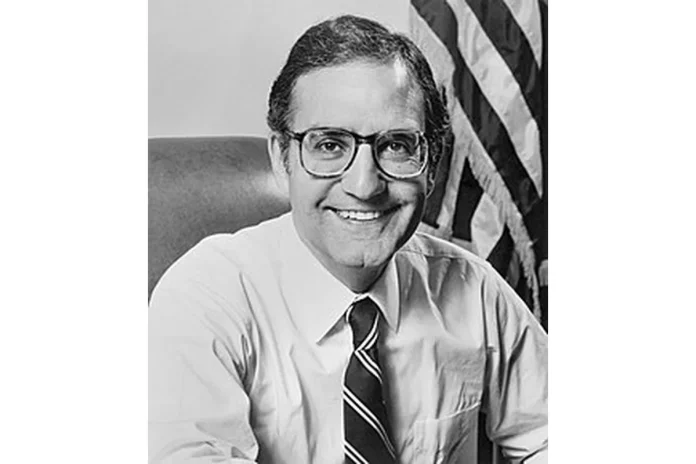
George J. Mitchell Bio
George John Mitchell Jr. (born 20 August 1933) is an American politician, diplomat, and lawyer whose career has spanned government service, international peace negotiations, corporate leadership, and academia. A leading member of the Democratic Party, he represented Maine in the United States Senate from 1980 to 1995 and served as Senate Majority Leader from 1989 to 1995, shaping major legislative achievements of the era. After leaving the Senate, he became a globally recognized mediator, most notably as the principal architect of the 1998 Good Friday Agreement in Northern Ireland. He is one of the few people in modern times to have served in the executive, legislative, and judicial branches of the federal government.
Early Life and Background
George John Mitchell Jr. was born on 20 August 1933 in Waterville, Maine. His father, George John Mitchell Sr. (born Joseph Kilroy), was an Irish immigrant who had been orphaned and later adopted by a Lebanese American, and worked as a janitor at Colby College. His mother, Mary (née Saad), was a textile worker who had immigrated to the United States in 1920 from Bkassine, Lebanon, at the age of eighteen. Mitchell was raised in a family of five children in a working-class home, alongside three brothers who were all noted athletes.
Mitchell was raised a Maronite Catholic and served as an altar boy at St. Joseph’s Maronite Church in Maine during his childhood. Throughout junior high school and high school, he worked alongside his father as a janitor, helping to support the family. Although he was a talented student, he often found himself overshadowed by his brothers’ athletic achievements. After graduating from high school at the age of sixteen, Mitchell went on to attend Bowdoin College in Brunswick, Maine.
Path to US Politics
At Bowdoin College, Mitchell held several jobs and played on the basketball team, graduating with a Bachelor of Arts degree in 1954. He had originally intended to attend graduate school and then teach, but instead served in the United States Army from 1954 to 1956, rising to the rank of first lieutenant. He later attended Georgetown University Law Center on a part-time basis at night, receiving his Bachelor of Laws in 1961, and has since been awarded an honorary Doctor of Laws degree from Bates College.
After law school, Mitchell served as a trial attorney for the Antitrust Division of the United States Department of Justice in Washington from 1960 to 1962, and then as executive assistant to Senator Edmund S. Muskie from 1962 to 1965, where he first gained interest in the political world. He practiced law in Portland, Maine, from 1965 to 1977, also serving as assistant county attorney for Cumberland County in 1971. In 1974, Mitchell won the Democratic nomination for governor of Maine, though he lost in the general election to independent candidate James B. Longley. He was then appointed United States Attorney for Maine by President Jimmy Carter, serving from 1977 to 1979, before being nominated to the United States District Court for the District of Maine in 1979, where he briefly served before entering the Senate.
George J. Mitchell Career
Early Career (1977–1988)
Mitchell’s federal career began in 1977 when President Jimmy Carter appointed him as United States Attorney for Maine, a position he held for two years. In 1979, he was nominated to a new seat on the United States District Court for the District of Maine, confirmed by the Senate, and commissioned in October of that year. His judicial service ended in May 1980 when he was appointed to the United States Senate by Governor Joseph Brennan to fill the seat vacated by Edmund Muskie, who had resigned to become Secretary of State. Mitchell is also the last registered Democrat to represent Maine in the U.S. Senate.
After winning his first full Senate term in 1982 with a victory over Congressman David Emery, Mitchell rose quickly through the Democratic leadership. He was elected chair of the Democratic Senatorial Campaign Committee in 1984 and helped the party regain control of the Senate in 1986, gaining a net eight new seats and a 55–45 majority. During the illness of President pro tempore John C. Stennis, Mitchell served as Deputy President pro tempore in the 100th United States Congress, becoming the only senator other than Hubert Humphrey to have held that post. In 1988, he was reelected by more than 348,000 votes, the largest margin of victory in a Senate election that year and the largest majority ever for a senator from Maine.
Senate Majority Leader Breakthrough (1989–1995)
Mitchell served as Senate Majority Leader from 1989 to 1995, a period defined by significant legislative accomplishments. Under his leadership, the Senate reauthorized the Clean Air Act in 1990 and passed the landmark Americans with Disabilities Act of 1990. The Senate also approved the North American Free Trade Agreement and supported the formation of the World Trade Organization. Mitchell voted in favor of the bill establishing Martin Luther King Jr. Day as a federal holiday and the Civil Rights Restoration Act of 1987, including voting to override President Reagan’s veto of the latter.
Mitchell’s tenure was also marked by notable Supreme Court confirmation battles. He voted against the nominations of Robert Bork and Clarence Thomas to the Supreme Court, stating explicitly that he believed Thomas’ nomination constituted a racial quota. In 1994, Mitchell turned down an offer of appointment by President Bill Clinton to the United States Supreme Court, choosing to remain in the Senate to help pass significant health-care legislation. He did not seek reelection in 1994, ending his fifteen-year career in the upper chamber.
Northern Ireland and the Middle East Era (1995–2011)
After leaving the Senate, Mitchell was appointed United States Special Envoy for Northern Ireland (1995–2001) by President Bill Clinton. He first led an international body to review options for paramilitary arms decommissioning, producing the Mitchell Principles that regulated access to subsequent all-party peace talks. Mitchell then co-chaired the all-party talks that led to the Belfast Agreement, signed on Good Friday 1998 and now known as the Good Friday Agreement. His mediation between the parties was widely regarded as crucial to the success of the talks. In recognition of his role, he was awarded the Presidential Medal of Freedom in 1999 and the Liberty Medal in 1998.
In 2009, President Barack Obama and Secretary of State Hillary Clinton appointed Mitchell as Special Envoy for Middle East Peace, a position he held until May 2011. During his tenure, he engaged with Israeli, Palestinian, Egyptian, Jordanian, Turkish, and Saudi leaders in the wake of the 2008–09 Gaza War. He had previously led the 2001 Mitchell Report on the Arab–Israeli conflict, which stressed the need for Israel to halt settlement expansion and for the Palestinians to prevent violence. Obama praised Mitchell upon his resignation, citing his deep commitment to resolving conflict.
Disney, Baseball, and Beyond (2004–Present)
On 4 March 2004, the Walt Disney Company board of directors named Mitchell as Michael Eisner’s replacement as Chairman of the Board, a role he held until 1 January 2007. He had already served on the boards of Xerox, Starwood, FedEx, and Staples, Inc., and he played an important role in the selection of Robert A. Iger as Disney’s new CEO in 2005. Mitchell has also served as a director of Unilever and the Boston Red Sox, and as partner and chairman of the Global Board of DLA Piper.
In 2006, Major League Baseball Commissioner Bud Selig tapped Mitchell to lead an investigation into the use of performance-enhancing drugs by players. Mitchell released a 409-page report on 13 December 2007, naming 89 former and current players for whom evidence of steroid or prohibited-substance use existed. Mitchell has continued to serve in academic and advisory roles, including as a senior fellow at Columbia University’s Center for International Conflict Resolution, chancellor of Queen’s University in Belfast (1999–2009), founder of the Mitchell Institute in Portland, Maine, and co-chair of the Bipartisan Policy Center, which he helped establish in 2007.
Notable Events and Milestones
Among Mitchell’s most defining achievements is the 1998 Good Friday Agreement in Northern Ireland, for which he is widely recognized as the principal architect. He also led the 2001 Mitchell Report on the Arab–Israeli conflict and the 2007 Mitchell Report on performance-enhancing drugs in Major League Baseball. He received the Presidential Medal of Freedom in 1999 and was made an Honorary Knight Grand Cross of the Order of the British Empire the same year. In 2018, he was awarded Freedom of the City of Belfast alongside former President Bill Clinton.
George J. Mitchell Career Awards
Throughout his public service, Mitchell has been recognized with numerous prestigious awards for his work in government, diplomacy, and peacebuilding. These honors reflect the breadth of his contributions, from environmental and disability legislation in the U.S. Senate to international mediation in Northern Ireland and the Middle East.
Awards and Honors Highlights
Mitchell received the U.S. Senator John Heinz Award for Greatest Public Service in 1994 and the Golden Plate Award of the American Academy of Achievement in 2002. In 1999, he was awarded the Presidential Medal of Freedom and was invested as an Honorary Knight Grand Cross of the Order of the British Empire. He received the Liberty Medal in 1998 for his role in the Northern Ireland peace process and the Freedom Medal in 2003. On 10 April 2018, Mitchell was awarded Freedom of the City of Belfast alongside former President Bill Clinton in a ceremony at the Ulster Hall.
Other Honors and Achievements
In 2014, a portrait of Mitchell was unveiled for display at the Maine State Capitol alongside those of other notable Mainers. The George J. Mitchell Scholarship, which he inspired, sponsors graduate study for twelve Americans each year in the Republic of Ireland and Northern Ireland. A 2025 documentary titled The Negotiator, which follows Mitchell’s work to broker the Good Friday Agreement, was released at the Maine International Film Festival.
George J. Mitchell Family
Family Background and Heritage
Mitchell was born into a working-class family of five children in Waterville, Maine, with deep Irish and Lebanese roots. His father, George John Mitchell Sr. (born Joseph Kilroy), was born in Ireland and adopted by a Lebanese American after being orphaned, while his mother, Mary (née Saad), immigrated to the United States from Bkassine, Lebanon, in 1920. Mitchell was raised a Maronite Catholic and was one of five children, including three brothers who were noted athletes during their youth.
Personal Life
Mitchell was married to Sally Heath for 26 years before they divorced in 1987, and they have a daughter, Andrea. In December 1994, at the age of 61, he married Heather MacLachlan, a sports management consultant. Together they have a son, Andrew, and a daughter, Claire, who was named in honor of Claire Bowes (née Gallagher), a woman who had inspired Mitchell after she was blinded in the Omagh bombing. Mitchell was diagnosed with a small, low-grade, and localized prostate cancer in 2007 and with acute leukemia in August 2020, though by April 2023 he described himself as pain-free and in remission.