

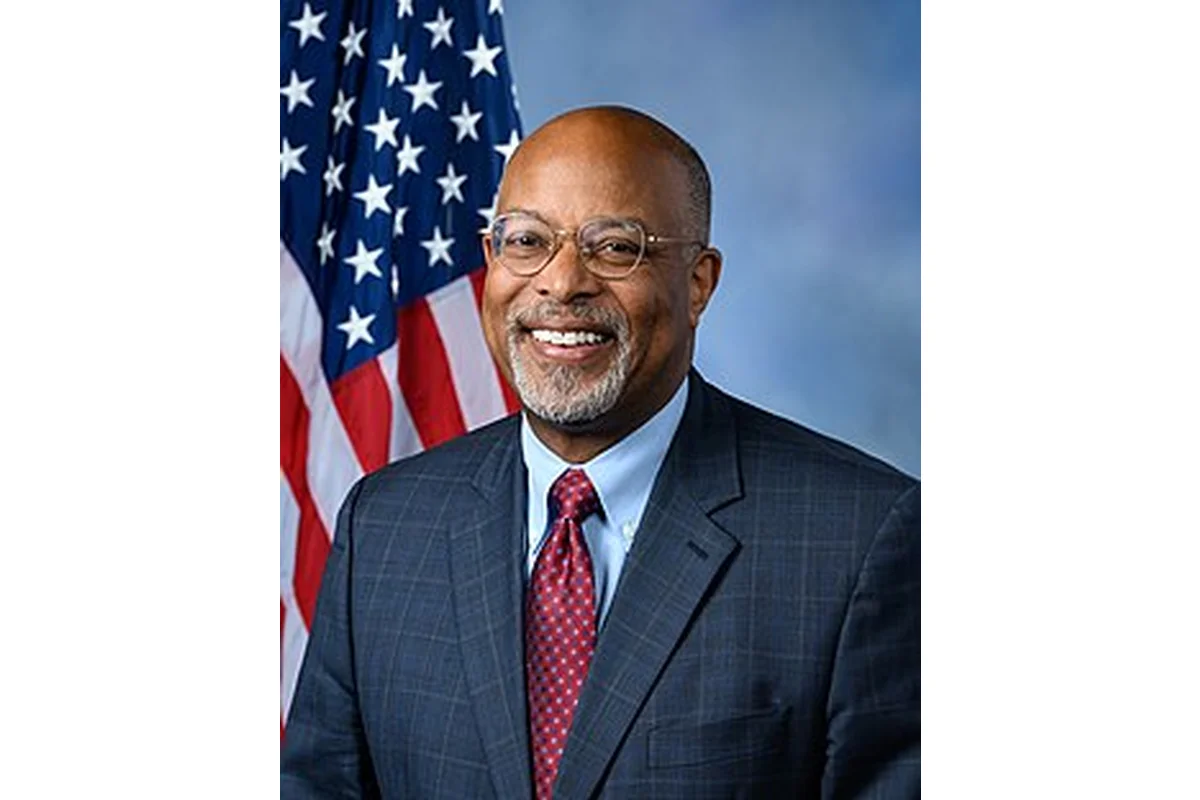
Glenn Ivey Bio
Glenn Frederick Ivey is an American politician and attorney serving as the U.S. representative for Maryland’s 4th congressional district since 2023. A Democrat, he previously built a long career in law, government, and public service, including two terms as state’s attorney for Prince George’s County from 2003 to 2011. Ivey is also a former chair of the Maryland Public Service Commission and the founder of the Greenbelt-based law firm Ivey & Levetown.
His work has spanned Capitol Hill, the U.S. Department of Justice, and private practice. He is known for his focus on criminal justice reform, public safety, and community engagement. Ivey resides in Cheverly, Maryland, with his wife and family.
Early Life and Background
Glenn Frederick Ivey was born on February 27, 1961, in Chelsea, Massachusetts. He spent much of his childhood in Rocky Mount, North Carolina, where much of his extended family lived. His mother worked as the first Black teacher at an all-white school in the area, an experience that shaped his early awareness of civil rights and public service.
His immediate family later moved to Dale City, Virginia, after his father took a job with the United States Department of Labor. Ivey graduated with honors from Princeton University, where he earned an A.B. degree in politics in 1983. He went on to receive a J.D. degree from Harvard Law School in 1986, laying the foundation for his legal and political career.
Path to U.S. Politics
After graduating from Harvard Law School, Ivey joined the Baltimore law firm of Gordon-Feinblatt before moving to Capitol Hill in 1987 to serve as an aide to U.S. representative John Conyers. He later worked for the law firm of Preston, Gates, Ellis & Rouvelas before joining the United States Department of Justice in 1989.
At the Department of Justice, Ivey served as an assistant U.S. attorney in Washington, D.C., working under U.S. Attorney for the District of Columbia Eric Holder. He later returned to Capitol Hill, serving as majority counsel to U.S. Senate Banking Committee chairman Donald Riegle and as counsel to senator Paul Sarbanes during the Senate Whitewater investigations. In 1998, Governor Parris Glendening appointed Ivey chairman of the Maryland Public Service Commission, where he oversaw the deregulation of the state’s electric power industry.
Glenn Ivey Career
Early Career (1986–2002)
Following his time on Capitol Hill and at the Department of Justice, Ivey built a broad legal career in both the public and private sectors. He served as chief counsel to Senate Democratic leader Tom Daschle until 1998 and later joined the K&L Gates law firm. He also taught trial advocacy at Harvard Law School during winter sessions beginning in 2013 and served as an adjunct professor at the University of Maryland School of Law from 1995 to 2014.
In 2002, Ivey ran for Prince George’s County state’s attorney, seeking to succeed outgoing state’s attorney Jack B. Johnson. He was endorsed by U.S. representative Albert Wynn, U.S. senator Paul Sarbanes, and The Washington Post. He defeated deputy state’s attorney Mark Spencer in the primary with 60.0% of the vote and ran unopposed in the general election, beginning a new chapter in his public service career.
Prince George’s State’s Attorney Breakthrough (2002–2011)
Glenn Frederick Ivey was sworn in as Prince George’s County state’s attorney in December 2002 and was re-elected to a second term. When he took office, the county had the second-highest crime rate in Maryland. During his two terms, he oversaw reductions in crime and led reform measures that placed cameras in police interrogation rooms and prosecuted officers accused of excessive force.
He partnered with faith leaders to assist domestic violence survivors and worked to secure tougher sentences for convicted offenders. Ivey also involved community groups in crafting policies and strategies for tackling crime. In 2010, he endorsed Angela Alsobrooks, the executive director of the Prince George’s County revenue authority, to succeed him as state’s attorney.
U.S. House of Representatives Era (2023–Present)
Glenn Frederick Ivey was sworn into the United States House of Representatives on January 3, 2023, succeeding Anthony Brown in Maryland’s 4th congressional district. The district covers most of the Black-majority areas on the Maryland side of the Washington metropolitan area and is tied with California’s 12th for the most Democratic district in the country, with a Cook Partisan Voting Index rating of D+40.
Since taking office, Ivey has been an active member of the House Democratic caucus. In April 2023, he introduced his first bill, the Raise The Age Act, which would raise the legal age to buy a semi-automatic rifle or shotgun from 18 to 21. He has also joined bipartisan efforts, including a 2024 task force investigating the attempted assassination of Donald Trump.
Notable Events and Milestones
Ivey won the 2022 Democratic primary for the 4th congressional district over Donna Edwards, who had previously represented the district for four terms, with 51.8% of the vote. He then defeated Republican nominee Jeff Warner in the general election with over 90 percent of the vote, one of the largest margins for a Democrat facing major-party opposition. In March 2025, he became the first member of Congress to call for Chuck Schumer to step down as Senate Minority Leader.
Glenn Ivey Career Wins
Glenn Frederick Ivey has achieved a series of notable electoral victories throughout his career, beginning with his election as Prince George’s County state’s attorney in 2002 and continuing with his successful run for Congress in 2022. His ability to build broad coalitions has been a defining feature of his political career.
Congressional and Statewide Highlights
Ivey won the 2002 Democratic primary for Prince George’s County state’s attorney with 60.0% of the vote and ran unopposed in the general election. After two terms as state’s attorney, he ran unsuccessfully for the 4th congressional district in 2016, losing to Anthony Brown by roughly 7.6 points. He returned to the race in 2022 and won the Democratic primary with 51.8% of the vote, defeating former U.S. representative Donna Edwards by a margin of 13,677 votes. He then won the general election with over 90 percent of the vote, one of the largest margins for a Democrat facing major-party opposition.
Other Wins & Achievements
Ivey served as chairman of the Maryland Public Service Commission, where he oversaw the deregulation of the state’s electric power industry. He has also been a past president of the D.C. chapter of the Harvard Law School Association, a former chair of the Maryland Legal Services Corporation, and a former member of the D.C. Bar Association’s board of governors. In 2020, Prince George’s County executive Angela Alsobrooks appointed him to chair the county’s police reform task force.
| Position | Wins | Year |
|---|---|---|
| Prince George’s County State’s Attorney | 2 | 2002, 2006 |
| U.S. Representative, Maryland’s 4th District | 1 | 2022 |
Glenn Ivey Family
Family Background and Public Service Lineage
Glenn Frederick Ivey was raised in a family with deep roots in public service and education. His mother worked as the first Black teacher at an all-white school in Rocky Mount, North Carolina, while his father held a position with the United States Department of Labor. These family experiences shaped Ivey’s commitment to civil rights, education, and community engagement throughout his career.
Personal Life
Ivey met his wife, Jolene Stephenson, through a mutual friend who attended her high school and his law school. They have been married since 1988 and have five children, including Maryland delegate Julian Ivey. Ivey also has another daughter from a previous relationship. The family lives in Cheverly, Maryland. Ivey is a Protestant, and he has been cancer-free since undergoing surgery in 2004 to remove a small tumor from his kidney.