
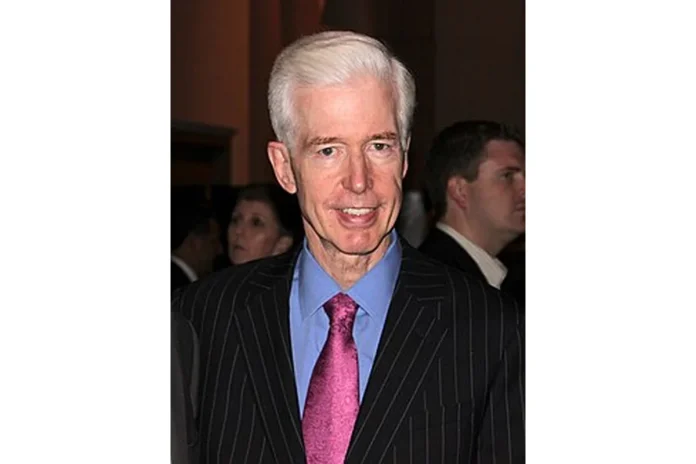
Gray Davis Bio
Joseph Graham “Gray” Davis Jr. (born December 26, 1942) is an American attorney and former politician who served as the 37th governor of California from 1999 until his recall and removal from office in 2003. A member of the Democratic Party, he is the second state governor in United States history to have been recalled, after Lynn Frazier of North Dakota in 1921. After leaving the governorship, Davis worked as a lecturer at the UCLA School of Public Affairs and as an attorney at the law firm Loeb & Loeb.
Early Life and Background
Gray Davis was born on December 26, 1942, in the Bronx, New York City, in the United States. He is the son of Joseph Graham Davis, his father, and Doris (Meyer) Morell, his mother. Davis grew up in a household shaped by public service values, and his early years laid the foundation for a lifelong interest in law, government, and civic engagement.
He attended the Harvard School for Boys, which is now known as Harvard-Westlake School, in California. Davis then enrolled at Stanford University, where he earned a Bachelor of Arts degree in history. He went on to receive a Juris Doctor from Columbia Law School, sharpening the legal and analytical skills that would later define his political career. After completing his education, Davis served as a captain in the Vietnam War, where his performance earned him the Bronze Star.
Path to US Politics
Davis’s first direct exposure to political campaigns came in 1970, when he volunteered for John V. Tunney’s campaign for the United States Senate. The following years brought additional hands-on experience: in 1973, he worked to help Tom Bradley win election as the first Black mayor of Los Angeles, a victory that inspired Davis to pursue his own path in public life. In 1974, he ran for state treasurer but lost the race when the more popular Jesse Unruh entered the contest on the filing deadline.
His opportunity arrived in 1975, when Davis was appointed executive secretary and chief of staff to Governor Edmund G. “Jerry” Brown Jr., a position he held until 1981. Working closely with Governor Brown gave Davis an insider’s understanding of state government and helped him build relationships with legislators and interest groups across California. This experience set the stage for his own successful runs for the California State Assembly in 1982, the State Controller’s office in 1986, and the lieutenant governorship in 1994.
Gray Davis Career
Early Career (1975–1994)
As chief of staff to Governor Jerry Brown from 1975 to 1981, Davis served as one of the most influential behind-the-scenes figures in state government. He earned a reputation for being more methodical and politically moderate than his boss, balancing Brown’s more freewheeling style. During Brown’s 1980 presidential campaign, Davis managed the daily operations of the state capital in the governor’s absence.
In 1982, Davis won a seat in the California State Assembly representing the 43rd district, which included parts of West Los Angeles and Beverly Hills. He served in the Assembly from 1983 to 1987, championing a popular campaign to place photographs of missing children on milk cartons and grocery bags. In 1986, Davis ran for State Controller, defeating six other contenders that included future congressman John Garamendi, and went on to serve eight years as California’s chief fiscal officer, a role in which he saved taxpayers more than half a billion dollars.
Lieutenant Governor Breakthrough (1995–1998)
Davis was elected the 44th lieutenant governor of California in 1994, a position he held from 1995 to 1999. As lieutenant governor, he built a profile as a steady, experienced administrator who had already worked at the highest levels of state government for nearly two decades. Political analysts described him as perhaps the best-trained governor-in-waiting California had ever produced.
In 1998, Davis ran for governor and won, becoming California’s first Democratic governor in 16 years. His victory broke a long Republican hold on the office and gave the Democratic Party renewed control of the statehouse. Davis entered the governorship with significant experience in the legislature, the fiscal offices, and the executive branch, an unusually broad resume for a California chief executive.
California Governorship Era (1999–2003)
Davis took office in January 1999 and began his administration with high public approval, reaching 62 percent in February 2000. He made education his top priority, calling a special legislative session on reading and signing laws that created a statewide accountability program, the Academic Performance Index, and a major expansion of the Cal Grant program. Public schools received $8 billion above the minimum required by Proposition 98 during his first term, and per-pupil spending rose from $5,756 to $6,922 between 1999 and 2004.
Beyond education, Davis signed the nation’s first state law requiring automakers to limit auto emissions, banned certain assault weapons, expanded subsidized health coverage for low-income children, recognized domestic partnerships, raised the minimum wage to $6.75, and increased funding for the state park system. He also opened trade offices abroad and presided over a surge in California-Mexico commerce, with Mexico becoming the state’s leading export market for the first time.
His tenure, however, was severely tested by two crises. The California electricity crisis of 2000 and 2001, marked by rolling blackouts and allegations of market manipulation by energy companies such as Enron, ended with the state committing to long-term power purchases totaling about $43 billion. Soon after, the bursting of the dot-com bubble produced a deep budget shortfall, reaching an estimated $34.6 billion for fiscal year 2003–2004. Davis responded with spending cuts and an unpopular increase in vehicle license fees, actions that drove his approval ratings down to 24 percent by April 2003 and ultimately led to the first gubernatorial recall in California history.
Notable Events and Milestones
The defining event of Davis’s political life was the 2003 California recall election. On October 7, 2003, 55.4 percent of voters supported removing him from office, and he was succeeded on November 17, 2003, by Arnold Schwarzenegger. During his 1,778 days in office, Davis signed 5,132 bills and vetoed 1,112, leaving a substantial legislative record. Earlier milestones included his 1998 election as California’s first Democratic governor in 16 years and his receipt of the Bronze Star for service as a captain in the Vietnam War.
Gray Davis Career Wins
Gray Davis compiled an unusually long list of electoral victories in California, winning five statewide races over the course of his political career. His wins included a State Assembly seat in 1982, the State Controller’s office in 1986, the lieutenant governorship in 1994, the governorship in 1998, and re-election as governor in 2002. The final statewide defeat, the 2003 recall, ended a run of political success that had stretched across more than two decades.
Statewide Office Highlights
Davis’s most important electoral breakthrough came in 1998, when he became the first Democratic governor of California in 16 years. He followed that victory with a hard-fought re-election in 2002, defeating his Republican challenger Bill Simon Jr. and becoming the first California governor re-elected since 1982. His earlier wins as State Controller and lieutenant governor gave him the executive experience that framed his image as a steady, technocratic leader.
Davis’s statewide victories also included the 2002 re-election, a race in which he campaigned on his record of education funding, environmental regulation, and public health expansion. His statewide success during the 1990s and early 2000s reflected both Democratic strength in California and Davis’s reputation for detailed policy work. The recall election of 2003, by contrast, marked a sharp reversal of voter sentiment driven largely by the electricity and budget crises.
Other Wins and Achievements
Beyond his electoral record, Davis earned the Bronze Star for his service as a captain in the Vietnam War, an honor that reflected his military service before entering politics. He also won recognition from education advocates for his record-breaking school spending and from environmental groups for signing the first state law in the United States to regulate vehicle greenhouse gas emissions. After leaving office, Davis maintained an active public profile through his teaching at UCLA and his legal practice.
Gray Davis Family
Family Background and Public Service
Gray Davis was born to Joseph Graham Davis, his father, and Doris (Meyer) Morell, his mother. His upbringing in the Bronx and later California shaped his early interest in law and public service. He earned a Bachelor of Arts in history from Stanford University and a Juris Doctor from Columbia Law School, educational accomplishments that gave him a strong foundation for a career in public life.
Personal Life
Davis met his future wife, Sharon Ryer, in 1978 while traveling on official business. The couple married in 1983 in a ceremony officiated by California Supreme Court Justice Rose Bird. Ryer served as First Lady of California during Davis’s governorship, and the couple has been a visible part of his public life from his early years in state government through his post-political career.