

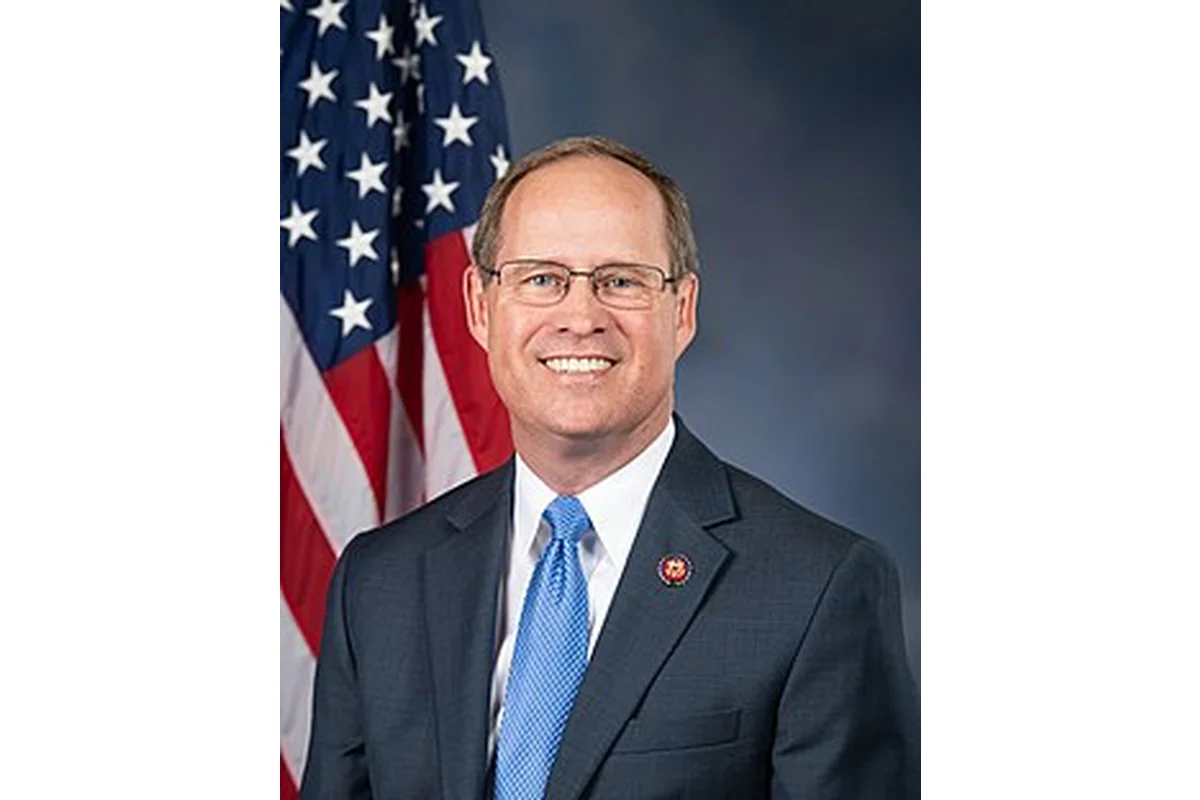
Greg Murphy Bio
Gregory Francis Murphy (born March 5, 1963) is an American physician and politician who has represented North Carolina’s 3rd congressional district in the United States House of Representatives since 2019. A Republican, Murphy combines a background in urology with a career in public service, having previously served in the North Carolina General Assembly from 2015 to 2019. He trained as a surgeon and held leadership positions at Vidant Medical Center and East Carolina University before entering full-time political life.
Since arriving in Congress, Murphy has been a consistent conservative voice on health policy, higher education, and national security. He has also been an active legislator at the state level, where he built a reputation for tackling the opioid crisis and expanding access to care for veterans. In the House, he continues to practice medicine alongside his legislative work, bringing a clinician’s perspective to federal policy debates.
Early Life and Background
Gregory Francis Murphy was born on March 5, 1963, in Tarrytown, New York. He was raised in Raleigh, North Carolina, and attended Needham B. Broughton High School. Growing up in the Tar Heel State gave him an early connection to North Carolina communities that would later shape his political career and his decision to settle in the eastern part of the state.
After high school, Murphy attended Davidson College as an Edward Crosland Stuart Scholar, earning a Bachelor of Science degree. He then pursued medical training at the University of North Carolina at Chapel Hill School of Medicine, where he graduated with honors and was inducted into the Alpha Omega Alpha medical honor society. Following medical school, he completed a residency in urology and renal transplantation at the University of Kentucky, which prepared him for a career in academic and clinical medicine.
Path to US Politics
After completing his medical training, Murphy and his wife moved to Greenville, North Carolina, where he established a medical practice and rose through regional health leadership ranks. He served as president of a medical practice, chief of staff at Vidant Medical Center, and as a faculty member at the Brody School of Medicine at East Carolina University. He also served as president of the Davidson College Alumni Association from 2015 to 2017 and sat on the college’s board of trustees, building a record of civic and institutional engagement.
Murphy’s entry into elected office came in November 2015, when he was appointed to the North Carolina General Assembly to finish the term of Brian Brown in the 9th District of Pitt County. The appointment launched a rapid rise in state-level politics, where he quickly became known for his work on health policy, including legislation aimed at the opioid crisis and at improving care for veterans with traumatic brain injuries.
Greg Murphy Career
Early Career (2015–2018)
Murphy began his legislative career in the North Carolina General Assembly, representing the 9th District in Pitt County. On November 8, 2016, he won a full term by defeating Brian Farkas with 22,540 votes, or 57.52 percent of the ballots cast, compared with 16,648 votes for his opponent. He was then reelected in 2018, defeating Democratic challenger Kristoffer (Kris) Rixon, which cemented his standing as a rising Republican figure in eastern North Carolina.
During his time in the General Assembly, Murphy served as Senior Chair of Health Policy and championed several health-care initiatives. In 2017, he introduced the STOP Act (Strengthen Opioid Misuse Prevention Act), North Carolina’s first major legislative effort to confront the opioid epidemic, and later introduced the HOPE Act to help law enforcement curtail drug trafficking. Together, these measures were credited with helping reduce opioid overdose deaths in the state for the first time in more than a decade.
Congressional Breakthrough (2019)
In 2019, Murphy announced his candidacy for the United States House of Representatives special election in North Carolina’s 3rd congressional district, which had been vacated by the death of Representative Walter B. Jones Jr. He won the Republican runoff on July 9, 2019, defeating pediatrician Joan Perry by a margin of 59.7 percent to 40.3 percent, and then prevailed in the September 10 general election against former Greenville Mayor Allen M. Thomas, 61.7 percent to 37.5 percent.
The victories positioned Murphy as the new congressman for a sprawling eastern North Carolina district that includes military bases, agricultural communities, and the city of Greenville. In 2020, he was unopposed in the Republican primary and went on to defeat Democratic nominee Daryl Farrow with 63.5 percent of the vote in the general election, signaling strong incumbency advantages in his first full cycle in Congress.
Current Congressional Era (2019–Present)
Since taking office, Murphy has continued to focus on health, education, and national security policy. On March 19, 2024, he introduced a bill in the 118th Congress to amend the Higher Education Act of 1965, aiming to bar graduate medical schools that maintain diversity, equity, and inclusion training programs or offices from receiving federal funds. He has also written publicly that DEI training is harmful to medical education and to the quality of future physicians.
Murphy has also turned his attention to international concerns. Following reports of Chinese espionage at American universities, he introduced the INFLUENCE Act, which would require higher education institutions to report foreign gifts of $50,000 or more and would establish interagency coordination to protect national security projects. In addition, he has continued his medical missionary work, having previously served in a Catholic leprosy hospital in Bihar, India, and provided post-earthquake care in Haiti in 2010.
Notable Events and Milestones
Murphy’s career has featured several signature legislative moments, including the STOP Act and HOPE Act at the state level, and federal efforts like the INFLUENCE Act and his 2024 higher education amendment. He was one of 126 Republican members of the House to sign an amicus brief supporting Texas v. Pennsylvania in December 2020, and he formally objected to the counting of Pennsylvania’s electoral votes after the January 6, 2021, storming of the United States Capitol. In 2017, he received a Distinguished Leadership Award from the American Association of Clinical Urologists, and in 2019, he received a Distinguished Medical Alumnus Award from the University of North Carolina School of Medicine.
Greg Murphy Career Wins
Murphy has compiled a steady record of electoral victories at both the state and federal levels, beginning with his 2016 win in the North Carolina General Assembly and continuing through multiple reelections in Congress. He has consistently won majority support in North Carolina’s 3rd congressional district, a region that has rewarded his focus on health care, veterans, and conservative policy priorities.
Congressional Highlights
Murphy won the 2019 special election runoff against Joan Perry with 59.7 percent of the vote and the general election against Allen M. Thomas with 61.7 percent. He followed that with a 2020 general election win over Daryl Farrow, taking 63.5 percent of the vote while running unopposed in the Republican primary. These results established him as a durable incumbent in a district with strong Republican roots.
Other Wins and Achievements
Before coming to Congress, Murphy won election to the North Carolina General Assembly in 2016, defeating Brian Farkas 57.52 percent to 42.48 percent, and was reelected in 2018. Beyond the ballot box, he earned the 2017 Distinguished Leadership Award from the American Association of Clinical Urologists and the 2019 Distinguished Medical Alumnus Award from the University of North Carolina School of Medicine, reflecting his standing in the medical community.
Greg Murphy Family
Family Background and Education
Murphy was born in Tarrytown, New York, and raised in Raleigh, North Carolina, by a family that valued education and service. He attended Needham B. Broughton High School before going on to Davidson College and the University of North Carolina at Chapel Hill School of Medicine. He has continued to support his alma maters, serving as president of the Davidson College Alumni Association from 2015 to 2017 and on the college’s board of trustees.
Personal Life
Murphy lives in Greenville, North Carolina, with his wife, with whom he settled after completing his urology residency at the University of Kentucky. He is Catholic, and his faith has shaped his medical missionary work, including service in a Catholic leprosy hospital in Bihar, India, and in Haiti following the 2010 earthquake. In May 2024, he was diagnosed with a pituitary macroadenoma and received follow-up treatment in December 2025.