

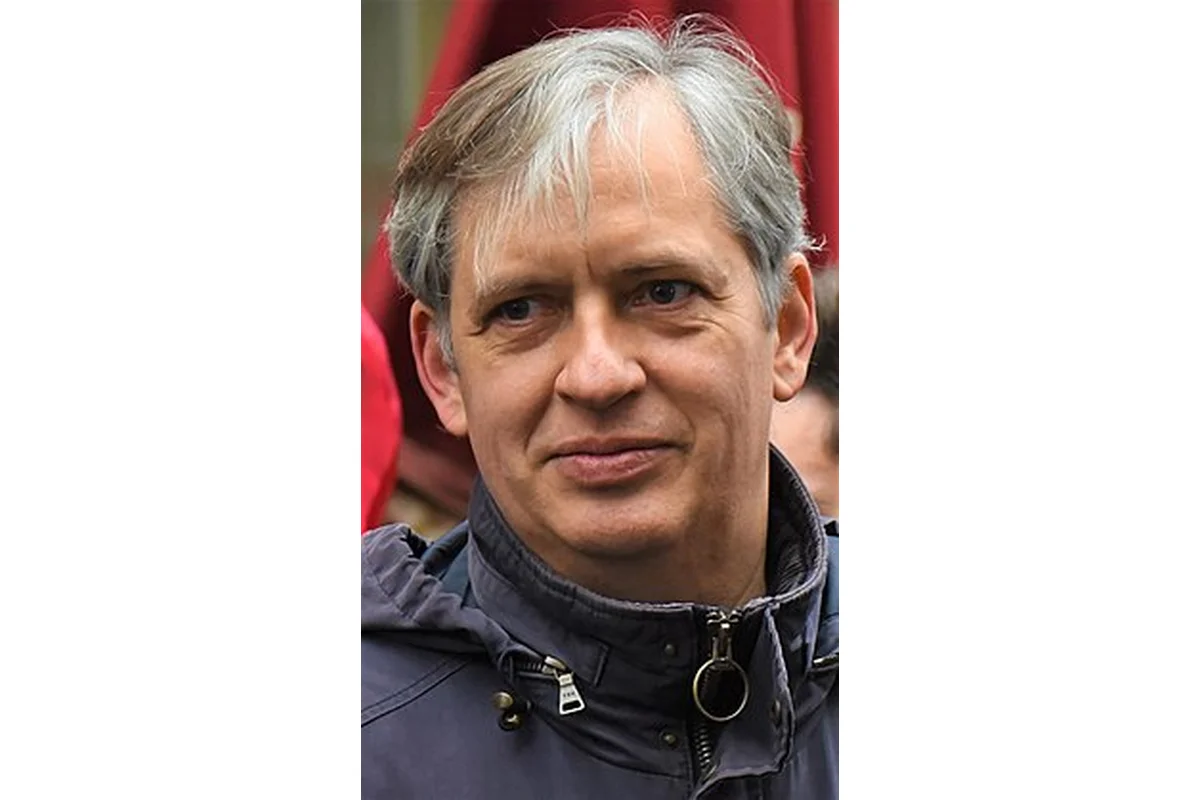
Jiří Dienstbier Jr. Bio
Jiří Dienstbier Jr. (born 27 May 1969) is a Czech politician and lawyer who has held senior roles in national politics. He served as Senator for the Kladno constituency from 2011 to 2020 and was Minister for Human Rights, Equal Opportunities and Legislation in the cabinet of Prime Minister Bohuslav Sobotka. Dienstbier has been Deputy Chairman of the Czech Social Democratic Party (ČSSD), a member of the Chamber of Deputies, and was the ČSSD presidential candidate in the Czech Republic’s first direct presidential election in 2013. Trained as a lawyer, he worked in legal practice before entering national office. In June 2025 he left the party, then renamed Social Democracy, over cooperation plans with the Stačilo! alliance.
He is the son of the dissident and former foreign minister Jiří Dienstbier Sr., a well-known Czech political figure who became the first Minister of Foreign Affairs of the newly democratic Czechoslovakia. Dienstbier Jr. is a member of the Czech Social Democratic Party, a centre-left political party in the Czech Republic, where he has held the position of Deputy Chairman. He is also known for his public image as an honest politician opposed to corruption.
Early Life and Background
Jiří Dienstbier Jr. was born on 27 May 1969 in Washington, D.C., United States, while his father was working there. He is the son of Jiří Dienstbier Sr., a former journalist and civil rights activist, and Zuzana Dienstbierová, née Wíšová, a psychologist. His parents and his grandfather, Jaromír Wíšo, were signatories to the Charter 77 human rights declaration, a civic initiative that criticised the Czechoslovak government for failing to uphold basic human rights.
Because of his family’s political activities, Dienstbier’s family experienced intense political pressure from the communist regime during the “Normalization” period after 1969. When Jiří Dienstbier Jr. was 10 years old, his father was imprisoned for his work in the Committee for the Defense of the Unjustly Prosecuted (VONS), a movement acting parallel to Charter 77. Like other children from dissident families, his political background blocked him from attending certain higher education institutions, particularly courses in the humanities.
Eventually, he was admitted to a technical school in Prague. After graduating, Dienstbier studied economics at the Engineering Faculty of the Czech Technical University (ČVUT) in Prague. As a young man in the 1980s, he was also a keen beekeeper, which he has credited with helping him deal with the systematic pressure that the communist regime applied to him and his family.
Path to Politics
While at university, Dienstbier was part of a group of students who founded an organisation known as Stuha (Studenské hnutí), an alternative student movement to the state-controlled student organizations. The group aimed to engage students in political resistance against the communist regime. After the Berlin Wall fell in early November 1989, Dienstbier and other members of Stuha organised a march for International Students’ Day on 17 November 1989, which had in previous years been a rallying event for criticism of the regime.
The march from the Albertov district of Prague triggered a further series of demonstrations over the next few weeks, which culminated in the Velvet Revolution and the end of communist rule in Czechoslovakia. The Bohemian–Moravian Student Parliament subsequently nominated Dienstbier as a deputy to the Czechoslovak Federal Assembly, for which he was only just over the 21 years of age required to be eligible. He remained in the Assembly for the two years of his mandate, until the first free and democratic general elections in early June 1990.
Jiří Dienstbier Jr. Career
Early Career (1989–1997)
After his mandate in the Federal Assembly expired in June 1992, Dienstbier returned to university, switching his field of studies from economics to law. He studied at the Faculty of Law at Charles University, graduating in 1997. He qualified for the bar 18 months later. During this time he remained active in Prague municipal politics and was elected to the town council for Prague 2 district in 1994, for the centrist Citizens’ Party (Občanské hnutí), a short-lived party founded by former dissidents who had split from Civic Forum.
After graduation, he was employed by the law firm of Marián Čalfa, a former Czechoslovak prime minister. In 1998, he also worked as an articled clerk at the Hamburger, Weinschenk, Molnar law firm in Washington, D.C. Dienstbier worked as a lawyer for fifteen years. He was elected three times to the town council of Prague 2, the last in 2006.
Political Breakthrough (1997–2010)
In 1997, Dienstbier joined the Czech Social Democratic Party (ČSSD) and became Chairman of the Young Social Democrats, a post he held for two years. He was elected to the Chamber of Deputies in May 2010 and became Shadow Minister of Justice in July of that year. Later that year he was chosen as ČSSD’s lead candidate in the Prague City Assembly elections and as a candidate for mayor.
Although the party’s reputation had been badly damaged by a coalition with the Civic Democratic Party, and although Dienstbier did not become Mayor, the party secured 14 councillors with a record share of the vote in the city, traditionally a weak area for ČSSD. Dienstbier refused to enter a coalition with the Civic Democratic Party, telling The Prague Post such a deal would make him feel “like a mafia member.” From these events he acquired a reputation as a trustworthy politician, and a November 2012 opinion poll found that he was the country’s most popular politician.
Minister and Senator Era (2011–2020)
In March 2011, Dienstbier won a by-election for the Czech Senate in the Kladno constituency, filling the seat that became vacant on the death of his father, Jiří Dienstbier Sr. As a senator he was Vice-Chairman of the ČSSD Senate Club and a member of the Senate’s Legal and Constitutional Committee and Organisation Committee. He was also a member of the Standing Senate Commission on the Czech Constitution and Parliamentary Procedures. From March 2011 to March 2013, he served as Deputy Chairman of the Social Democratic Party.
He was re-elected as Senator for Kladno in 2014. In his second term, Dienstbier became well known for his opposition to the right to keep and bear arms. In January 2014 he was appointed Minister for Human Rights, Equal Opportunities and Legislation and Chairman of the Government’s Legislative Council in the Government of Prime Minister Bohuslav Sobotka. He remained in the position until November 2016. He stood for reelection in 2020 but did not progress from the first round.
2013 Czech Presidential Election
While sitting as a Senator, Dienstbier was nominated as the ČSSD candidate for the first direct presidential elections in the Czech Republic, held in January 2013. In late October he finished collecting the 50,000 signatures required to get onto the presidential ballot. According to opinion polls, he was among the leading group of candidates for the election, and he enjoyed personal popularity with the public.
Despite this popularity, he finished fourth of nine candidates in the first round of the election, with 16.12% of the vote, and did not qualify for the second round.
Later Political Career (2017–Present)
In June 2025, Dienstbier left ČSSD, now named Social Democracy, in protest at the party’s attempts to cooperate with the Stačilo! alliance in the forthcoming elections. His departure marked the end of a long association with the social democratic movement that had defined his national political career.
Jiří Dienstbier Jr. Family
Family Background and Political Lineage
Jiří Dienstbier Jr. comes from one of the most recognisable dissident families in modern Czech history. His father, Jiří Dienstbier Sr., was a journalist and civil rights activist who became the first Minister of Foreign Affairs in the newly democratic Czechoslovakia. His mother, Zuzana Dienstbierová, is a psychologist, and his maternal grandfather, Jaromír Wíšo, was also a signatory to the Charter 77 declaration. The family paid a personal price for their activism during the communist era.
Personal Life
Dienstbier’s long-term partner is Jaroslava Tomášová, and the couple are married. Together they have one son, also called Jiří, born in 1992. As a long-term supporter of Bohemians 1905, the Prague football club, in 2005 Dienstbier provided legal advice to the club to prevent it from being defrauded by its chairman Petr Svoboda.