
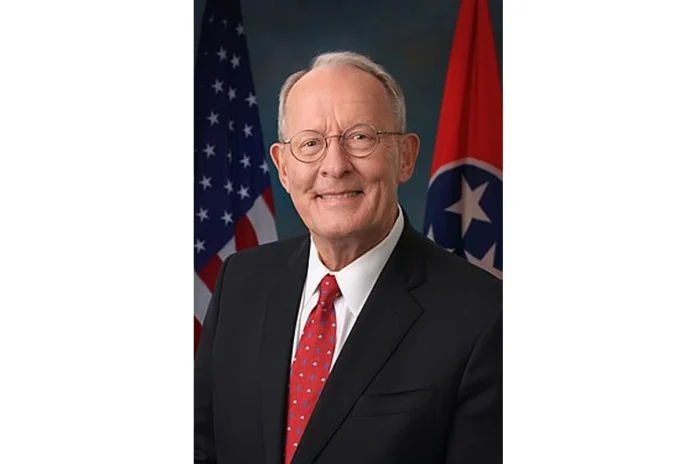
Lamar Alexander Bio
Andrew Lamar Alexander Jr., commonly known as Lamar Alexander, is an American politician, academic administrator, and attorney. A Republican, he served as a United States senator from Tennessee from 2003 to 2021 after earlier serving as the 45th governor of Tennessee from 1979 to 1987 and the 5th United States Secretary of Education from 1991 to 1993 under President George H. W. Bush. Over the course of his career, he also led the University of Tennessee as its president, chaired the Senate Republican Conference and the Senate Health, Education, Labor and Pensions Committee, and sponsored major federal education legislation.
Early Life and Background
Andrew Lamar Alexander Jr. was born on 3 July 1940 in Maryville, Tennessee. He was raised in Maryville by his mother, Genevra Floreine Rankin, a preschool teacher, and his father, Andrew Lamar Alexander, a high school principal. His family is of Scotch-Irish descent. He attended Maryville High School, where he served as class president and was elected governor of Tennessee Boys State, an early signal of his interest in public life.
After high school, Alexander attended Vanderbilt University, where he graduated Phi Beta Kappa in 1962 with a Bachelor of Arts degree in Latin American studies. He was a member of Sigma Chi, served as editor of The Vanderbilt Hustler student newspaper, and advocated for the open admission of African Americans to the university. He then earned his Juris Doctor in 1965 from the New York University School of Law.
Path to US Politics
Following law school, Alexander clerked for Judge John Minor Wisdom of the United States Court of Appeals for the Fifth Circuit in New Orleans from 1965 to 1966. In 1967, he joined the staff of Senator Howard Baker of Tennessee, and in 1969 he worked for Bryce Harlow, an assistant to President Richard Nixon. In 1970, he returned to Tennessee to manage the successful gubernatorial campaign of Winfield Dunn, the first Republican in fifty years to win the governorship.
After managing Dunn’s campaign, Alexander co-founded the Nashville law firm of Dearborn and Ewing. He first ran for governor of Tennessee in 1974 but lost to Democrat Ray Blanton, who tied Alexander to Nixon and the Watergate scandal. After working briefly in Baker’s Washington office following Baker’s election as Senate Minority Leader, Alexander entered the 1978 gubernatorial race, famously walking 1,022 miles across Tennessee in a red and black flannel shirt, and won.
Lamar Alexander Career
Early Career (1965-1978)
Alexander built his early career in law and Republican politics. After clerking for Judge John Minor Wisdom, he worked on Capitol Hill for Senator Howard Baker and briefly in the Nixon White House, and managed Winfield Dunn’s successful 1970 gubernatorial campaign. He then co-founded the Nashville law firm of Dearborn and Ewing and continued to build a network across Tennessee politics.
In 1974, Alexander won the Republican nomination for governor but lost the general election to Democrat Ray Blanton. The defeat did not end his ambitions. In 1978, he again sought the governorship, walking the length of Tennessee in a signature plaid shirt, and defeated Democrat Jake Butcher to become the 45th governor of Tennessee.
Governorship Breakthrough (1979-1987)
As governor, Lamar Alexander was sworn in on 17 January 1979, three days earlier than tradition, to prevent outgoing Governor Blanton from issuing additional pardons amid a cash-for-clemency scandal. He created an Office of Ombudsman, gave state employees a 7 percent raise, and replaced state prisoners working at the Governor’s Mansion with paid staff.
Alexander’s biggest economic accomplishment was attracting Japanese automaker Nissan to build a $660 million assembly plant in Smyrna, Tennessee, in 1980, then the largest single investment in state history. He also helped bring General Motors’ Saturn facility to Spring Hill. In 1983, he launched the Better Schools program, which standardized basic skills and expanded math, science, and computer education.
He won reelection in 1982, defeating Knoxville Mayor Randy Tyree, and served as chairman of the National Governors Association from 1985 to 1986. In 1986, he proposed the Better Roads Program, which raised the state gasoline tax by three cents to fund fifteen priority highway projects. Term-limited by the state constitution, he left office in January 1987 and was succeeded by Ned McWherter.
University of Tennessee and Secretary of Education Era (1988-1993)
After leaving the governorship, Alexander served as president of the University of Tennessee from 1988 to 1991. While in that role, he and his family took a six-month trip to Australia, which became the basis for his book Six Months Off.
In 1991, President George H. W. Bush appointed Alexander as the 5th United States Secretary of Education. As Secretary, he supported the implementation of the America 2000 education reform initiative and approved the Transnational Association of Christian Colleges and Schools to accredit schools, a decision that drew criticism. He left office in 1993.
Senate and National Leadership (2003-2021)
After two unsuccessful presidential bids in 1996 and 2000, Alexander returned to elective politics and won Tennessee’s open U.S. Senate seat in 2002, succeeding retiring Senator Fred Thompson. He defeated Congressman Bob Clement in the general election with 54 percent of the vote, becoming the first Tennessean to be popularly elected both governor and senator. He was reelected in 2008 with 65 percent of the vote, and again in 2014 with 62 percent, becoming the longest-serving U.S. senator in Tennessee history.
In the Senate, Alexander chaired the Senate Republican Conference from 2007 to 2012, and later chaired the Senate Health, Education, Labor and Pensions Committee from 2015 to 2021. He was the principal sponsor of the Every Student Succeeds Act, which replaced the No Child Left Behind Act in 2015. On 17 December 2018, he announced that he would not seek a fourth Senate term in 2020, ending his tenure in January 2021.
Notable Events and Milestones
Among the most significant moments of Alexander’s Senate career was his sponsorship of the Every Student Succeeds Act, the major federal education law that replaced No Child Left Behind. He also played a key role in the confirmation battle over Supreme Court nominee Brett Kavanaugh in 2018, was one of the speakers at the second inauguration of Barack Obama in 2013, and worked across the aisle on bipartisan issues including the humanities and health care reform.
Lamar Alexander Career Wins
Across more than four decades in public life, Lamar Alexander compiled a record of major electoral and policy victories. He won three gubernatorial elections, was twice elected and reelected to the United States Senate, served as president of the University of Tennessee, led the United States Department of Education, and chaired two powerful Senate committees.
Governorship and Senate Highlights
Alexander won the Tennessee governorship in 1978 by defeating Democrat Jake Butcher and was reelected in 1982 over Randy Tyree. He then won election to the United States Senate in 2002, defeating Bob Clement, and was reelected in 2008 against Bob Tuke with 65 percent of the vote, carrying all but one of Tennessee’s 95 counties. In 2014, he turned back a Tea Party primary challenge from Joe Carr before winning his third Senate term with 62 percent of the vote.
Other Wins and Achievements
Beyond elections, Alexander’s major achievements included attracting the Nissan plant to Smyrna in 1980, the largest single corporate investment in Tennessee history at the time. He led the successful passage of the Every Student Succeeds Act in 2015, served as chairman of the National Governors Association from 1985 to 1986, and was honored in 2006 when a new species of springtail discovered in the Great Smoky Mountains was named Cosberella lamaralexanderi after him.
Lamar Alexander Family
Family Background and Public Service Lineage
Alexander was raised in Maryville, Tennessee, by his mother, Genevra Floreine Rankin, a preschool teacher, and his father, Andrew Lamar Alexander, a high school principal. His family is of Scotch-Irish descent, and his upbringing in small-town East Tennessee shaped his long-standing interest in education and state government.
Personal Life
In 1969, Alexander married Leslee Honey Buhler, a Victoria, Texas native and Smith College graduate whom he had met during a Senate staff softball game. Together they had four children: Drew, Leslee, Kathryn, and Will. Drew Alexander died in 2021. Alexander is also a classical and country pianist who began lessons at age three and recorded Patti Page’s Tennessee Waltz in 2007, and he is an Eagle Scout and a member and elder of Westminster Presbyterian Church in Nashville.