
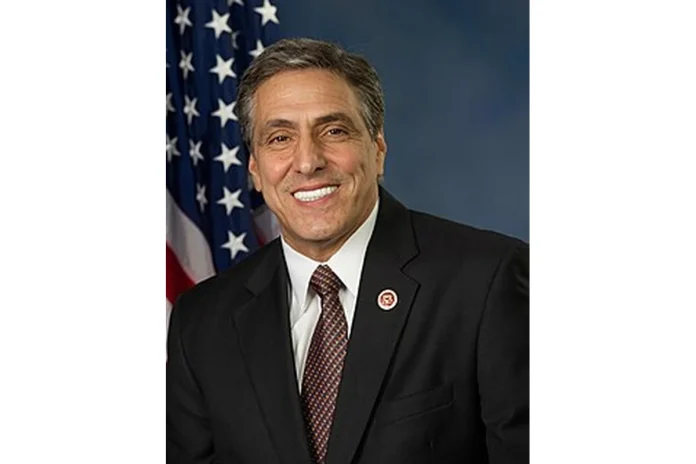
Lou Barletta Bio
Louis John Barletta, known publicly as Lou Barletta, is an American businessman and Republican politician from Pennsylvania. He served as the U.S. Representative for Pennsylvania’s 11th congressional district from 2011 to 2019 and as Mayor of Hazleton, Pennsylvania, from 2000 to 2010. After leaving Congress he ran unsuccessfully for the U.S. Senate in 2018 and for the Republican nomination for governor in 2022, and later founded a consulting firm.
Born and raised in Hazleton, Barletta built a career that combined private business with public office. He first gained statewide attention as mayor for a high-profile ordinance targeting illegal immigration, and he later won national notice for his three campaigns against longtime Democratic incumbent Paul Kanjorski. His career reflects a steady rise from local entrepreneur to statewide political figure within the Republican Party.
Early Life and Background
Louis John Barletta was born on January 28, 1956, in Hazleton, Pennsylvania, to Angeline DeAngelo and Rocco Barletta, both of Italian ancestry. His parents married in 1943, and Rocco helped manage several family businesses, including Angela Park, a property near Drums that closed in 1988. Rocco also served on the executive committee of the Democratic Party of Hazleton, a detail that made his son’s later Republican career a notable departure from the family’s local political tradition.
At eighteen months old, Barletta was involved in a car crash that left him with a minor bruise to his left ear and the right side of his head. After high school, he attended Luzerne County Community College and later Bloomsburg University of Pennsylvania, where he earned a bachelor’s degree in elementary education. During his college years he tried out for the Cincinnati Reds baseball team but was cut after failing to hit a curveball, ending his brief athletic pursuit.
Following college, Barletta returned to the family business, working in construction and heating oil. In 1984 he founded the pavement marking company Interstate Road Marking Corporation. Over the next sixteen years he expanded the firm into the largest of its kind in Pennsylvania, eventually selling the business in 2000 as he prepared to enter public office full time.
Path to US Politics
Barletta’s entry into politics began at the local level in Hazleton. In 1995 he lost a bid for Hazleton City Council, but he won a council seat two years later and continued to build a reputation in the small city. In 1999 he challenged Democratic primary winner Jack Mundie and won the mayoral election, taking office on January 3, 2000, despite a Democratic voter registration edge in the city.
As mayor, Barletta pursued fiscal discipline and public safety. During his first term, Hazleton received the Governor’s Award for Fiscal Accountability and Best Management Practices, and in 2004 President George W. Bush appointed him to the United Nations Advisory Committee of Local Authorities. Local crime statistics declined each year between 2006 and 2011, a record that supported his campaigns for higher office.
Barletta first reached for Congress in 2002, running against nine-term Democratic incumbent Paul Kanjorski in a district long considered the most Democratic in Pennsylvania outside Philadelphia and Pittsburgh. Although he lost that race with 42 percent of the vote, he ran again in 2008 and narrowed the margin to 52-48 percent. His persistence established him as the strongest Republican challenger Kanjorski had faced in decades and positioned him for a successful third attempt in 2010.
Lou Barletta Career
Early Career (2000-2010)
Barletta served as Mayor of Hazleton for ten years, winning reelection in 2003 and 2007. His first term brought fiscal recognition from the state, and his second term became nationally significant because of his response to rapid demographic change in Hazleton, where the Hispanic population grew from 5 percent in 2000 to 30 percent in 2006.
In 2006 Barletta introduced the Illegal Immigration Relief Act, an ordinance that denied business permits to employers who hired undocumented immigrants, fined landlords who rented to them, and made English the official language of city government. The measure drew national attention, supportive comments from figures such as Rudy Giuliani, Tucker Carlson, and Neil Cavuto, and a lawsuit from the American Civil Liberties Union and the Puerto Rican Legal Defense and Education Fund. A federal judge ruled the ordinance unconstitutional in 2007, and the ruling was upheld on appeal in 2010.
Congressional Breakthrough (2010-2012)
On December 9, 2009, Barletta announced a third campaign against Paul Kanjorski. He won the Republican primary on May 18, 2010, and on November 2, 2010, he defeated Kanjorski by a 55-45 percent margin, capturing a seat that had been held by Democrats for decades. Joe Yannuzzi succeeded him as mayor of Hazleton on December 15, 2010.
Once in office, Barletta quickly focused on immigration-related legislation. He proposed the Mobilizing Against Sanctuary Cities Act of 2011, which would have denied federal funding to municipalities that limited cooperation with federal immigration enforcement, though the bill was never voted on. He also introduced the 1986 Amnesty Transparency Act and the Visa Overstay Enforcement Act of 2013, both aimed at tightening immigration rules and penalties.
House Majority Era (2013-2018)
Barletta won reelection three times in the House, with 58 percent of the vote in 2012, 66 percent in 2014, and a 63-36 percent margin over fellow former Hazleton mayor Michael Marsicano in 2016. During these years he served on committees dealing with transportation and infrastructure, drawing on his business background in road marking and construction.
He was a reliable vote for the Republican leadership on major economic issues, supporting Paul Ryan’s budget in 2011 and the Tax Cuts and Jobs Act in 2017. In 2014 he introduced a bill to repeal a provision of the Affordable Care Act that required volunteer emergency responders to be offered health coverage, arguing the requirement was financially unsustainable for small organizations.
Senate Campaign and Post-Congressional Work (2018-Present)
In 2017 Barletta prepared to run for the U.S. Senate, officially announcing his candidacy on August 29, 2017, to challenge Democratic incumbent Bob Casey Jr. A loyal ally of President Donald Trump, he secured the Republican nomination but lost the general election on November 6, 2018, by roughly 13 points. His campaign was consistently outraised, and he attributed the loss in part to Casey’s well-known family name in Pennsylvania.
After declining to return to the House, Barletta founded the consulting firm Pioneer Strategies and joined the board of World for Brexit. He chaired the Pennsylvania delegation to the 2020 Republican National Convention and in 2021 announced a campaign for governor of Pennsylvania. He lost the 2022 Republican primary to State Senator Doug Mastriano, receiving 20 percent of the vote to Mastriano’s 44 percent, and afterward stated that the race would be his last campaign.
Notable Events and Milestones
Barletta’s signature moment as mayor came in 2006 with the Illegal Immigration Relief Act, a measure that drew national coverage, supportive statements from leading conservatives, and a constitutional challenge that reached the U.S. Supreme Court, which declined to hear the case. His defining political moment was the 2010 defeat of Paul Kanjorski, ending a Democratic hold stretching back to 1986. In 2017 Barletta helped author the Disaster Recovery Reform Act, which was merged into the FAA Reauthorization Act of 2018 and signed into law by President Trump on October 5, 2018.
Lou Barletta Career Wins
Lou Barletta’s electoral record is anchored in his long tenure as Mayor of Hazleton and four terms in the U.S. House of Representatives. He won the mayoral office in 1999, secured reelection in 2003 and 2007, and went on to defeat a long-serving Democratic incumbent in Congress in 2010.
Congressional Highlights
Barletta captured Pennsylvania’s 11th congressional district in 2010 with 55 percent of the vote, the first Republican win in the seat in many years. He followed that with 58 percent in 2012, 66 percent in 2014, and 63 percent in 2016, demonstrating durable support even as the district’s political makeup changed following redistricting.
Other Wins and Achievements
Beyond elections, Barletta received the Governor’s Award for Fiscal Accountability and Best Management Practices during his first term as mayor and was appointed to the United Nations Advisory Committee of Local Authorities in 2004. He was also named chairman of the Pennsylvania delegation to the 2020 Republican National Convention, a sign of his standing within the state Republican Party.
Lou Barletta Family
Family Background and Political Lineage
Barletta comes from an Italian American family rooted in northeastern Pennsylvania. His father, Rocco Barletta, helped manage family businesses and was active in the local Democratic Party, while his mother, Angeline DeAngelo, raised the family in Hazleton. Rocco died in 1994 and Angeline in 1999, both before their son’s rise to Congress.
Barletta’s cousin, Allison Barletta, served on the Hazleton City Council as a Republican. She ran unsuccessfully against incumbent Mayor Jeff Cusat in a 2019 primary. The family’s continued involvement in Hazleton politics reflects a long-standing local tradition that shaped Lou Barletta’s own political development.
Personal Life
Lou Barletta married Mary Grace Malloy in 1977, and the couple has four daughters. Mary Grace Barletta works as an elementary school teacher, as do two of their daughters, a fact Barletta often cited on the campaign trail. The family resides in Hazleton, Pennsylvania.
A practicing Roman Catholic, Barletta has long enjoyed baseball, a sport he hoped to play professionally in his youth. During his time in Congress he regularly took part in the annual Congressional Baseball Game. After leaving office he led the American Italian Food Coalition, advocating for the protection of Italian-produced food products from U.S. tariffs, a cause tied to his Italian heritage.