
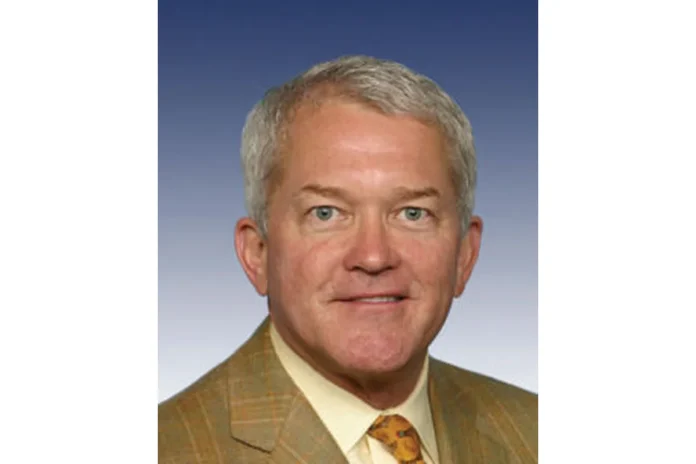
Mark Adam Foley Bio
Mark Adam Foley, born on 8 September 1954, is an American former politician best known for representing Florida’s 16th congressional district in the United States House of Representatives from 1995 until his resignation in 2006. A member of the Republican Party, he served on the influential House Ways and Means Committee and rose into the House Republican leadership as a deputy whip. His congressional career ended abruptly after reports surfaced that he had sent sexually explicit messages to teenage congressional pages, an episode widely referred to as the Mark Foley scandal. Although state and federal investigations did not result in criminal charges, the controversy reshaped his political life and ultimately his personal life in the years that followed.
After leaving Washington, Foley moved into private life in Palm Beach, Florida, where he built a career in real estate and hosted a local political radio show. In time he returned briefly to public attention as a supporter of Donald Trump during the 2016 presidential campaign, appearing alongside the candidate at one of his rallies.
Early Life and Background
Mark Adam Foley was born on 8 September 1954 in Newton, Massachusetts, and grew up in a family shaped by public service and civic involvement. He is the son of Edward Joseph Foley Jr., a teacher and civic activist, and Frances Foley. His father’s work in the community gave the household a strong sense of civic engagement that would later influence Mark’s own decision to enter politics.
Foley’s formative years included a period living in Lake Worth, Florida, where he attended local schools and, according to a later newspaper account, served as a teenage altar boy. He later attended Palm Beach State College, completing his higher education in Florida. Although details of his early schooling are limited, his family’s relocation to the Sunshine State helped shape his political outlook and set the stage for his future career in Florida government.
Path to US Politics
Foley’s entry into public service began in the Florida state legislature, where he served in the Florida House of Representatives from 1990 to 1992. He then moved to the Florida State Senate, representing his district from 1993 to 1994. During these years he built a reputation as a moderate Republican with an interest in social welfare issues, child protection, and fiscal matters, all themes that would carry over into his federal career.
In 1994, Foley set his sights on Congress and won election to the U.S. House of Representatives, defeating Democrat John Comerford with 58 percent of the vote. The victory launched a twelve-year career in Washington during which he became a familiar voice on tax policy, child safety, and Florida-specific issues such as Everglades preservation.
Mark Adam Foley Career
Early Career (1990–1994)
Foley’s political career began at the state level, where he served two years in the Florida House of Representatives before moving up to the Florida State Senate. His time in Tallahassee gave him early experience with state-level legislation and helped him establish connections within the Florida Republican Party that would support his later congressional bids.
By the early 1990s, Foley had earned a reputation as a rising moderate voice in Florida politics. His decision in 1994 to run for the U.S. House seat in Florida’s 16th congressional district marked a natural progression from state-level work to federal office, and his comfortable general-election win signaled strong name recognition in his home region.
Congressional Breakthrough (1995–2002)
After arriving in Congress, Foley secured a seat on the powerful House Ways and Means Committee, where he worked on tax and trade policy. He was re-elected in 1996 with 64 percent of the vote, ran unopposed in 1998, and continued to post strong margins in 2000 and 2002, when he won with 79 percent of the vote. The string of easy victories reflected both his personal popularity and the Republican lean of his district, which had been held by the party since its creation in 1973.
Foley quickly established himself as a leading congressional voice against child pornography and exploitation. He chaired the House Caucus on Missing and Exploited Children and introduced the so-called Child Modeling Exploitation Prevention Act of 2002, aimed at websites featuring sexually suggestive images of preteen children. Although that specific bill did not become law, his broader work on child protection culminated in the Adam Walsh Child Protection and Safety Act of 2006, which President George W. Bush signed into law. He also won passage of a measure allowing youth-serving organizations such as the Boy Scouts of America and Boys and Girls Clubs to access FBI fingerprint background checks.
Senior House Years (2003–2006)
During his final term in office, Foley took on a senior leadership role as a deputy whip in the House Republican leadership. He continued to focus heavily on child safety legislation and also worked across the aisle on Florida-specific priorities, helping to secure the first-ever financial commitment from Congress for the preservation of the Everglades. In 2003, he announced a candidacy for the U.S. Senate seat being vacated by Bob Graham, raising roughly $3 million in campaign funds before withdrawing from the race.
His withdrawal followed persistent press questions about his personal life, which he declined to address in detail. Foley cited his father’s battle with cancer as the reason for stepping aside, and the seat was later won by Republican Mel Martinez. Despite the setback, Foley remained in the House and was re-elected in 2004 with 68 percent of the vote, suggesting his constituents continued to support his work.
Notable Events and Milestones
The defining moment of Foley’s career came in late September 2006, when ABC News reported that he had sent sexually explicit messages to teenage congressional pages. Within days, on 29 September 2006, he resigned from Congress at the request of Republican leaders, including Speaker Dennis Hastert. Federal and state investigations ultimately produced no criminal charges, but the episode ended his political career and triggered an ethics review of how House Republican leaders had handled earlier warnings about his behavior.
Mark Adam Foley Family
Family Background
Foley was raised by his father, Edward Joseph Foley Jr., a teacher and civic activist, and his mother, Frances Foley. His father’s involvement in community affairs left a clear mark on Mark’s later decision to pursue a career in public service. The family later moved to Florida, where Foley would eventually build his political base.
Personal Life
From 1984 until 2012, Foley was in a relationship with Layne Nisenbaum, a Palm Beach dermatologist. The couple’s relationship became public knowledge after Foley left Congress, and Nisenbaum passed away in 2012. Foley currently resides in Palm Beach, Florida, where he has rebuilt his life away from elected office.