
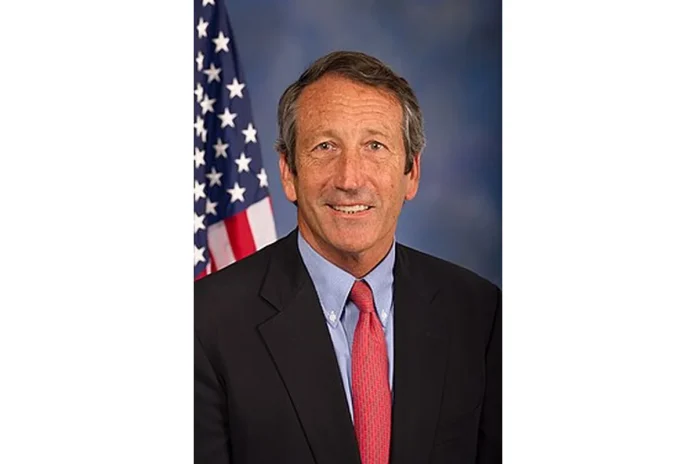
Mark Sanford Bio
Marshall Clement “Mark” Sanford Jr. is an American politician and author who served as the U.S. representative for South Carolina’s 1st congressional district from 1995 to 2001 and again from 2013 to 2019. A member of the Republican Party, he also served as the 115th governor of South Carolina from 2003 to 2011. Sanford is widely recognized for his fiscal conservatism, his advocacy for limited government spending, and the high-profile personal scandal that emerged during his second gubernatorial term.
Early Life and Background
Marshall Clement Sanford Jr. was born on May 28, 1960, in Fort Lauderdale, Florida. His father, Marshall Clement Sanford, was a cardiothoracic surgeon, and his mother is Margaret Elise “Peggy” Pitz. Sanford grew up in a comfortable household, though he later recalled that the family slept in the same room to conserve electricity. Before his senior year of high school, his family relocated to the 3,000-acre Coosaw Plantation near Beaufort, South Carolina, where he completed his formative years.
Sanford attained the rank of Eagle Scout in the Boy Scouts of America, an achievement that reflected his early interest in discipline and outdoor life. He went on to earn a Bachelor of Arts degree in business from Furman University in 1983. After college, he continued his education at the Darden Graduate School of Business Administration at the University of Virginia, where he received a Master of Business Administration degree in 1988.
Path to US Politics
After completing his MBA, Sanford founded Norton and Sanford Real Estate Investment, a leasing and brokerage company based in South Carolina, in 1992. He had never run for public office before deciding to enter the 1994 Republican primary for South Carolina’s Charleston-based 1st Congressional District. The seat had opened after four-term Republican incumbent Arthur Ravenel ran for governor, and Sanford used his business experience and outsider profile to position himself as a reformer focused on fiscal restraint.
Sanford finished second in a crowded Republican primary behind Van Hipp Jr. before defeating Hipp in the runoff. He went on to win the November general election against Democratic state representative Robert A. Barber Jr. by a wide margin, beginning a career in Congress that would be defined by his willingness to break with his own party on spending matters.
Mark Sanford Career
Early Career (1995-2001)
During his three terms in the U.S. House of Representatives, Sanford was recognized as its most fiscally conservative member by the Cato Institute. He also received recognition from Citizens Against Government Waste and the National Tax Payers Union for his efforts to rein in government spending and reduce the national deficit, and he earned a lifetime rating of 92 from the American Conservative Union.
Sanford built a reputation for voting against bills that otherwise received unanimous support, including a bill to preserve sites linked to the Underground Railroad. He voted against pork barrel projects even when they benefited his own district, such as a 1997 defense appropriations bill that included funds for Charleston’s harbor. Keeping a pledge to serve only three terms, he did not run for reelection in 2000 and instead set his sights on the governorship.
Governorship Breakthrough (2002-2006)
In 2002, shortly before announcing his gubernatorial campaign, Sanford joined the Air Force Reserve. He first defeated Lt. Gov. Bob Peeler in the Republican primary, then defeated Democratic incumbent Jim Hodges in the general election by a margin of 53% to 47%, becoming the 115th governor of South Carolina. His victory, paired with the election of Republican lieutenant governor Andre Bauer, gave the Republican Party full control of state government for the first time since Reconstruction.
Sanford won a second term in 2006, defeating state senator Tommy Moore with 55% of the vote. His time in office was marked by frequent clashes with the South Carolina General Assembly, even though Republicans dominated the chamber. In 2004, the state House of Representatives overrode 105 of his 106 budget vetoes in a single day, prompting Sanford to bring live pigs onto the House floor as a protest against “pork projects.” He ultimately vetoed 278 bills during his governorship, 213 of which were overridden by the legislature.
Second Term and Scandal (2007-2011)
Sanford’s second term was dominated by his vocal opposition to the American Recovery and Reinvestment Act of 2009, the federal stimulus package. On March 11, 2009, he became the first United States governor to formally reject a portion of the stimulus funds earmarked for South Carolina, citing concerns about long-term debt. He later compromised to accept the funds on the condition that the state legislature provide matching funds to pay down state debt.
From June 18 to June 24, 2009, Sanford’s whereabouts were unknown to the public, his staff, and the State Law Enforcement Division. He had told his staff he would be hiking the Appalachian Trail, but he had actually traveled to Argentina to meet his mistress, María Belén Chapur. Upon his return, Sanford held a press conference admitting to the extramarital affair. The South Carolina House of Representatives voted 102-11 to censure him in January 2010, and he resigned as chairman of the Republican Governors Association, but he completed his term as governor. His wife, Jenny Sullivan Sanford, filed for divorce in December 2009, and the divorce was finalized in March 2010.
Congressional Return (2013-2019)
After a hiatus from politics that included a stint as a paid Fox News contributor, Sanford returned to his old congressional seat in a 2013 special election triggered by Tim Scott’s appointment to the U.S. Senate. Despite controversy over a trespassing complaint filed by his ex-wife, Sanford won the Republican primary runoff against Curtis Bostic and the general election against Elizabeth Colbert Busch with about 54% of the vote. He was sworn in on May 15, 2013.
Sanford was unopposed for reelection in 2014 and won another term in 2016 with 58.56% of the vote. Although he became one of President Donald Trump’s most vocal Republican critics, voting with the president only 89% of the time, he was nevertheless defeated in the 2018 Republican primary by state representative Katie Arrington, who had been endorsed by Trump. After leaving office, Sanford became a teaching fellow at the University of Chicago Institute of Politics.
Notable Events and Milestones
Sanford’s 2009 disappearance and subsequent admission of an extramarital affair remains one of the most memorable political scandals in modern South Carolina history. The episode drew national attention to his fiscal-conservative stances and personal conduct, and led to his censure by the state legislature.
Mark Sanford Career Wins
Sanford compiled a long record of electoral victories across more than two decades in South Carolina politics, winning races for the U.S. House, the governorship, and a return to Congress.
Congressional and Gubernatorial Highlights
Sanford first won his congressional seat in 1994, defeating Democrat Robert A. Barber Jr. by 66.3% to 32.4%. He was unopposed by Democratic candidates in 1996 and 1998, winning both races by overwhelming margins. In 2002, he won the governorship with 53% of the vote against incumbent Jim Hodges, and he secured a second gubernatorial term in 2006 by defeating Tommy Moore 55% to 45%. After a four-year break, he reclaimed his old House seat in 2013, won unopposed in 2014, and earned another term in 2016 before losing the 2018 Republican primary.
Other Achievements
Sanford was elected chairman of the Republican Governors Association in November 2008, and in February 2009 he was cited by Republican National Committee chairman Michael S. Steele as one of four “rising stars” in the GOP. In September 2019, he launched a long-shot campaign for the 2020 Republican presidential nomination, criticizing the nation’s finances, before ending his bid on November 12, 2019.
Mark Sanford Family
Family Background and Personal Life
Sanford was raised in a relatively well-to-do household. His father, Marshall Clement Sanford, was a cardiothoracic surgeon, and his mother is Margaret Elise “Peggy” Pitz. Before his senior year of high school, the family moved from Fort Lauderdale to the Coosaw Plantation near Beaufort, South Carolina, where his interest in politics and the outdoors took shape. Sanford attained the rank of Eagle Scout in the Boy Scouts of America.
Sanford married Jenny Sullivan in November 1989, and the couple had four sons before divorcing in March 2010. In August 2012, he became engaged to María Belén Chapur, the woman at the center of his 2009 scandal, though the engagement was broken off in September 2014. Sanford has lived in Charleston, South Carolina, since leaving office.