
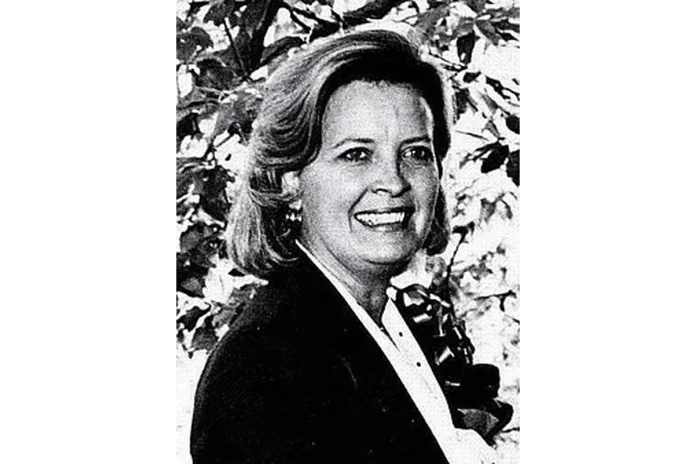
Martha Layne Collins Bio
Martha Layne Collins was an American businesswoman, educator, and Democratic politician from Kentucky who became the state’s 56th governor, serving from 1983 to 1987. She was the first and, to date, only woman elected to that office, and at the time of her election she was the highest-ranking woman in the Democratic Party. After leaving the governorship, Collins remained active in higher education and international trade, building a second career as a college administrator and honorary diplomat.
Early Life and Background
Martha Layne Hall was born on December 7, 1936, in Bagdad, Kentucky, the only child of Everett and Mary (Taylor) Hall. When she was in the sixth grade, her family moved to Shelbyville, Kentucky, where they opened the Hall-Taylor Funeral Home, with her father serving as the funeral director. Her parents were active in local Democratic politics, working for the campaigns of several party candidates, and young Martha often joined them, stuffing envelopes and delivering pamphlets door-to-door. Those early canvassing trips gave her a direct, hands-on introduction to political organizing.
Hall attended Shelbyville High School, where she was a good student and a cheerleader who also competed in beauty pageants, winning the title of Shelby County Tobacco Festival Queen in 1954. After high school, she enrolled at Lindenwood College, then an all-woman institution in Saint Charles, Missouri, and after one year transferred to the University of Kentucky in Lexington. There she was active in Chi Omega, the Baptist Student Union, and the home economics club, and she served as president of her dormitory and vice president of the house presidents council.
In 1957, Hall met Billy Louis Collins at a Baptist camp in Shelby County. He was a student at Georgetown College, about 13 miles from Lexington, and the two dated while finishing their degrees. She earned a Bachelor of Science degree in home economics in 1959, and earlier that year had been named Kentucky Derby Festival Queen. She briefly considered a career in modeling, but instead she and Billy Collins married shortly after her graduation, going on to have two children, Steve and Marla.
Path to US Politics
While Billy Collins pursued a degree in dentistry at the University of Louisville, Martha taught at Seneca and Fairdale high schools in Louisville. The couple later moved to Versailles, Kentucky, in 1966, where she taught at Woodford County Junior High School. Through the Young Democratic Couples Club, they worked on Henry Ward’s unsuccessful 1967 gubernatorial campaign, deepening Martha’s involvement in party politics.
By 1971, Collins was president of the Jayceettes, a role that brought her to the attention of Democratic U.S. Senator Dee Huddleston, who asked her to co-chair Wendell Ford’s gubernatorial campaign in Kentucky’s 6th congressional district. State Democratic Party Chairman J. R. Miller later remarked that she organized that district with remarkable skill. After Ford’s victory, he named Collins a Democratic National Committeewoman from Kentucky, and she left teaching to work full-time at the state party headquarters, serving as secretary of the state Democratic Party and as a delegate to the 1972 Democratic National Convention. The following year, she worked on Huddleston’s U.S. Senate campaign.
In 1975, Collins won the Democratic nomination for Clerk of the Kentucky Court of Appeals in a five-way primary and went on to defeat Republican Joseph Lambert in the general election. During her tenure, a constitutional amendment renamed the Court of Appeals as the Kentucky Supreme Court, and Collins became both the last clerk of the old court and the first clerk of the new one. The Woodford County chapter of Business and Professional Women named her its 1976 Woman of Achievement, and in 1977 Governor Julian Carroll appointed her Kentucky Executive Director of the Friendship Force.
Martha Layne Collins Career
Early Career (1979-1983)
Collins entered the lieutenant governor’s race in 1979, securing the Democratic nomination in a crowded field with about 23 percent of the vote and then handily defeating Republican Hal Rogers 543,176 to 316,798. As lieutenant governor, she traveled the state on behalf of Governor John Y. Brown Jr., who disliked formal events and frequently stayed away from the capital, leaving Collins as acting governor for more than 500 days of her four-year term. By the end of her term, she had visited all 120 counties in Kentucky.
She also served as president of the state Senate, where members of both parties praised her impartiality and command of parliamentary procedure, and she became the first woman to chair the National Lieutenant Governors Association. During these years she was considered for several higher offices, including a place on the board of regents of the Southern Baptist Theological Seminary, where she was named in 1982.
Gubernatorial Election Breakthrough (1983)
Nearing the end of her term as lieutenant governor, Collins announced her run for governor in 1983, entering a Democratic primary against Louisville mayor Harvey I. Sloane and former Human Resources Secretary Grady Stumbo. Despite a late endorsement of Stumbo by Governor Brown, Collins edged out Sloane 223,692 to 219,160 and Stumbo 199,795 to win the nomination. In the general election, she faced Republican state senator Jim Bunning, a future Baseball Hall of Fame pitcher whose Catholicism and reserved campaign style limited his appeal among Kentucky’s majority-Protestant electorate.
Several national women’s organizations declined to endorse Collins over her lukewarm support for the Equal Rights Amendment and her opposition to most abortions, but she still won the general election 561,674 to 454,650, becoming the first and to date only woman elected governor of Kentucky. Her victory made her the highest-ranking woman in the Democratic Party, and she was briefly mentioned as a potential vice-presidential running mate before Walter Mondale chose Congresswoman Geraldine Ferraro in 1984.
Governor of Kentucky Era (1983-1987)
Collins’s administration focused on two priorities: education and economic development. In her first legislative address, she requested an additional $324 million from the General Assembly, most of it for education, funded through a tax package that included corporate licensing fee increases and a flat five percent personal income tax. With the state still recovering from recession and an election year approaching, legislators refused to raise taxes, and she withdrew the request in favor of a continuation budget, though several targeted education measures, including mandatory kindergarten and academic receivership for failing schools, were approved.
Undaunted, Collins appointed herself secretary of the state Education and Humanities Cabinet in January 1985 and toured every county gathering public input. In June 1985, she unveiled a new package that included a five percent teacher pay raise, smaller class sizes, construction funding, kindergarten aides, and a “power equalization” program for poorer districts. The General Assembly approved the plan in a special session, tripling the corporate licensing tax to $2.10 per $1,000 to pay for it, and followed up in 1986 with an additional $100 million for higher education and a pilot preschool program, even as a proposed vocational education overhaul was left unfinished.
On the economic side, Collins made trade missions to Japan beginning in 1985 and also visited China, the first Kentucky governor to do so, establishing a sister-state relationship with Jiangxi province. Her Japan trips produced her signature achievement: convincing Toyota to build an $800 million assembly plant in Georgetown, Kentucky. The state offered about $125 million in incentives, including land, training funds, and highway improvements, which the Kentucky Supreme Court ultimately upheld as constitutional in a 4-3 ruling in June 1987. By the end of her term, 25 automotive-related plants had been built in 17 counties, and the state’s unemployment rate had fallen from 9.7 percent in October 1983 to 7.2 percent in October 1987, with a reported net gain of 73,000 jobs.
Notable Events and Milestones
Collins presided over the 1984 Democratic National Convention in San Francisco, becoming the first woman governor to deliver the Democratic response to a presidential Saturday address, given four days after her inauguration in response to President Ronald Reagan. She also chaired the Tennessee-Tombigbee Waterway Authority when the waterway opened to the public in 1985, was inducted into the University of Kentucky Alumni Association’s Hall of Distinguished Alumni that same year, and led the Southern Growth Policies Board, the Southern States Energy Board, and the Appalachian Regional Commission’s co-chair. In October 1987, she called a special legislative session to shore up the state’s workers’ compensation Special Fund, signing a plan that raised assessments on premiums for thirty years, with coal companies paying more because of black lung disease claims.
Martha Layne Collins Career Wins
Although Collins is best known for a single four-year governorship rather than a long string of elected victories, her political career included several clear electoral wins at the state level. Her most consequential victory was the 1983 gubernatorial race, and she also won a five-way Democratic primary that year, a 1979 primary and general election for lieutenant governor, and a 1975 general election for clerk of the Kentucky Court of Appeals.
Gubernatorial Highlights
Collins’s 1983 gubernatorial win, 561,674 to 454,650 over Jim Bunning, was historic: she became the first woman elected governor of Kentucky, a distinction she still holds. Her primary victory that spring, edging Louisville mayor Harvey I. Sloane by roughly 4,500 votes, was nearly as hard-fought, and she entered office as the highest-ranking woman in the Democratic Party. Together, those wins marked the high point of her political career, the launching pad for her ambitious education and economic development agendas.
Other Wins and Achievements
Beyond her gubernatorial victory, Collins won a competitive 1979 Democratic primary for lieutenant governor with about 23 percent of the vote and a decisive general election over Hal Rogers, and in 1975 she won both a five-way Democratic primary and the general election for Clerk of the Kentucky Court of Appeals, defeating future Kentucky Supreme Court Chief Justice Joseph Lambert. After leaving office, she received the first Martha Layne Collins Leadership Award from Women Leading Kentucky in 1999, the World Trade Day Book of Honor Award for Kentucky in 2003, the Order of the Rising Sun, Gold and Silver Star from Japan in 2009, and had the Bluegrass Parkway renamed the Martha Layne Collins Bluegrass Parkway in 2003 and a Shelby County high school named in her honor in 2010.
Martha Layne Collins Family
Family Background and Political Lineage
Collins was the only child of Everett and Mary (Taylor) Hall, and her parents’ deep involvement in local Democratic politics shaped her early life. The family operated the Hall-Taylor Funeral Home in Shelbyville, where her father served as funeral director, and young Martha was a regular presence at party events. Her parents worked on campaigns for several Democratic candidates, and she often joined them in the routine work of canvassing, stuffing envelopes, and delivering pamphlets door-to-door, a foundation she later credited with teaching her the importance of grassroots organizing.
Personal Life
Collins married Billy Louis Collins, known as Bill Collins, shortly after her 1959 graduation from the University of Kentucky, and the couple had two children, Steve and Marla. Bill Collins later earned a dentistry degree at the University of Louisville and was named state treasurer for the Democratic Party during her gubernatorial campaign, a move that drew press criticism and led to his resignation. In 1993, he was convicted in an influence-peddling scandal tied to his wife’s time as governor and sentenced to five years and three months in federal prison; he was released in 1997. The conviction damaged Collins’s prospects for a return to political life, including rumored candidacies for the U.S. Senate and a possible role in the Clinton administration, and the couple’s later years were divided between Lexington, Kentucky, and other commitments until her death in her sleep on November 1, 2025, at the Richmond Place Retirement Community in Lexington, at the age of 88.