

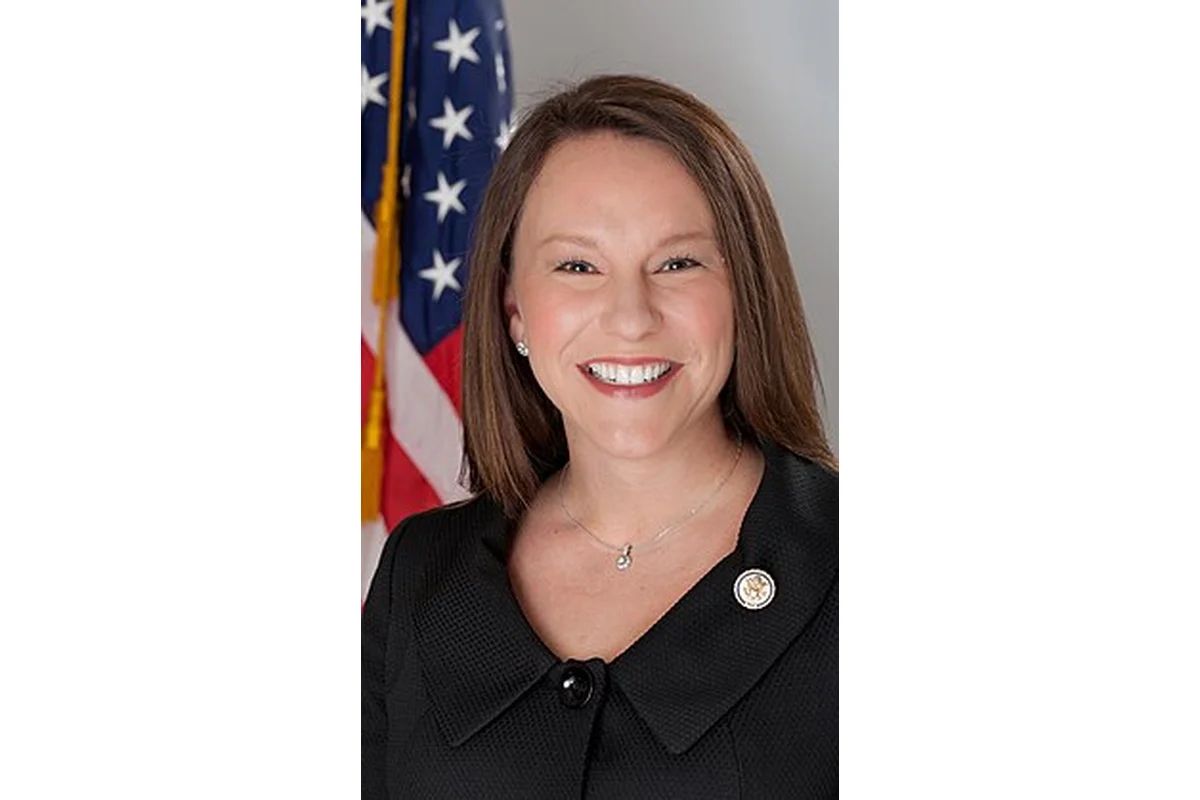
Martha Roby Bio
Martha Kehres Roby is an American lawyer and Republican politician who served as the U.S. Representative for Alabama’s 2nd congressional district from 2011 to 2021. Born and raised in Montgomery, Alabama, she built a career in law and local government before moving to the national stage. During her five terms in the House, she aligned largely with Republican positions on fiscal, social, and defense issues, and she co-led efforts on bipartisan workplace training and rural broadband expansion in her district.
Roby entered Congress after defeating incumbent Democrat Bobby Bright in 2010. That same year, alongside Democrat Terri Sewell, she became one of the first women elected to Congress from Alabama in a regular election. In July 2019, she announced she would not seek reelection, and her term ended in January 2021.
Early Life and Background
Martha Dubina was born on July 26, 1976, in Montgomery, Alabama. She grew up in a family with a strong background in the legal profession. Her father, Joel Fredrick Dubina, served as a judge on the United States Court of Appeals for the Eleventh Circuit, an experience that exposed her early to matters of law and public service.
Roby attended New York University, where she earned a Bachelor of Music degree. She later returned to Alabama to study law at the Samford University Cumberland School of Law in Birmingham, receiving her Juris Doctor in 2001. After completing her legal education, she joined the Montgomery law firm of Copeland, Franco, where she worked before entering public life.
Path to US Politics
Roby’s entry into politics began at the local level. In 2003, she was elected to the Montgomery City Council, defeating five opponents and winning 54.88 percent of the vote in her district. During her time on the council, she joined colleagues and then-Mayor Bobby Bright in opposing a proposed shopping mall in East Montgomery, opposed the privatization of household garbage disposal, supported a ten-cent cigarette tax increase, and advocated for a state sales tax holiday.
These early policy debates helped Roby build a record as a fiscal conservative at the municipal level. She set her sights on federal office in 2010, when she challenged incumbent Democratic U.S. Congressman Bobby Bright for Alabama’s 2nd congressional district seat. After winning a competitive Republican primary and runoff, she defeated Bright in the general election by a margin of 51 to 49 percent.
Martha Roby Career
Early Career (2003-2010)
Roby’s early political career was rooted in Montgomery, where she served on the City Council from 2003. Her work there focused on local fiscal policy, infrastructure decisions, and tax issues, giving her a foundation in constituent service and legislative negotiation. The experience positioned her to run for higher office in a traditionally conservative district.
In 2010, she launched her campaign for Congress with a platform centered on reducing government spending, opposing earmarks, and supporting a Balanced Budget Agreement. She pledged to maintain defense spending at least 4 percent of GDP, support missile defense programs, abolish the Internal Revenue Service, and oppose cap-and-trade energy policies. Her primary victory over a crowded Republican field, followed by a narrow general election win, marked her arrival in national politics.
US House of Representatives Breakthrough (2011-2015)
Upon taking office in 2011, Roby joined a freshman class determined to rein in federal spending. In December 2011, she voted in support of H.R. 10, the Regulations From the Executive in Need of Scrutiny Act, which would have required congressional approval for major executive regulations. She also voted in September 2013 to cut $39 billion from the food stamp program, a vote that drew attention given that roughly 41,000 households in her district received food stamps at the time.
Roby won reelection with growing margins. In 2012, she defeated Democrat Therese Ford 64 to 36 percent, carrying 11 of the district’s 15 counties. In 2014, she won 67.34 percent of the vote against Democratic nominee Erick Wright. During this period, she co-sponsored the Sanctity of Human Life Act, signed a prohibition on funding the United Nations Population Fund, and supported voluntary prayer in all schools. She also backed the Cyber Intelligence Sharing and Protection Act and voted to terminate funding for National Public Radio.
Second-Term Era (2015-2019)
Roby’s second-term era was defined by major votes on healthcare, taxes, and national security. In March 2016, she won the Republican primary with 64 percent of the vote and went on to win the general election with 48.8 percent. In May 2017, she voted in favor of repealing the Patient Protection and Affordable Care Act and passing the American Health Care Act, calling the Affordable Care Act a failed law and arguing the replacement would lower costs and increase choices.
She also supported the Tax Cuts and Jobs Act of 2017, saying the legislation would help families keep more of their own money and encouraging businesses to remain in the United States. In 2017, Roby co-sponsored a bipartisan bill requiring sexual harassment and anti-discrimination training for all House members, employees, staff, and unpaid personnel, a measure that passed the House. That year, she also helped secure more than $3.6 million to expand broadband internet access in rural Autauga County, Alabama.
Notable Events and Milestones
One of Roby’s most defining moments came in October 2016, when she withdrew her presidential endorsement of Donald Trump, saying his behavior made him unacceptable as a candidate and that she would not vote for him. After Trump’s election, she became more supportive of the new administration and earned Trump’s endorsement for her 2018 primary reportedly after House Majority Leader Kevin McCarthy encouraged it. She went on to defeat Bobby Bright, who had switched to the Republican Party, in the primary and won the 2018 general election with 61.4 percent of the vote against Democratic nominee Tabitha Isner. In December 2019, during the first impeachment vote, she opposed impeachment while her son George sat on her lap.
Martha Roby Family
Family Background and Public Service
Roby comes from a family with deep ties to the legal profession. Her father, Joel Fredrick Dubina, served as a judge on the United States Court of Appeals for the Eleventh Circuit. Growing up in a household shaped by federal jurisprudence influenced her decision to study law and pursue public service.
Personal Life
Roby is married to Riley Roby. The couple has been based in Montgomery, Alabama, where she built her legal and political career. Her family life became a visible part of her public identity, particularly during the 2019 impeachment proceedings when her young son sat with her during the House vote.