
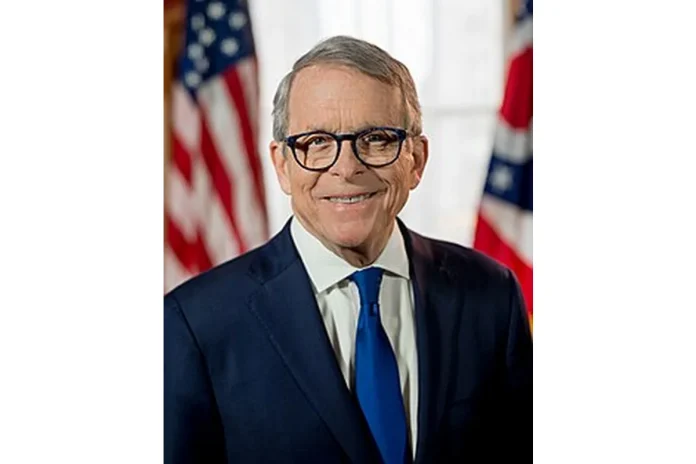
Mike DeWine Bio
Richard Michael DeWine, known publicly as Mike DeWine, is an American politician and attorney serving as the 70th governor of Ohio. A member of the Republican Party, he took office in January 2019 and won a second term in 2022. Over more than four decades in public life, he has held roles as a county prosecutor, state senator, U.S. representative, U.S. senator, lieutenant governor, and attorney general, making him one of the most experienced state-level officeholders in Ohio history.
Beyond politics, DeWine is a trained lawyer and a former educator. He built a career that stretches from the courtroom to the statehouse, shaped by a willingness to take on tough public-safety and public-health challenges. His tenure has been defined by a pragmatic, sometimes bipartisan approach that has occasionally put him at odds with the more conservative wing of his party.
Early Life and Background
Richard Michael DeWine was born on January 5, 1947, in Springfield, Ohio, and grew up in the nearby village of Yellow Springs. He is the son of Jean Ruth Liddle and Richard Lee DeWine. Raised in a Roman Catholic household, he attended local schools before pursuing higher education in Ohio.
DeWine earned a Bachelor of Science degree in education from Miami University in Oxford, Ohio, in 1969. He then went on to earn a Juris Doctor from the Pettit College of Law at Ohio Northern University in 1972. His training in both teaching and law gave him an early foundation in public service and courtroom advocacy.
Path to US Politics
DeWine began his legal career in 1972 as an assistant prosecuting attorney for Greene County, Ohio. In 1976, he was elected county prosecutor, serving a four-year term and building a reputation as a tough-on-crime attorney. He then won election to the Ohio State Senate in 1980, giving him his first experience in a legislative chamber.
In 1982, DeWine successfully ran for the U.S. House of Representatives from Ohio’s 7th congressional district after longtime Representative Bud Brown retired. He was reelected three more times, running unopposed in 1986, and served in the House until 1991. During that period, he served as one of the House impeachment managers in the 1986 impeachment trial of Judge Harry E. Claiborne.
Mike DeWine Career
Early Career (1972–1990)
DeWine started in public service as an assistant prosecutor in Greene County, where he worked on criminal cases and built his legal reputation. After winning election as county prosecutor in 1976, he transitioned to the Ohio State Senate in 1980, representing his district for a single two-year term.
His next move came in 1982, when he won election to the U.S. House of Representatives. Reelected three more times from his district, he was part of the House impeachment managers who prosecuted the case against Judge Harry E. Claiborne. He left the House in 1991 to run for lieutenant governor on the ticket with George Voinovich.
U.S. Senate Breakthrough (1991–2007)
After serving as the 59th lieutenant governor of Ohio under George Voinovich, DeWine ran unsuccessfully for the U.S. Senate in 1992 against incumbent John Glenn. He returned to the Senate race in 1994 and won a landslide victory as part of the Republican Revolution, defeating prominent attorney Joel Hyatt by 14 points.
Reelected in 2000, DeWine sat on the Senate Judiciary and Select Intelligence committees. He was the lead sponsor of the Drug-Free Century Act in 1999 and was a member of the bipartisan Gang of 14 that brokered a compromise on judicial nominees in 2005. He was defeated for reelection in 2006 by U.S. Representative Sherrod Brown.
Attorney General Era (2011–2019)
After four years in the private sector teaching at Cedarville University, Ohio Northern University, and Miami University, DeWine returned to elected office in 2010, winning election as the 50th attorney general of Ohio. He was reelected in 2014, carrying 83 of Ohio’s 88 counties.
As attorney general, DeWine made criminal justice reform a centerpiece of his administration. He led efforts to test thousands of previously untested rape kits, resulting in more than 5,000 DNA hits and indictments of approximately 700 alleged attackers. He also targeted Ohio’s opioid crisis, helping to close pill mills in Scioto County, forming a Heroin Unit, and suing opioid manufacturers and distributors for their role in the epidemic.
Governorship (2019–Present)
DeWine announced his candidacy for governor in 2016 and won the Republican primary in 2018 before defeating Richard Cordray in the general election. Inaugurated as Ohio’s 70th governor on January 14, 2019, he quickly signed executive orders establishing priorities in children’s services, mental health, anti-discrimination, and the opioid response.
He drew national attention in early 2020 for his aggressive response to the COVID-19 pandemic, including school closures, stay-at-home orders, and a statewide mask mandate. His “Vax-a-Million” lottery in 2021 boosted vaccine uptake. He was reelected in 2022 with 62.4 percent of the vote, defeating former Dayton Mayor Nan Whaley by roughly 25 points.
Notable Events and Milestones
DeWine signed Ohio’s “Heartbeat Bill” in April 2019, one of the strictest abortion restrictions in the nation at the time. Following the Dayton mass shooting in August 2019, he proposed a 17-point gun safety plan that included red-flag laws. In February 2023, after a Norfolk Southern train derailment in East Palestine, he activated the National Guard and pushed for federal rail safety reforms.
Mike DeWine Career Wins
Mike DeWine has compiled one of the longest records of electoral victories in Ohio politics, winning races at the county, state, and federal levels across four decades. From his first county prosecutor race in 1976 to his 2022 gubernatorial landslide, he has won consistently in both Republican strongholds and competitive districts.
Electoral Highlights
DeWine won his first election as Greene County prosecutor in 1976 and followed it with a successful Ohio State Senate bid in 1980. He won four consecutive U.S. House races from 1982 to 1990, including an unopposed campaign in 1986, and returned to the Senate in 1994 with a 14-point victory. His 2018 gubernatorial win came by about 166,000 votes, and his 2022 reelection produced a roughly 25-point margin.
Other Achievements
Beyond elections, DeWine’s signature achievements include the closure of Ohio’s pill mills, the testing of nearly 14,000 previously untested rape kits, the launch of the H2Ohio water-quality program, and a nationally watched COVID-19 response. He also led Ohio’s largest-ever infrastructure investments, including Intel’s semiconductor campus and expanded broadband access.
Mike DeWine Family
Family Background and Political Lineage
Mike DeWine is the son of Richard Lee DeWine and Jean Ruth Liddle. His second cousin, Kevin DeWine, served as the former chairman of the Ohio Republican Party, giving the family a notable footprint in state-level politics. The DeWines have deep ties to the Miami Valley region, where Mike DeWine has lived and worked for most of his life.
Personal Life
DeWine married Frances Struewing on June 3, 1967, and the couple has had eight children together. Their daughter Rebecca died in a car accident in 1993 at the age of 22. Their son Pat DeWine serves on the Ohio Supreme Court, and another son, Brian DeWine, is president of the Minor League Baseball team the Asheville Tourists, which the family purchased in 2010. The governor and his wife reside in the historic Whitelaw Reid House.