
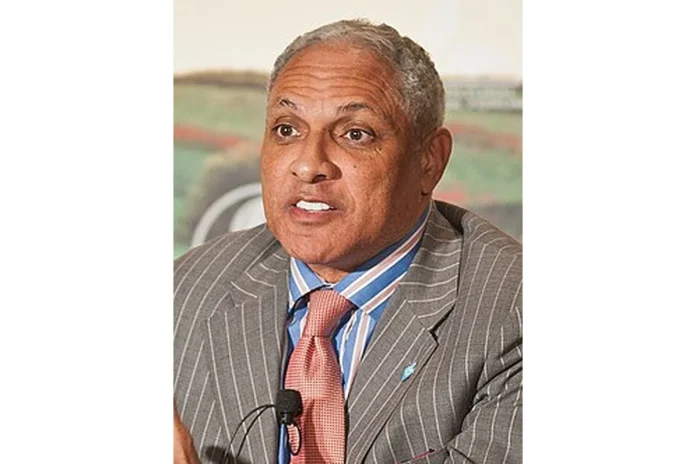
Mike Espy Bio
Alphonso Michael “Mike” Espy (born November 30, 1953) is an American lawyer and Democratic politician from Mississippi. He served as the United States Representative for Mississippi’s 2nd congressional district from 1987 to 1993 and later became the 25th United States Secretary of Agriculture under President Bill Clinton. Espy was the first African American and the first person from the Deep South to hold the position of Secretary of Agriculture.
After leaving federal office, Espy built a career as a private attorney. He later returned to politics, winning the Democratic nomination for United States Senate in both 2018 and 2020. He lost both general elections to Republican Cindy Hyde-Smith, but his campaigns were the closest Senate races in Mississippi in decades.
Early Life and Background
Espy was born in Yazoo City, Mississippi, and grew up in the Mississippi Delta region. He is the grandson of Thomas J. Huddleston Sr., the founder of the Afro-American Sons and Daughters, a fraternal organization that operated the Afro-American Hospital, a leading health care provider for Black residents in Mississippi from the 1920s through the 1970s. His family’s deep roots in community service helped shape his interest in law and public policy.
Espy attended Howard University in Washington, D.C., where he majored in political science and was active in student politics, holding several elective positions. He later earned his Juris Doctor from Santa Clara University School of Law in California in 1978. Espy currently serves on the board of directors of the Mississippi Center for Justice, a nonprofit legal advocacy organization.
Path to US Politics
After law school, Espy returned to Mississippi to begin his public service career. He worked as an attorney with Central Mississippi Legal Services from 1978 to 1980, also serving as the Assistant Secretary of State for Mississippi Legal Services. From 1980 to 1984, he served as the Assistant Secretary of State for the Public Lands Division. In 1984, he was named Assistant Mississippi Attorney General, a position he held until 1985.
These early legal and state-level roles gave Espy hands-on experience in Mississippi government and a strong network of political contacts. Building on that foundation, he entered the national stage in 1986 when he ran for the United States House of Representatives. His deep Mississippi roots and his family’s civil rights legacy made him a strong candidate in a historically conservative district.
Mike Espy Career
Early Career (1978-1986)
Espy’s early legal career was rooted in public service. He began as an attorney with Central Mississippi Legal Services, providing legal aid to underserved Mississippians. His work in this role connected him to the political establishment in the state and prepared him for higher office.
He progressed through several state government positions, including Assistant Secretary of State for the Public Lands Division and Assistant Mississippi Attorney General. By the time he launched his first congressional campaign in 1986, Espy had built a strong reputation as a skilled lawyer and a rising figure in Mississippi’s Democratic Party.
Congressional Career (1987-1993)
In November 1986, Espy was elected as a Democrat to the 100th Congress from Mississippi’s 2nd congressional district. He defeated two-term Republican Webb Franklin to become the first African American to represent Mississippi at the federal level since the Reconstruction era, a distinction last held by Senator Hiram Revels in 1870-1871. The victory was a historic moment for the state and for Black political representation in the Deep South.
Espy was reelected three times, serving four terms in the House. He became known for supporting gun ownership, earning the National Rifle Association’s Silver Rifle Award in 1988. His voting record combined liberal social views with support for cutting the federal budget and protecting Mississippi’s defense and agricultural industries, a balance that helped him win in a conservative-leaning district.
Secretary of Agriculture (1993-1994)
In December 1992, President-elect Bill Clinton chose Espy to serve as Secretary of Agriculture in his new administration. Following his confirmation by the United States Senate in late January 1993, Espy resigned from his seat in the House of Representatives. He became both the first African American and the first person from the Deep South to hold the position.
Espy served as Secretary of Agriculture from 1993 to 1994. His tenure ended in October 1994, when he announced his resignation following questions from the White House about his use of government perks and acceptance of gifts. The issues stemmed in part from a foundation run by Tyson Foods that had given his then girlfriend a $1,200 scholarship.
Corruption Trial and Acquittal (1997-1998)
On August 27, 1997, Espy was indicted on charges of receiving improper gifts, including sports tickets, lodging, and airfare. He refused to plea bargain and went to trial. Independent Counsel Donald Smaltz presented more than 70 witnesses during the trial and spent more than $20 million preparing and trying the case.
On December 2, 1998, Espy was acquitted of all 30 criminal charges. The defense did not call any witnesses, arguing that the prosecution had not proved its case. The jury deliberated less than 10 hours before finding him not guilty. In a related case, his former Chief of Staff, Ronald Blackley, was convicted on three counts of making false statements and sentenced to 27 months in prison.
Private Law Career (2008-Present)
In 2008, Espy joined the nationwide law firm Morgan & Morgan as an attorney. He handles general plaintiff’s law, mass tort, bond and governmental finance, and international relations cases. One of his notable cases involved the Pigford lawsuit, where he worked with the National Black Farmers Association to represent Black farmers in a major discrimination case.
Espy has remained an active figure in Mississippi civic life. In October 2007, he crossed party lines to endorse Republican Mississippi Governor Haley Barbour’s reelection campaign, demonstrating his bipartisan approach. He has been described as a moderate and conservative Democrat with a centrist political style.
Senate Campaigns (2018 and 2020)
On March 5, 2018, Republican Senator Thad Cochran announced he would resign for health reasons, triggering a special election. Espy announced his candidacy that same day, becoming the first declared candidate in the race. He made jobs, rural hospital closures, and the high cost of education the core themes of his campaign.
A nonpartisan special election took place on November 6, 2018, with a runoff held on November 27, 2018, after no candidate won a majority. Espy lost the runoff to Republican Cindy Hyde-Smith, but he garnered more than 46 percent of the vote, the closest United States Senate election in Mississippi since 1988. Three days after the loss, on his 65th birthday, Espy filed with the Federal Election Commission to run for the seat again in 2020. He won the Democratic nomination a second time but lost the general election to Hyde-Smith by ten percentage points.
Notable Events and Milestones
Espy’s 1986 congressional victory made him the first African American to represent Mississippi in Congress since the Reconstruction era, a milestone that was later followed by his historic appointment as the first African American Secretary of Agriculture. His 2018 Senate runoff, in which he won more than 46 percent of the vote, was the closest Senate race in Mississippi in 30 years and marked one of the strongest showings by a Democrat in recent state history.
Mike Espy Family
Family Background and Public Service
Espy’s family has deep roots in Mississippi and a strong tradition of public service. He is the grandson of Thomas J. Huddleston Sr., founder of the Afro-American Sons and Daughters. This fraternal society operated the Afro-American Hospital, a leading provider of health care for Black people in Mississippi from the 1920s to the 1970s, helping shape his lifelong interest in equity and community advocacy.
Personal Life
Espy married Sheila Bell, and the couple had two children before divorcing. In 1999, he married Portia Ballard. His family has remained a central part of his public life, and he has often spoken about the influence of his grandfather’s commitment to service.