
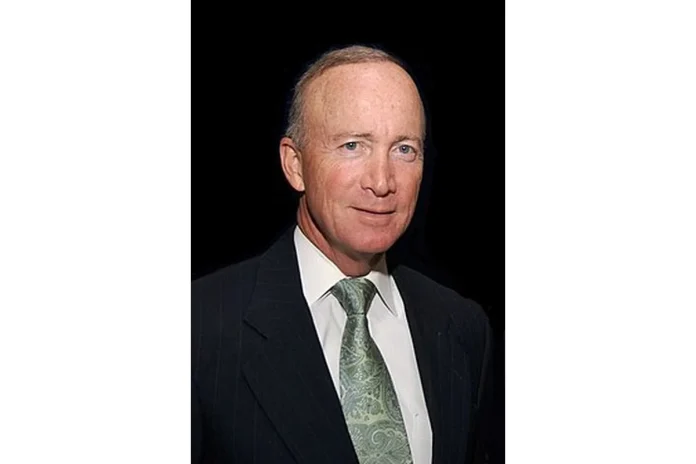
Mitch Daniels Bio
Mitchell Elias Daniels Jr. (born 7 April 1949) is an American former academic administrator, businessman, author, and retired politician. A Republican, he served as the 49th governor of Indiana from January 2005 to January 2013 and as the 12th president of Purdue University from January 2013 to January 2023. His time in elected and administrative office was defined by his push for fiscal restraint, restructuring of state services, and efforts to make higher education more affordable. Daniels retired as president of Purdue University effective 1 January 2023.
Before entering state government, Daniels served as director of the U.S. Office of Management and Budget under President George W. Bush from 2001 to 2003. He was also chief of staff to Senator Richard Lugar and held senior executive roles at Eli Lilly and Company. Across these roles, he built a reputation for budget discipline and a results-oriented approach to public management.
Early Life and Background
Mitchell Elias Daniels Jr. was born on 7 April 1949 in Monongahela, Pennsylvania, United States. He is the son of Mitchell Elias Daniels and Dorothy Mae (née Wilkes). Daniels grew up in Indiana and attended North Central High School. He went on to earn a Bachelor of Arts degree from Princeton University and a Juris Doctor from Georgetown University Law Center.
While an undergraduate at Princeton in 1970, Daniels was arrested during a drug investigation involving his residence hall. He was charged with possession of marijuana, LSD, and other drugs, and maintaining a common nuisance. As part of a plea agreement, the charges were dropped in exchange for a $350 fine for marijuana use. In later years, Daniels wrote about the episode in opinion columns and disclosed it on job applications, describing it as a formative moment of his youth.
Path to U.S. Politics
Daniels began his public career in Washington, D.C., working as an assistant to Senator Richard Lugar of Indiana. He served as Lugar’s chief of staff in the Senate from 1977 to 1982 and was appointed executive director of the National Republican Senatorial Committee when Lugar served as chairman from 1983 to 1984. In 1985, he worked as a chief political advisor and liaison to President Ronald Reagan.
After his time in the Senate, Daniels returned to Indiana to lead the Hudson Institute, a conservative think tank. In 1990, he joined Eli Lilly and Company, where he became president of North American Pharmaceutical Operations from 1993 to 1997 and then senior vice president of corporate strategy and policy from 1997 to 2001. In January 2001, President George W. Bush appointed him as director of the U.S. Office of Management and Budget, a position he held until June 2003, setting the stage for his run for governor of Indiana.
Mitch Daniels Career
Early Career (1977–2003)
Daniels’s first major role in public service came as chief of staff to Senator Richard Lugar from 1977 to 1982. His work managing Lugar’s Senate office gave him direct experience in federal budgeting, legislative strategy, and constituent services. He later ran the National Republican Senatorial Committee during the 1983 to 1984 cycle, helping to coordinate campaign efforts for Republican Senate candidates nationwide.
In 1985, Daniels served in the Reagan White House as a political advisor and liaison to the president. He then spent several years in Indiana leading the Hudson Institute before joining Eli Lilly and Company in 1990. His rise at Eli Lilly to senior vice president positioned him for a return to government when President George W. Bush named him director of the Office of Management and Budget in 2001, a role he held until 2003.
Governorship of Indiana (2005–2013)
First Term (2005–2009)
After leaving the Bush administration, Daniels ran in the 2004 Indiana gubernatorial election. He won the Republican primary with 67% of the vote and defeated Democratic incumbent Governor Joe Kernan in the general election. On his first day in office, Daniels created Indiana’s Office of Management and Budget and decertified state government employee unions by executive order. He also proposed major reforms to address a projected $800 million biennial deficit, leading to a final budget of $23 billion and a $300 million surplus.
During his first term, Daniels signed into law the Major Moves initiative, which leased the Indiana Toll Road to a joint venture for 75 years in exchange for $3.85 billion and a commitment of $4.4 billion in road upgrades. He also championed the Healthy Indiana Plan to provide health coverage for uninsured workers and signed one of the nation’s first voter photo identification laws, which was ultimately upheld by the U.S. Supreme Court. In 2008, he was reelected to a second term, defeating Jill Long Thompson, and was recognized by Governing magazine as a 2008 Public Official of the Year.
Second Term (2009–2013)
His second term was marked by political conflict, including the 2011 Indiana legislative walkouts, in which Democratic lawmakers fled the state to block a right-to-work bill and a school voucher program. After weeks of stalemate, the assembly passed most of Daniels’s agenda, including the statewide school voucher program, charter school expansion, a merit pay system for teachers, and a right-to-work law that made Indiana the first state in a decade to adopt such legislation. Daniels also signed restrictions on abortion funding and immigration-related measures, including a denial of in-state tuition for undocumented immigrants.
Daniels’s tenure also drew national attention for budget austerity. He cut the state government workforce, capped property taxes, and balanced budgets by limiting spending growth below the rate of inflation. He also pushed Indiana to adopt Daylight Saving Time statewide, ending decades of mixed observance. He chose not to run in the 2012 presidential election despite widespread speculation about a potential campaign.
Purdue University Presidency (2013–2023)
After leaving the governor’s office in January 2013, Daniels became the 12th president of Purdue University, a position he held until 1 January 2023. He was selected by a search committee composed largely of Purdue faculty and administrators and confirmed by the university’s Board of Trustees. During his presidency, Daniels focused on freezing tuition, expanding financial aid, and improving affordability for in-state students, while also pursuing research growth and online education initiatives.
His tenure was not without controversy. Emails released in 2013 showed Daniels asking advisers to ensure that Howard Zinn’s book The People’s History of the United States was not used for credit in Indiana, prompting criticism from some faculty. In response, roughly 90 Purdue professors signed an open letter expressing concern about academic freedom, and Daniels defended his actions, stating that no one’s academic freedom had been infringed. He retired as president on 1 January 2023, concluding a decade leading one of the country’s largest public research universities.
Notable Events and Milestones
Among Daniels’s most defining achievements were the Major Moves toll road lease, the passage of a school voucher program, the adoption of right-to-work legislation, and the creation of the Healthy Indiana Plan. He served as director of the U.S. Office of Management and Budget, governor of Indiana, and president of Purdue University, a sequence of leadership roles few American politicians have matched.
Mitch Daniels Family
Family Background
Daniels is the son of Mitchell Elias Daniels and Dorothy Mae (née Wilkes). He grew up in Indiana, where he attended North Central High School before enrolling at Princeton University. His Midwestern upbringing and family ties to Indiana shaped his long association with the state and informed his later policy priorities as governor.
Personal Life
Daniels has been married to Cheri Herman since 1978. The couple has been a consistent presence throughout his career in public service, business, and higher education. He is known for keeping his personal life largely out of the public eye while focusing on his professional roles in government and academia.
Mitch Daniels Awards and Recognition
Over the course of his career in government and public administration, Daniels received several awards recognizing his work on fiscal discipline and policy innovation. He was honored by the Manhattan Institute and Hudson Institute, among other organizations, for his contributions to state and national governance.
Honors Received
Daniels received the 2011 Najeeb Halaby Award for Public Service. In 2008, he was given the Urban Innovator Award by the Manhattan Institute for his approach to state fiscal and urban challenges. He was also recognized with the Herman Kahn Award from the Hudson Institute and the Fiscy Award for Fiscal Discipline, reflecting his reputation for budget restraint in both state and federal roles.