

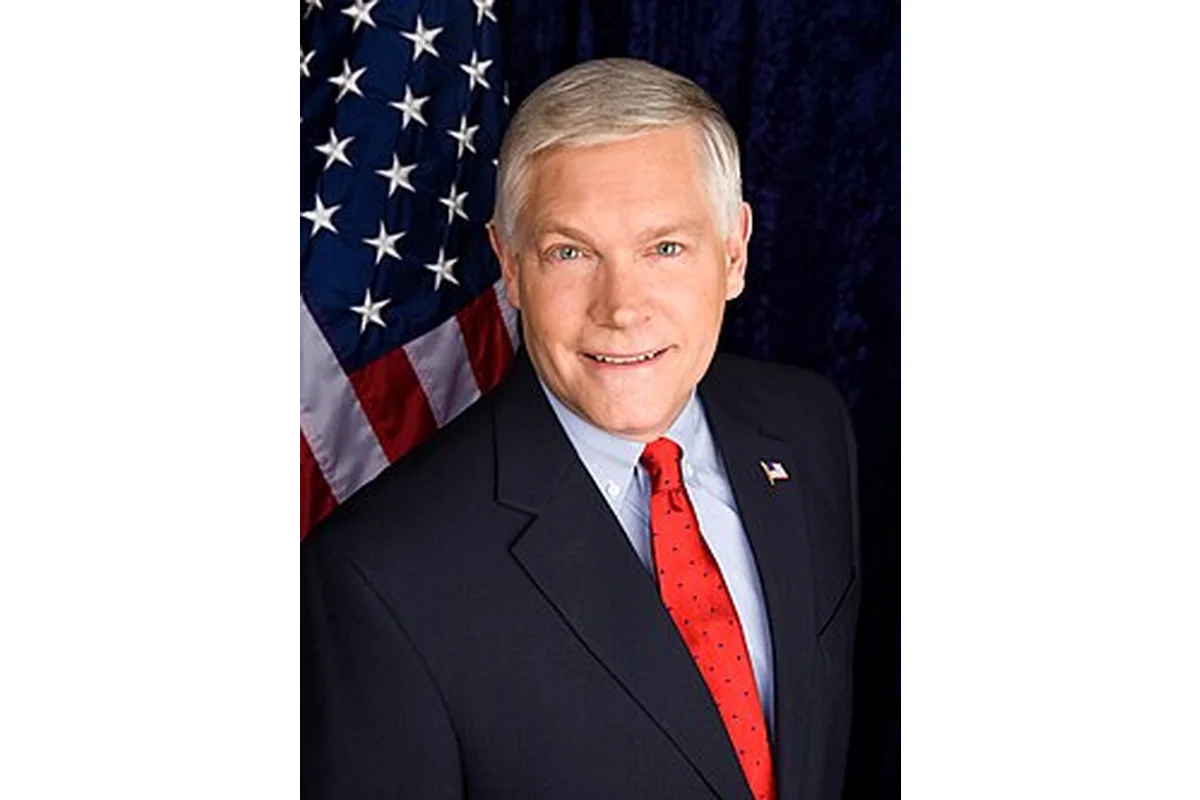
Pete Sessions Bio
Peter Anderson Sessions, widely known as Pete Sessions, is an American Republican politician and businessman who serves in the United States House of Representatives for Texas’s 17th congressional district. A native of Waco, Texas, he has built a long career in federal office, first representing Dallas-area districts from 1997 to 2019 and then returning to Congress in 2021 to represent a district that includes his hometown. He is a former chair of the National Republican Congressional Committee and led the House Rules Committee from 2013 to 2019, placing him at the center of legislative strategy for House Republicans during those years.
Beyond his committee work, Pete Sessions is recognized for his roles in party leadership and for his ties to several national political causes, including efforts tied to the Boy Scouts of America and conservative policy advocacy. He is the son of William S. Sessions, who served as Director of the Federal Bureau of Investigation, and has been a consistent voice for Republican priorities on taxes, healthcare, immigration, and national security. His career has spanned elections, defeats, and comebacks, reflecting both the volatility and the loyalty common in modern American political life.
Early Life and Background
Pete Sessions was born in Waco, Texas, on March 22, 1955, to Alice June Lewis and William S. Sessions. His father later served as Director of the Federal Bureau of Investigation, giving the family a high public profile long before Pete entered politics. Growing up in Waco placed him in the heart of central Texas, a region that would later return to political importance in his career.
He attended Winston Churchill High School and went on to graduate from Southwestern University in 1978 with a Bachelor of Science degree. Southwestern Bell hired him shortly after college, and he spent sixteen years at the company, eventually becoming a district manager for marketing in Dallas. This corporate background gave him early experience in management, public relations, and the business networks that often support political careers.
Outside of work, Sessions became deeply involved in the Boy Scouts of America. The organization recognized him as a Distinguished Eagle Scout, and he has held a position with the Circle Ten Council of the BSA. His two sons are also active in scouting, and he later sponsored legislation marking the centennial of the Boy Scouts, reflecting the lasting influence of these early experiences.
Path to US Politics
Pete Sessions first moved toward public office in 1991, when he finished sixth in a special election for the United States House of Representatives. The loss did not deter him. In 1993, he left Southwestern Bell to run again, this time challenging Democratic incumbent John Bryant in the 5th District. During that campaign, he toured the district with a livestock trailer filled with horse manure, using the visual prop to argue that the Clinton Administration’s health care plan was worse than the smell. He lost that race by roughly 2,400 votes.
After the 1993 defeat, Sessions took a position as vice president for public policy at the National Center for Policy Analysis, a Dallas-based conservative research institute. The role allowed him to sharpen his policy profile and expand his network among Texas conservatives. When Representative John Bryant ran for the United States Senate in 1996, Sessions saw his opening.
In 1996, Sessions won the 5th District seat, defeating Democratic nominee John Pouland with 47 percent of the vote. The victory launched a congressional career that would eventually include senior committee leadership and a leading role in electing Republicans to the House nationwide.
Pete Sessions Career
Early Career (1997–2002)
After arriving in Congress in 1997, Pete Sessions moved quickly to establish himself as a reliable conservative voice. He was reelected in 1998, defeating schoolteacher Victor Morales with 56 percent of the vote, and again in 2000, defeating Regina Montoya Coggins with 54 percent. His early legislative work focused on economic policy, federalism, and a cautious approach to federal regulations.
When redistricting after the 2000 census reshaped Texas’s congressional map, Sessions ran in the newly created 32nd District in 2002 and won easily, defeating Pauline Dixon with 68 percent of the vote. By the end of his first term in the 32nd District, he had built a reputation for aggressive campaigning and a willingness to take on tough opponents.
Major Races and Reelections (2004–2016)
The 2004 election became one of the defining races of Sessions’s early career. He faced 13-term Democratic incumbent Martin Frost, who had moved into the 32nd District after redistricting eliminated his former seat. In what was reported as the most expensive U.S. House race in the country that year, Sessions won 54 percent to 44 percent. The campaign was unusually combative, with Frost raising a decades-old streaking incident from Sessions’s college days and airing an advertisement featuring the World Trade Center towers, while Sessions criticized Frost for booking Peter Yarrow of the folk group Peter, Paul and Mary for a fundraiser.
Sessions continued to win his primary and general election contests through the following decade. In 2010, he chaired the National Republican Congressional Committee, the campaign arm of House Republicans, and the party gained control of the House with a net gain of 63 seats and 89 new freshman members. In 2014, he briefly sought the post of House majority leader after Eric Cantor’s defeat but withdrew from the internal House Republican Conference election, leaving the field clear for Kevin McCarthy. He won renomination in 2016 with 61.4 percent of the primary vote.
House Rules Committee and Party Leadership (2013–2019)
From 2013 to 2019, Pete Sessions chaired the House Rules Committee, a powerful position that controls which amendments reach the House floor. In that role, he shaped the legislative agenda for House Republicans and became a key strategist for the conference. He also led the National Republican Congressional Committee, helping direct party resources toward competitive races across the country.
His tenure as Rules chairman drew attention for both policy decisions and procedural choices. He repeatedly limited amendments related to cannabis policy, blocked a Russia-Iran sanctions bill in 2017 over concerns about Dallas-based companies, and was involved in back-channel talks with Venezuelan opposition figures, including discussions involving Rudy Giuliani aimed at persuading President Nicolás Maduro to leave office in 2018. These episodes showed the breadth of his influence and the controversies that often accompanied his leadership role.
Defeat, Comeback, and Current Tenure (2018–Present)
In 2018, Pete Sessions was defeated for reelection by Democrat Colin Allred, a lawyer and former NFL player. The loss ended his two-decade run representing Dallas-based districts. On October 3, 2019, he announced that he would run for Congress again, this time in the 17th District, which includes Waco, his boyhood home. He sold his home in Dallas and bought a home in Waco shortly after launching his campaign.
Sessions won a crowded 12-way Republican primary and then defeated healthcare executive Renee Swann in a runoff to claim the nomination. On November 3, 2020, he won the general election and returned to the House. In 2023, he unsuccessfully sought the Republican nomination for Speaker of the House. He continues to represent the 17th District, focusing on agriculture, military, veterans, and small business issues important to central Texas.
Pete Sessions Family
Family Background and Public Lineage
Pete Sessions is the son of Alice June Lewis and William S. Sessions, who served as Director of the Federal Bureau of Investigation. He is descended from Richard Sessions, who owned 96 slaves in Chicot County, Arkansas, before the American Civil War, and whose home was later raided during the conflict. Despite that early wealth, Richard Sessions struggled financially in the years after the war. Pete Sessions is not related to former senator and attorney general Jeff Sessions, a common point of public confusion given their shared family name.
Personal Life
In February 1984, Pete Sessions married Juanita “Nete” Diaz, and the couple had two sons. They divorced in August 2011 after 27 years of marriage. In August 2012, he married Karen Diebel, a former congressional candidate in Florida and a first Trump administration appointee to the Millennium Challenge Corporation. His two sons are active in the Boy Scouts of America, continuing a family tradition that has shaped much of his public life.