

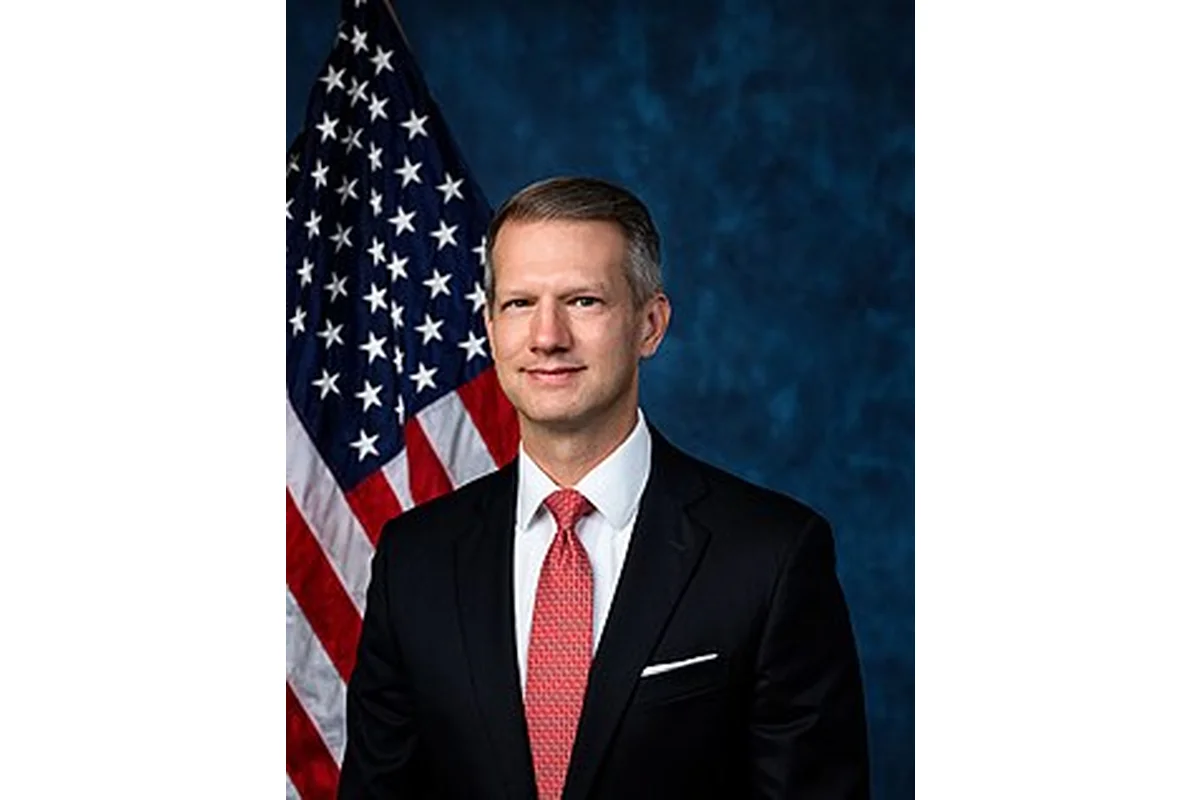
Riley Moore Bio
Riley McGowan Moore (born July 1, 1980) is an American politician and a member of the Republican Party. He has served as the U.S. representative for West Virginia’s 2nd congressional district since January 2025. Before winning his seat in Congress, Moore served as the 25th West Virginia State Treasurer from 2021 to 2025 and represented the 67th district in the West Virginia House of Delegates from 2017 to 2019. Earlier in his career, he worked as a welder, served on staff for the United States House Committee on Foreign Affairs, and held corporate and lobbying roles in the private sector.
Moore earned a bachelor’s degree in government from George Mason University and a master’s degree in strategic security studies from the National Defense University. He also holds a welding apprenticeship certificate from the C. S. Monroe Technology Center. He lives in Harpers Ferry, West Virginia, and is the grandson of former West Virginia Governor Arch A. Moore Jr.
Early Life and Background
Riley McGowan Moore was born on July 1, 1980, in Morgantown, West Virginia. He grew up in a family with a strong tradition of public service in West Virginia politics. His grandfather, Arch A. Moore Jr., served as governor of West Virginia and also represented the same congressional district, then numbered as the 1st, in the United States House of Representatives from 1957 to 1969. Moore was named for his grandmother, Shelley Riley Moore, and several of his relatives, including his aunt Shelley Moore Capito and his cousin Moore Capito, have also pursued political careers.
Moore attended the C. S. Monroe Technology Center, where he completed an apprenticeship certificate in welding. He later earned a bachelor’s degree in government from George Mason University and continued his studies at the National Defense University, where he obtained a master’s degree in strategic security studies. His mixed background of hands-on trade skills and advanced education in government and national security shaped his early worldview and prepared him for a career that would blend public service with private industry.
Before entering politics full-time, Moore worked as a welder, giving him direct experience with the industrial and working-class roots of his state. He also served as a staffer on the United States House Committee on Foreign Affairs, where he developed knowledge of federal policy and international affairs. These early experiences connected him to both the labor and policy sides of American governance.
Path to US Politics
Moore’s entry into electoral politics came in 2016, when Stephen Skinner opted not to run for reelection for the 67th district in the West Virginia House of Delegates. Moore ran to succeed him and defeated Democrat Rod Snyder in the general election. He took office in 2017 and was named assistant majority whip for the Republican caucus, quickly building a reputation as a rising figure in state-level politics.
During his time in the House of Delegates, Moore gained attention from party leaders for his work on fiscal and conservative policy issues. In 2018, Speaker of the House Roger Hanshaw named him as the next Majority Leader in the West Virginia House of Delegates. Although he lost his reelection bid later that year to Democrat John Doyle, his selection as Majority Leader demonstrated the trust he had earned from his colleagues in a short period.
Outside of elected office, Moore held several private-sector roles that shaped his political outlook. From 2013 to 2017, he served as a Vice President at the Podesta Group, a lobbying firm. Beginning in 2017, he became a director at Textron, a major American industrial company. These positions gave him experience in corporate governance, lobbying, and federal contracting, all of which informed his later campaigns focused on economic and energy policy.
Riley Moore Career
Early Career (2017–2019)
Moore’s first elected role was in the West Virginia House of Delegates, where he represented the 67th district from 2017 to 2019. He began as assistant majority whip and was later chosen as the chamber’s next Majority Leader by Speaker Roger Hanshaw in 2018. His early legislative work focused on conservative priorities in line with his Republican constituents.
His tenure in the state House ended with a loss to Democrat John Doyle in the 2018 general election. Despite the defeat, Moore’s rapid rise within the caucus positioned him for higher office at the state level.
State Treasurer of West Virginia (2021–2025)
In 2020, Moore ran for West Virginia State Treasurer. He was unopposed in the Republican primary and faced 24-year incumbent John Perdue in the general election. Moore won the general election with 56 percent of the vote, beginning his tenure as the 25th State Treasurer of West Virginia in 2021.
During his time as Treasurer, Moore became a leading critic of environmental, social, and governance (ESG) investing. In June 2022, he sent a letter to six major financial institutions, including BlackRock, JPMorgan Chase, Wells Fargo, Morgan Stanley, US Bancorp, and Goldman Sachs, informing them that they would no longer be allowed to do business with the state because of their advocacy against the fossil fuel industry. His aggressive stance on energy policy made him a national voice in the broader debate over ESG.
U.S. House of Representatives (2025–Present)
On November 21, 2022, Moore announced his candidacy for the United States House of Representatives in West Virginia’s 2nd congressional district, seeking to succeed fellow Republican Alex Mooney. He won the Republican primary against four other candidates with 46 percent of the vote and went on to win the November 2024 general election. On January 3, 2025, he was sworn in as a member of the 119th Congress.
In March 2025, Moore introduced a bill that would ban the issuing of student visas for all citizens of the People’s Republic of China. The proposal drew criticism from groups including the Committee of 100 and the Asian American Foundation, who labeled the bill Sinophobic. In April 2025, he visited the Terrorism Confinement Center in El Salvador and publicly praised the Trump administration’s deportation policies, saying the visit strengthened his support for the president’s homeland security efforts.
Notable Events and Milestones
Moore’s career has included a series of milestones, from being named Majority Leader of the West Virginia House of Delegates in 2018 to becoming State Treasurer in 2021 and a U.S. representative in 2025. His 2022 letter to major banks over ESG policies stood out as one of the most aggressive state-level actions against the practice in the country, and his 2025 student visa bill placed him at the center of a national debate over U.S. policy toward China.
Riley Moore Family
Family Background and Political Lineage
Moore comes from one of West Virginia’s most prominent political families. His grandfather, Arch A. Moore Jr., served as governor of West Virginia and represented the same congressional district in the U.S. House of Representatives from 1957 to 1969. Moore was named for his grandmother, Shelley Riley Moore. His aunt, Shelley Moore Capito, is a U.S. senator, and his cousin Moore Capito is also active in politics. Moore is a Catholic.
Personal Life
Moore is married to Guillermina Garcia. The couple has two daughters and one son and lives in Harpers Ferry, West Virginia. His family life and deep roots in West Virginia have been a central part of his political identity throughout his career.