
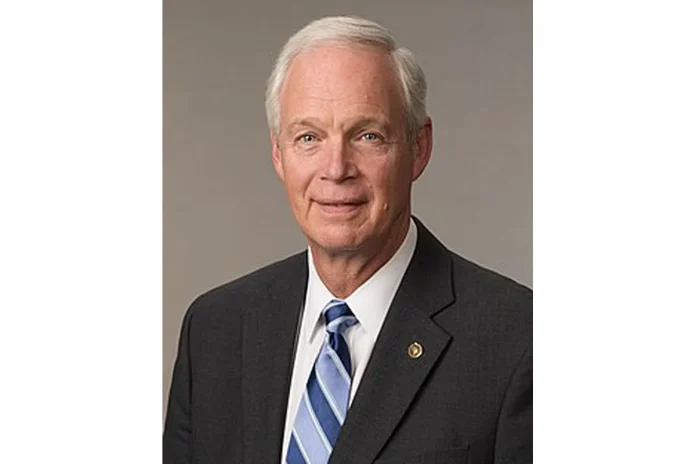
Ron Johnson Bio
Ronald Harold Johnson, born on April 8, 1955, is an American businessman and politician serving as the senior United States senator from Wisconsin. A member of the Republican Party, Johnson was first elected to the Senate in 2010 after a career as chief executive officer of the plastics manufacturer Pacur, and he was reelected in 2016 and 2022. He built his political profile around opposition to the Affordable Care Act, fiscal restraint, balanced budgets, and deregulation. Over his Senate tenure he has aligned closely with former President Donald Trump, chaired investigative committees, and courted controversy by promoting disputed claims on public health, elections, and climate science.
Johnson lives in Oshkosh, Wisconsin, with his wife Jane Curler, whom he married in 1977. The couple has three children and, as of 2024, four grandchildren. He is a member of the Wisconsin Evangelical Lutheran Synod and has credited his parents with shaping his religious outlook.
Early Life and Background
Ronald Harold Johnson was born on April 8, 1955, in Mankato, Minnesota, to Dale Johnson and Jean Johnson. He grew up in Minnesota, where he attended Edina High School, the same school where he met his future wife, Jane Curler. Johnson has attributed his deeply held religious beliefs to his parents, a background that continues to inform his political life as a member of the Wisconsin Evangelical Lutheran Synod.
He went on to attend the University of Minnesota, where he earned a Bachelor of Science degree. After completing his education, Johnson built a career in the manufacturing sector, a path that would later define his identity as a businessman-politician. He also engaged in philanthropy throughout his adult life, supporting the Boys & Girls Clubs of America, Catholic schools, and individuals in need.
Path to US Politics
Johnson’s entry into politics came in 2010 when, without previous political experience, he announced his candidacy for the United States Senate in Wisconsin a week before the May 15 Republican convention. He cited his opposition to the Affordable Care Act as his reason for running, calling it the greatest assault on freedom in his lifetime. The Tea Party movement provided a major boost to his political rise, although Johnson has said he did not formally identify with the movement, once describing himself as more Tea Party than Republican.
Because he entered the race late, Johnson had little time to seek donors, and his personal wealth became an advantage. He won the Republican primary in September 2010 with 85 percent of the vote. He then defeated three-term Democratic incumbent Russ Feingold in the general election with 51.9 percent of the vote to Feingold’s 47.0 percent, campaigning as a political outsider and small-business owner focused on fiscal responsibility, job creation, and reducing the national debt.
Ron Johnson Career
Early Career (2010-2011)
Before politics, Johnson served as chief executive officer of Pacur, a plastics manufacturing company based in Oshkosh, Wisconsin. In the months after his 2010 election, Pacur paid him $10 million in deferred compensation covering the period from 1997 to 2011, during which he took no salary as CEO. He sold the majority of his liquid assets after entering the Senate but retained a 401(k) account and a 5 percent share of Pacur, which he held until 2020.
Upon entering the Senate, Johnson was appointed to the Committee on the Budget and the Committee on Appropriations. He quickly became known for his focus on federal spending and the national debt, opposing budget proposals from both parties that did not offset new spending. He sought the position of vice chairman of the Senate Republican Conference in December 2011, but Roy Blunt was selected over him by a narrow margin.
2010 Senate Election (2010)
Johnson’s 2010 campaign is considered a breakthrough moment. He defeated Russ Feingold, a three-term incumbent who had previously won his seat by 11 points, in a year that saw strong Republican victories across the country. Johnson spent roughly $15 million on the campaign, including $8.7 million of his own money, and benefited from nearly all of the outside funds that flowed in following the Supreme Court’s Citizens United v. FEC decision.
His messaging emphasized fiscal responsibility, opposition to the Recovery Act and the Affordable Care Act, and his identity as a manufacturing executive. He took controversial positions on climate change and energy, and after several campaign stumbles, the campaign reduced his public appearances. In the end, his business background and outsider appeal carried him to victory, launching his Senate career.
2016 Senate Election (2016)
Johnson announced his 2016 reelection bid in March 2013 and ran unopposed in the Republican primary. The race became a rematch against Russ Feingold, who had won the Democratic nomination again. Feingold led in polling for most of the race, and the Washington Post rated Johnson the most vulnerable incumbent senator of the 2016 cycle.
Johnson hired his brother Dean Johnson, a television producer, to assist with advertising, and the campaign focused on Johnson’s role as a small-government businessman. Unlike 2010, he did not campaign on repealing the Affordable Care Act. He was reelected with 50.2 percent of the vote to Feingold’s 46.8 percent, performing especially well among rural, white, male voters without college degrees and even outperforming Donald Trump in the Minneapolis suburbs.
2022 Senate Election (2022)
After pledging to serve only two terms, Johnson reversed course and announced a third run in 2022, citing what he described as peril facing the country. He won the Republican primary with 84 percent of the vote against David Schroeder. Johnson was the only incumbent Republican Senate nominee competing in a state that Trump had lost in 2020.
His Democratic opponent was Lieutenant Governor of Wisconsin Mandela Barnes. Johnson presented himself as a more moderate alternative and emphasized cultural issues, anti-white racism, cancel culture, and a law-and-order stance on crime. He was reelected with 50 percent of the vote to Barnes’s 49 percent, a much narrower margin than polling had predicted. He was the only Republican to win a statewide race in Wisconsin that year.
Notable Events and Milestones
Among Johnson’s most notable Senate moments is his role as a key witness in the 2019 Trump-Ukraine scandal and the first impeachment of Donald Trump, stemming from his interactions with Ukrainian officials. He also served as chair of the Committee on Homeland Security and Governmental Affairs, leading investigations into Hillary Clinton, Hunter Biden, and the FBI’s handling of the Trump-Russia probe. In 2014, he sued the federal government over Affordable Care Act subsidies for members of Congress, a case that was ultimately dismissed.
Ron Johnson Career Wins
Ronald Harold Johnson has won three United States Senate elections in Wisconsin, in 2010, 2016, and 2022. Each victory came against a high-profile Democratic opponent, including two-time rival Russ Feingold and Lieutenant Governor Mandela Barnes. His 2022 win was particularly narrow but solidified his position as the senior senator from Wisconsin.
Senate Highlights
Johnson first won his Senate seat in 2010 by defeating three-term Democratic incumbent Russ Feingold, a win that helped fuel the broader Republican wave of that year. He secured a second term in 2016 in a rematch against Feingold, overcoming low name recognition and polling deficits. His most recent victory came in 2022, when he narrowly defeated Mandela Barnes to claim a third term.
Other Wins & Achievements
Beyond electoral wins, Johnson secured a 20 percent deduction in taxation for pass-through businesses during negotiations over the 2017 Tax Cuts and Jobs Act. He also helped pass the Integrated Public Alert and Warning System Act of 2015 and sponsored a federal right-to-try law allowing patients with severe illness to access experimental medical treatments.
Ron Johnson Family
Family Background and Personal Lineage
Ronald Harold Johnson was born to Dale Johnson and Jean Johnson, both of whom he has credited with shaping his deeply held religious beliefs. He is a member of the Wisconsin Evangelical Lutheran Synod, a faith community that traces back to his upbringing. He has also cited the influence of Ayn Rand’s novel Atlas Shrugged on his political ideology.
Personal Life
Johnson has been married to Jane Curler since 1977, having met her while they both attended Edina High School in Minnesota. The couple has three children and four grandchildren as of 2024. They reside in Oshkosh, Wisconsin, where Johnson built his business career and where he has remained throughout his Senate tenure. Outside of politics, the Johnsons are active philanthropists, supporting the Boys & Girls Clubs of America, Catholic schools, and individuals in need, and are involved with the faith-based Joseph Project jobs program.