
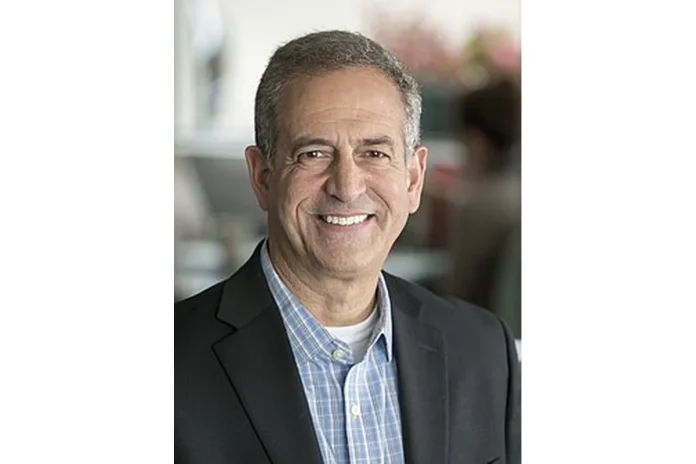
Russ Feingold Bio
Russell Dana Feingold, commonly known as Russ Feingold, is an American politician and lawyer who served as a United States senator from Wisconsin from 1993 to 2011. A member of the Democratic Party, he built a reputation as a maverick voice within Congress, frequently breaking with members of his own party to take more progressive positions on civil liberties, campaign finance, and trade. After leaving the Senate, Feingold continued his public service as a special envoy, organization leader, and global advocate for nature conservation.
Born on March 2, 1953, in Janesville, Wisconsin, Feingold rose from a family with deep civic roots to become one of the most recognizable reformers in American politics. He is widely recognized for coauthoring the Bipartisan Campaign Reform Act of 2002 with Senator John McCain and for being the lone senator to vote against the USA PATRIOT Act in 2001. Throughout his career, he has balanced legal practice, electoral politics, diplomatic work, and international advocacy.
Early Life and Background
Russ Feingold was born in Janesville, Wisconsin, and raised in a Jewish family whose grandparents had emigrated from Russia and Galicia. His father, Leon Feingold, was an attorney, while his mother, Sylvia Feingold, worked at a title company. He grew up as one of four children and was shaped early by two major influences: his father and his older brother David, a conscientious objector during the Vietnam War, who helped form his political outlook.
As a young man, Feingold joined the B’nai B’rith Youth Organization and Aleph Zadik Aleph, organizations that nurtured his sense of civic responsibility. He graduated from Joseph A. Craig High School in Janesville before attending the University of Wisconsin–Madison, where he earned a Bachelor of Arts degree with honors in political science in 1975. At Wisconsin, he was inducted into Phi Beta Kappa and the Iron Shield Society, the highest honor given to undergraduates at the university.
Feingold then won a Rhodes Scholarship to Magdalen College at the University of Oxford, earning a first-class honors Bachelor of Arts in jurisprudence in 1977. Upon returning to the United States, he attended Harvard Law School and received his Juris Doctor with honors in 1979, the same year Chief Justice John Roberts graduated.
Path to US Politics
Russ Feingold’s entry into public life began in the legal field. From 1979 to 1985, he worked as an attorney at the private law firms Foley & Lardner and La Follette & Sinykin, gaining practical legal experience that informed his later policy work. While building his legal career, he also engaged in Democratic politics, volunteering for John Lindsay’s 1972 presidential campaign and later supporting the presidential bids of Mo Udall and Ted Kennedy.
In 1982, Feingold was elected to the Wisconsin State Senate, representing the 27th district. He served for ten years in that chamber, focusing on consumer protection, government accountability, and progressive reforms. His time in the state legislature sharpened his legislative skills and expanded his statewide network, preparing him for a successful run for federal office.
Feingold’s transition to national politics came in 1992, when he launched an unconventional Senate campaign against incumbent Republican Bob Kasten. Painting five promises on his garage door as a contract with Wisconsin voters, he positioned himself as a quirky underdog who rejected negative campaigning. He won the Democratic primary with 70 percent of the vote and went on to defeat Kasten by seven points in the general election, earning his first term in the United States Senate.
Russ Feingold Career
Early Career (1982–1992)
Russ Feingold’s early career combined legal practice with state-level legislative work. After completing his law degree at Harvard in 1979, he joined two prominent Wisconsin law firms, where he developed expertise in litigation and corporate law. These six years of practice gave him a strong grounding in constitutional and regulatory issues that would later shape his Senate priorities.
In 1982, Feingold won election to the Wisconsin State Senate, where he served until 1993. He built a reputation for independence and reform, focusing on ethics, open government, and progressive fiscal policies. His decade in the state legislature established him as a rising voice in Wisconsin Democratic politics and laid the foundation for his successful 1992 challenge to Senator Bob Kasten.
Breakthrough (1993–2002)
Russ Feingold’s breakthrough period began with his 1992 Senate victory and continued through his first three terms in office. Throughout the 1990s, he gained attention for his willingness to break with party leadership, often taking more liberal or populist positions than his Democratic colleagues. In 1996, he was among a minority of legislators to vote against the Defense of Marriage Act, and he later emerged as a leading advocate for campaign finance reform.
His most celebrated achievement during this period came in 2002, when he and Senator John McCain coauthored the Bipartisan Campaign Reform Act, commonly known as the McCain–Feingold Act. The legislation, which took seven years to pass, sought to limit the influence of soft money in federal elections. In 1999, Feingold and McCain received the John F. Kennedy Profile in Courage Award for their efforts on campaign finance reform.
Feingold also became known for his lonely stand against the USA PATRIOT Act in 2001, casting the lone Senate vote against the bill on the grounds that it infringed on civil liberties. He was one of only 23 senators to vote against the Authorization for Use of Military Force Against Iraq in 2002, and he later became the first senator to call for a firm withdrawal date from Iraq in 2005. These positions cemented his reputation as a maverick unafraid to challenge party orthodoxy.
Democratic Era (2003–2011)
During his final years in the Senate, Russ Feingold continued to champion progressive causes and reform-minded legislation. He introduced a resolution in 2006 to censure President George W. Bush over allegations of illegal wiretapping under the Foreign Intelligence Surveillance Act, and he repeated the call in 2007 over the management of the Iraq War. He also authored the State-Based Health Care Reform Act in 2006, a pilot program to advance universal health coverage.
Feingold won a third Senate term in 2004 by defeating businessman Tim Michels by 11 percentage points, a strong victory that positioned him for a possible presidential run. In late 2005, he launched the Progressive Patriots Fund, fueling speculation about a 2008 White House bid. However, in November 2006, he announced he would not seek the Democratic nomination, saying the scrutiny would dismantle both his professional and personal life.
In 2010, Feingold lost his reelection bid to Republican businessman Ron Johnson by five percentage points. Despite the defeat, he remained an influential voice on civil liberties and progressive causes, having led a bipartisan coalition that successfully modified several controversial provisions of the Patriot Act during its 2006 reauthorization.
Notable Events and Milestones
Among Russ Feingold’s signature moments was his solitary vote against the USA PATRIOT Act in 2001, an act of dissent that became one of the defining images of his Senate career. His successful negotiation of bipartisan changes to the act during its 2005 reauthorization, along with his coauthorship of the McCain–Feingold Act, cemented his legacy as a reformer willing to work across the aisle. He was also the first senator to call for a fixed withdrawal date from Iraq in 2005, a position that influenced national debate on the war.
Russ Feingold Career Wins
Russ Feingold’s political career featured three U.S. Senate victories, one gubernatorial-level defeat, and a rematch loss, along with numerous legislative accomplishments that earned national recognition. He was celebrated with the John F. Kennedy Profile in Courage Award in 1999 and the Freedom Medal from the Roosevelt Institute in 2011, both honors that highlighted his commitment to principled governance.
Senate Highlights
Russ Feingold won three elections to the United States Senate, in 1992, 1998, and 2004. His first victory, a 53-to-46 percent win over Republican incumbent Bob Kasten, launched his national career. His 1998 reelection was among his most remarkable, as he capped his own fundraising at $3.8 million, pledged to forgo soft money, and still managed a narrow victory over Representative Mark Neumann. His 2004 win, an 11-point defeat of businessman Tim Michels, marked his strongest Senate performance. In 2010 and 2016, he lost Senate bids to Ron Johnson.
Other Wins & Achievements
Beyond electoral success, Russ Feingold earned lasting recognition for legislative and diplomatic achievements. He helped pass the Bipartisan Campaign Reform Act of 2002, secured bipartisan modifications to the USA PATRIOT Act, and received the John F. Kennedy Profile in Courage Award. He was also appointed U.S. Special Representative for the African Great Lakes region and the Democratic Republic of the Congo in 2013, served as president of the American Constitution Society from 2020 to 2025, and chairs the Campaign for Nature’s Global Steering Committee, advocating to protect at least 30 percent of the world’s land and sea by 2030.
Russ Feingold Family
Family Background and Political Lineage
Russ Feingold was raised in a close-knit Jewish family in Janesville, Wisconsin, with grandparents who had emigrated from Russia and Galicia. His father, Leon Feingold, was an attorney, and his mother, Sylvia Feingold, worked at a title company. He has one older brother, David Feingold, a Vietnam War conscientious objector who was a major influence on his political development, and two other siblings. His sister, Dena Feingold, is the rabbi of Beth Hillel Temple in Kenosha, Wisconsin, where Feingold himself remains a member.
Personal Life
Russ Feingold was first married to Sue Levine from 1977 until their divorce in 1986, and the couple had two children. He then married Mary Speerschneider in 1991; the couple announced their divorce in 2005. In 2013, Feingold married Dr. Christine Ferdinand, a fellow at Magdalen College, Oxford. Feingold resides in Middleton, Wisconsin, and continues to engage in public service, writing, and global advocacy for nature conservation.