

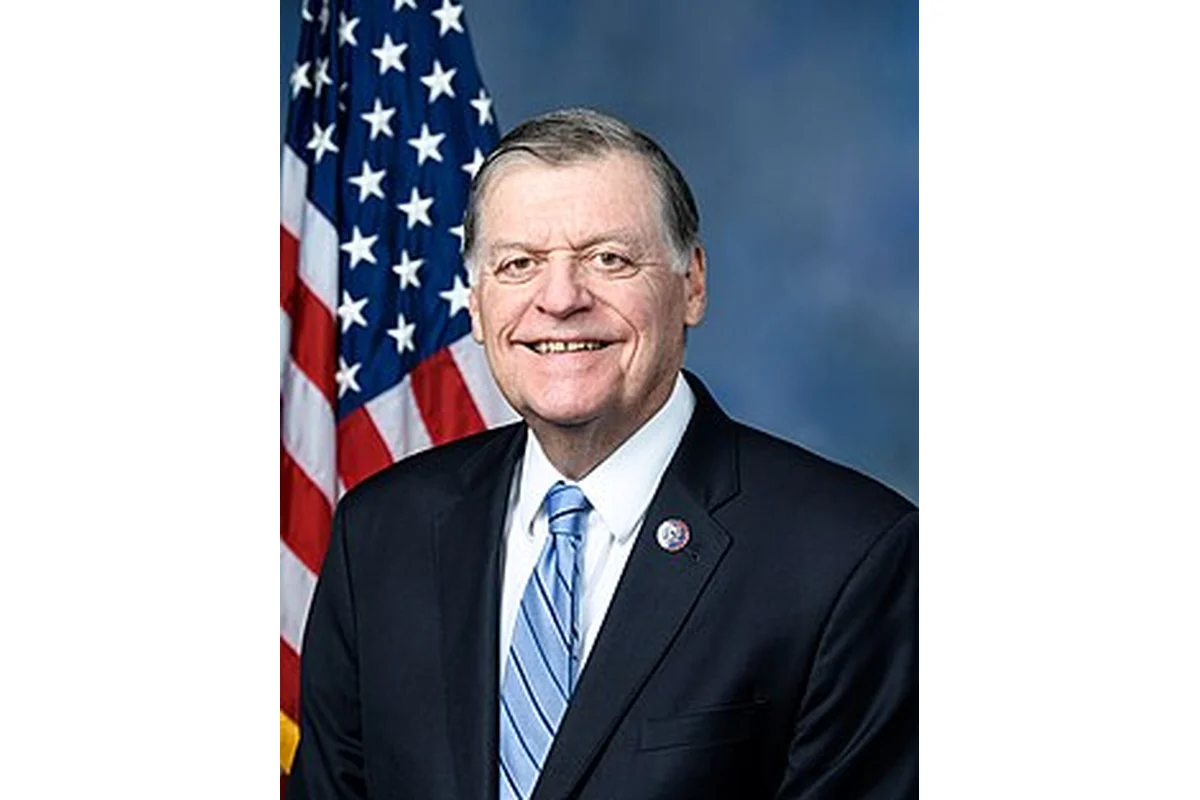
Tom Cole Bio
Thomas Jeffery Cole (born April 28, 1949) is an American politician and former educator who has represented Oklahoma’s 4th congressional district in the U.S. House of Representatives since 2003. A member of the Republican Party, Cole has built a long career in Oklahoma and national politics, including earlier service in the Oklahoma State Senate from 1988 to 1991 and as Oklahoma’s 26th secretary of state from 1995 to 1999. An enrolled member of the Chickasaw Nation, he is the longest-serving Native American in the history of Congress. On April 10, 2024, Cole was elected chair of the House Appropriations Committee, one of the most powerful posts in the chamber.
Early Life and Background
Cole was born in Shreveport, Louisiana, to John D. Cole and Helen Te Ata Cole (née Gale). His mother made political history of her own as the first Native American elected to the Oklahoma Senate. The family moved several times during his childhood because of his father’s military background, and they returned permanently to Oklahoma when Tom was in the sixth grade. A fifth-generation Oklahoman by heritage, he grew up identifying strongly with his Native American and Chickasaw roots, and has said he was raised to think of himself as Native American and, most importantly, as Chickasaw. A great-aunt of his was the celebrated Native American storyteller Te Ata.
Cole graduated from Moore High School in 1967 and went on to earn a Bachelor of Arts degree from Grinnell College in 1971. He later completed a Master of Arts at Yale University in 1974 and a Doctor of Philosophy in British history at the University of Oklahoma in 1984. His doctoral thesis, Life and Labor in the Isle of Dogs, examined the origins and evolution of an East London working-class community from 1800 to 1980. As a Thomas J. Watson Fellow, he conducted research abroad, and he later studied at the University of London from 1977 to 1978 as a Fulbright Fellow before entering teaching and politics.
Path to US Politics
Before running for office himself, Cole worked on Capitol Hill as a staffer for U.S. Representative Marvin (Mickey) Edwards of Oklahoma from 1982 to 1984. He moved quickly into party leadership, chairing the Oklahoma Republican Party from 1985 to 1989. He then won election to the Oklahoma State Senate, where he served from 1988 to 1991, gaining firsthand experience in state-level lawmaking.
From 1991 to 1993, Cole served as executive director of the National Republican Congressional Committee, deepening his ties to national GOP strategy. In 1995, Oklahoma Governor Frank Keating appointed him as the state’s 26th secretary of state, a post he held until 1999. During that time, he assisted with recovery efforts following the 1995 Oklahoma City bombing. He resigned from Keating’s administration to become chief of staff at the Republican National Committee, a role he held from 1999 to 2001, positioning him for a congressional run of his own.
Tom Cole Career
Early Career (1982–2002)
Cole’s political foundation was built in Oklahoma, beginning with his work for Representative Mickey Edwards in the early 1980s. His tenure as state party chair, state senator, and executive director of the National Republican Congressional Committee gave him a reputation as a steady organizer within the Republican Party. His service as Oklahoma’s secretary of state under Governor Frank Keating further raised his profile, particularly for his work supporting the state after the 1995 Oklahoma City bombing.
After returning to private life as chief of staff of the Republican National Committee from 1999 to 2001, Cole set his sights on Capitol Hill. During that period, he also taught as an assistant professor of history and politics, keeping one foot in academia while preparing for his next move. By 2002, he was ready to run for Congress in his home state.
U.S. House Breakthrough (2003–Present)
Cole was first elected to Congress in 2002, winning Oklahoma’s 4th congressional district with 53.8 percent of the vote against former Oklahoma State Senator Darryl Roberts. He benefited from the endorsement of the popular outgoing congressman, J.C. Watts, whose support helped him win the general election. Since that first victory, Cole has won at least 63 percent of the vote in each of his eight reelection campaigns and ran unopposed in 2010, demonstrating durable support at home.
Following the 2006 election cycle, House Republicans elected Cole as chairman of the National Republican Congressional Committee, putting him in charge of efforts to elect Republicans to Congress nationwide. In 2024, he won a contested Republican primary against Paul Bondar, Nick Hankins, Andrew Hayes, and Rick Whitebear-Harris, and went on to continue representing the 4th district. On April 10, 2024, Cole reached a new career milestone when his colleagues elected him chair of the House Appropriations Committee. The Center for Effective Lawmaking at Vanderbilt University and the University of Virginia later ranked him as the third-most effective House Republican in the 119th Congress (2023–25).
House Appropriations Committee Era (2024–Present)
As chair of the House Appropriations Committee, Cole now oversees the panel that writes the federal government’s annual funding bills. He had previously chaired the House Appropriations Subcommittee on the Legislative Branch, where he introduced the Legislative Branch Appropriations Act, 2015, a bipartisan measure that would appropriate about $3.3 billion to the legislative branch for that fiscal year. He has described that earlier work as a model of effective, efficient, and bipartisan legislating.
In his current leadership role, Cole has continued to advocate for issues important to Oklahoma, including the farm bill, which would save an estimated $40 billion over a decade. He has also been a leading voice for Native American communities, championing protections for Native American women under the Violence Against Women Act and pushing his Tribal Labor Sovereignty Act to clarify that the National Labor Relations Board has no jurisdiction over tribally owned businesses located on tribal land.
Notable Events and Milestones
One of Cole’s signature accomplishments is his central role in the 2013 reauthorization of the Violence Against Women Act, a fight he led to strengthen protections for Native American women. He is featured in the play Sliver of a Full Moon by Mary Kathryn Nagle for that work. He is also remembered for his public defense of Paul Ryan during the 2016 House speakership contest, when he argued that Ryan was a true conservative and a builder of the Republican House majority. In 2021, Cole drew national attention by voting against certification of the 2020 Electoral College results, after which he voluntarily gave up an honorary degree from Grinnell College.
Tom Cole Career Wins
Cole has compiled a strong record of electoral victories since first reaching Congress in 2002. He has never lost a general election, winning at least 63 percent of the vote in each of his eight reelection campaigns and running unopposed in 2010. His success in contested Republican primaries, including the 2024 primary against four challengers, has helped him maintain his seat for more than two decades.
U.S. House of Representatives Highlights
Cole’s first win came in 2002, when he captured Oklahoma’s 4th congressional district with 53.8 percent of the vote against Darryl Roberts. He has since built a record of consistent electoral strength, including running unopposed in 2010 and winning every general election since with comfortable margins. His most recent contested election, the 2024 Republican primary, saw him defeat Paul Bondar, Nick Hankins, Andrew Hayes, and Rick Whitebear-Harris.
Other Wins and Achievements
Beyond his congressional victories, Cole’s leadership wins within the Republican Party stand out. He was elected chairman of the National Republican Congressional Committee after the 2006 elections, was named the third-most effective House Republican in the 119th Congress by the Center for Effective Lawmaking, and was elected chair of the House Appropriations Committee on April 10, 2024, by his House Republican colleagues.
Tom Cole Family
Family Background and Political Lineage
Cole comes from a family with deep roots in Oklahoma and a strong tradition of public service. His mother, Helen Te Ata Cole (née Gale), was the first Native American elected to the Oklahoma Senate, making his own rise in politics part of a longer family story. His father, John D. Cole, had a military background that led the family to live in different places during Tom’s childhood before they returned to Oklahoma. Cole is an enrolled member of the Chickasaw Nation and has said a great-aunt of his was the renowned Native American storyteller Te Ata.
Personal Life
Cole married Ellen Decker in 1971, and the couple has one son. He has served on the Smithsonian Institution Board of Regents and on the board of the National Fulbright Association, reflecting his lifelong interest in history, education, and cultural institutions.